Episode 2: ‘Roof Guy’ Not the Shooter, Tracking ‘Tyler,’ and Debunking the Junk

Chris, I haven’t commented since Butler because reasons. But logged in to agree.
That slo-mo footage you can find online is taken with the very most bleeding-edge technology, able to stretch a millisecond into a lazy afternoon. Probability is 0 that any of the CCD cameras present at the UVU rally were capable of freezing a flying bullet. Note that the picture from the news camera that caught a bullet flying by Mr. Trump only managed to show a thin metallic streak in the air of a clear sunny day.

I still haven’t seen/heard any video with usable sound in it from the TPUSA rally. Some of the war video I have seen recently will show a distant explosion, the flash and smoke, with a synchronized boom. That is absolute proof that the sound was edited in, since it should be heard from one to several seconds after the flash. In the TPUSA footage, I can’t tell if there is a sonic crack (in a subsonic round it would likely coincide with the muzzle blast), and how much of it came from the PA sound system playing the sound over speakers.

I also agree that the blooming T-shirt looks like what happens to a block of ballistic gel stopping a bullet of almost any sort. Online slo-mo video shows it clearly, a huge cavitation bubble forms and collapses as energy is deposited, after which the gel block looks normal with a slender trail through it.

With what sketchy evidence I have seen, I think the shot came from close to the stage, a low-energy round by a professional. ("brown shirt guy? I don’t know, maybe) …
2 Likes

Now. What can I do without the drunken sailor (early in the evening):

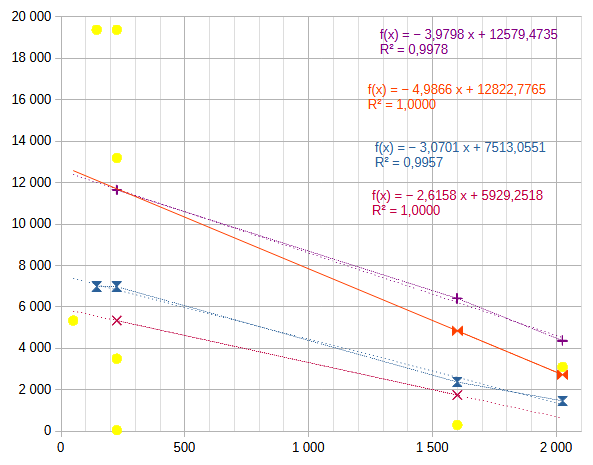
Maybe some quadratic regression:

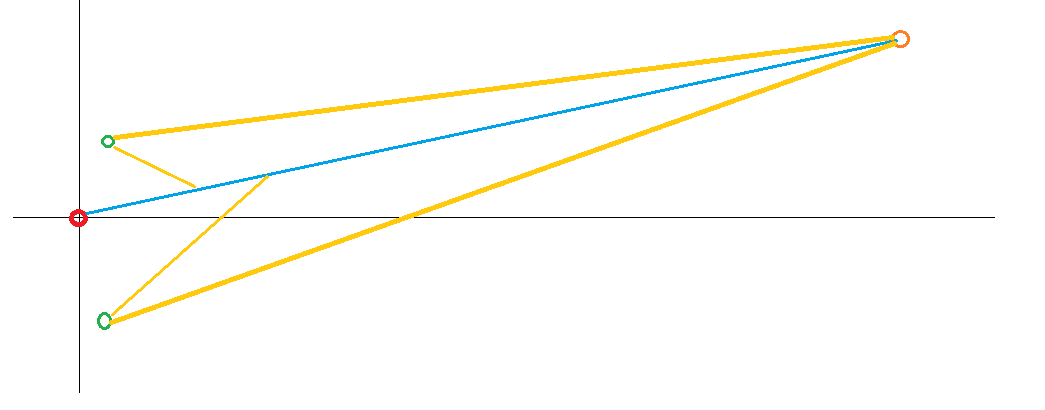
We don’t know the shooter’s distance, the muzzle speed and the velocity drop.
Assuming the distance to the shooter is greater than the distances between observers. Then the equation
∆t = a/v + b/c - D/c
might be approximated as a_i of observers is nearly the same and b/c is neglectable.

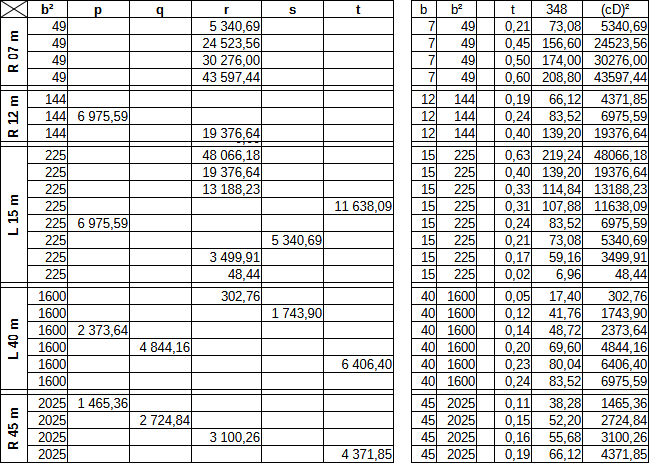
But, instead of dealing with the differences, a linear regression seems to be more useful. However, the Pythagorean is quadratic, so we take now the square.
Instead of b^2 I approximate it with the observer’s distance squared. Also the TDoA results needed to be converted into distances, multiplied by sound speed. Of course, the result will be square too - we need to take the root.

I collected the data points into linear segments with similar slope.

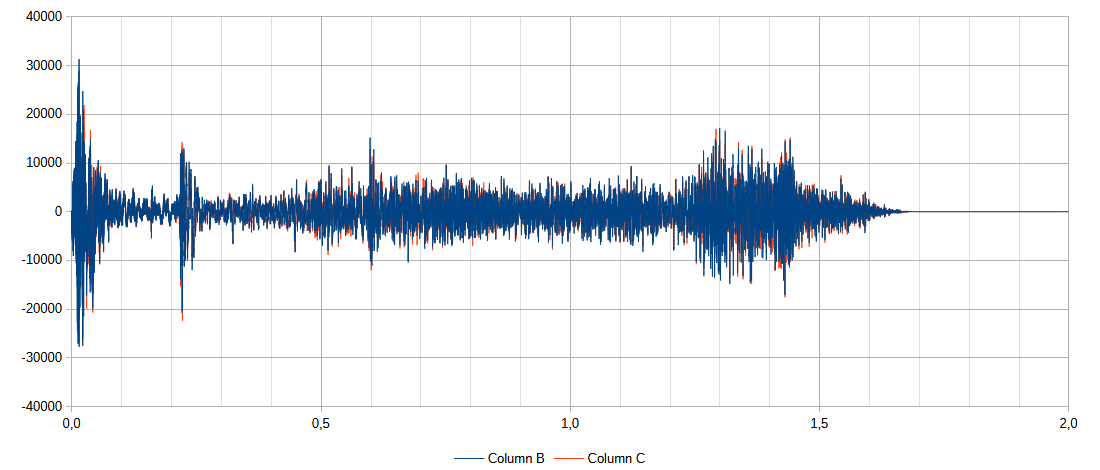
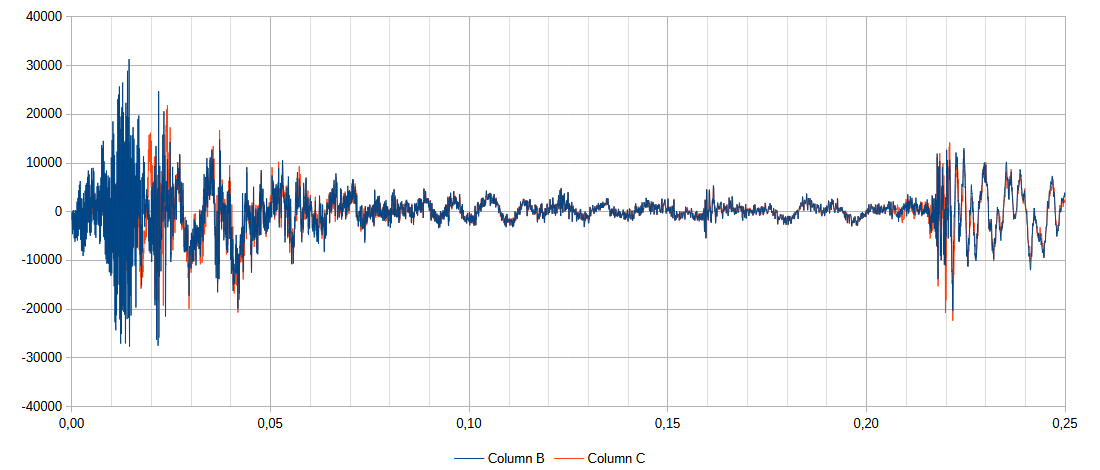
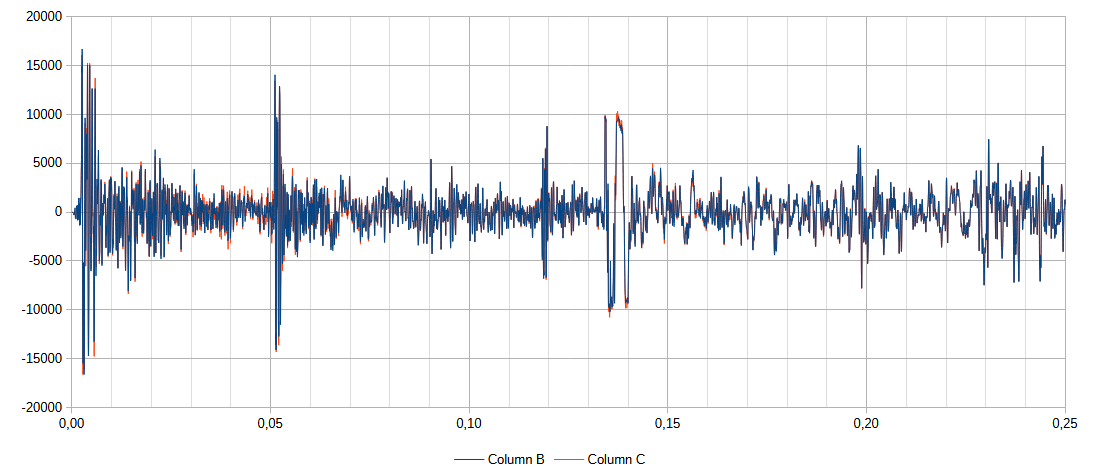
I filled the spreadsheet with all the suspected peaks:

+EDIT: well, I’m not sure about the interpretation of the results.

1 Like

It looks a bit like the runner may have left something in the gutter or gutter looking space from which he was hanging… thus the reason it looks like a gun as he starts to crawl down, but then he only descends with something that is “floppy” like a towel. Using a towel to handle it would keep his fingerprints from being detected even if the gun was found in the gutter space.

Late to the scene (racing against winter and hardly have time to eat), but here’s my 2 cents:

The question that really matters is “what did the person who decided to have him killed think they were stopping?” Answer that question, and we know how to respond to fight back. Figuring out who killed him is probably good information to nail down a hypothesis for why, but it isn’t the main goal, just a step.

That said, I think that “roof guy” had to be anticipating something for them to be up and running before people had even finished flinching… Or already starting to stand for a stretch when they got startled and their limbic system took over. The fluidity of getting up to jumping off a roof implies that they weren’t making decisions, just executing functions. Maybe they’re an adventurous college student who had jumped off the roof there before and they were the fastest to decide to get the crap out of there. Maybe they were in on it and were the false target, easily disproven, but only after enough time passes to let the trail get cold. Who knows?

I still think the big question should be more along the lines of “why?”. Was Kirk preparing to draw people’s attention to a new tooic? Is it just something that needed done before the next election, but far enough away that it doesn’t make the opposition stronger with a martyr? Was it just an individual who thought all Republicans should die? Answer the why, and you’ll have a better position to fight.

1 Like

Watched this body language analysis of the interview of Brian Harpole from the Kirk security team:


50m3s

The analyst avoids making too many conclusions, focusing instead on what he sees.

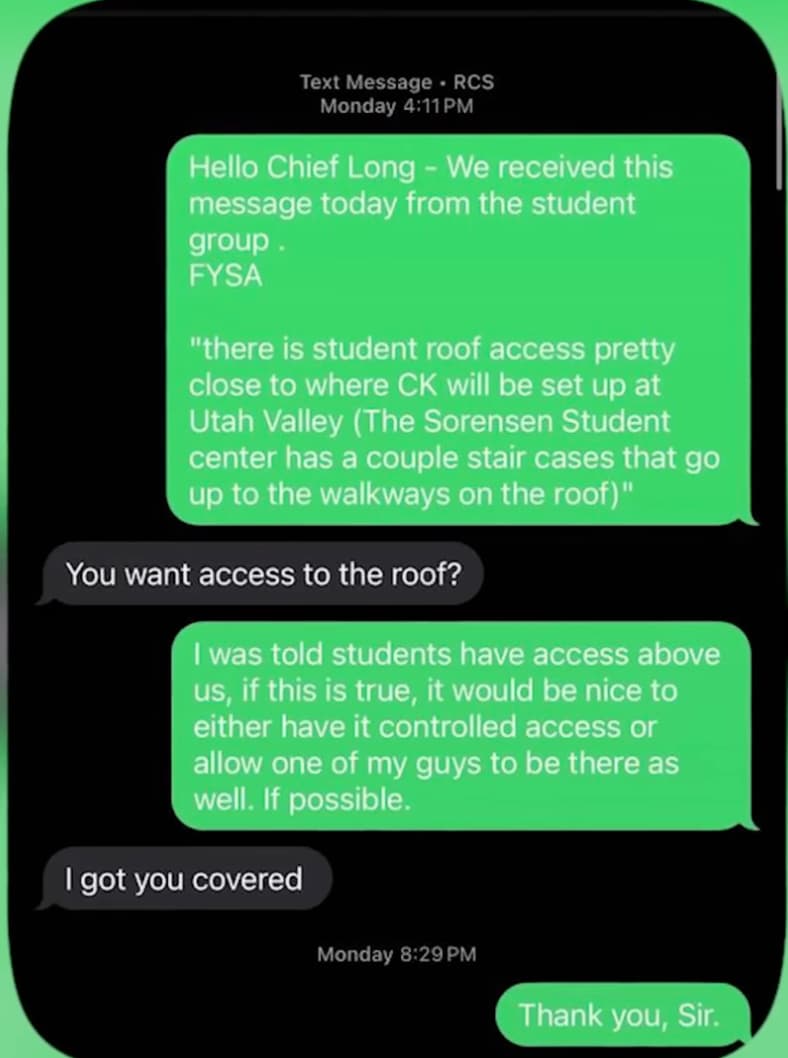
What I saw was a guy who took a vague statement “I got you covered”:

And read it as “I will take this off your plate”, which clearly the police chief did not say.

Then, when he did that, he refused to accept responsibility for the failure this caused. Assuming nothing else nefarious, I would just say I would never hire this man for a job like this. His inability to accept responsibility for what was his job and willingness to state absolute answers to questions, citing evidence which is actually questions not asked (eg when he was asked about Mossad connections from his teammates), is just way too big of a red flag for me.

I would have way more respect for him, if he said something like, “This was the biggest f-up of my life. I went back to see what I could have done better. Here’s what I came up with, if you want to hear it.”

1 Like

The twitter/youtube audience demands perfect timing.
The 1st Butler video I watched on this forum showed
a puff of smoke off a bleacher rail.
The audio had been faked, moved forward 1/4 second(~7.5 frames), to suggest that the supersonic bullet that hit Trump’s ear hit the rail.
youtube viewer comments are from an audience unaware that anyone else was shot.
Trump’s ear bullet hit James Copenhaver’s arm, 1/4 second after a ‘silent’(suppressed) shot hit the bleacher rail.

I came across an interesting video made a little over a month ago. This guy tried to more-or-less recreate the Charlie Kirk murder using cow femurs in ballistic gel.

Cow femurs are going to be a lot more sturdy than any bones in a human neck, and the 30.06 rifle blew them all away at 150 yards.

2 Likes

Hello Chris and Team, I recommend you watch the recent discussion (YouTube streamed 11/24) between Matt at Trigger Smart and Algeist Nydream, a German physicist. Algeist put together a full analysis using basic physics that can be verified and reproduced. He believes it proves that the shot from the roof sniper‘s nest intentionally was shot into a van back/trunk behind and to Charlie’s right. He is convinced that Charlie was not shot at all and is still alive, that this was a staged assassination utilizing state-of-the-art prosthetics, fake blood, etc. and most likely a 30-06 rifle shot by a US intelligence sniper. Algeist also corroborates this with videos from archives.org/kirkshooting. This is hard to believe but compelling!! It answers a lot of Q’s we all have about Charlie’s security team and the TPUSA team but also brings up new and different Q’s.

1 Like

Algeist Nydream is full of s**t

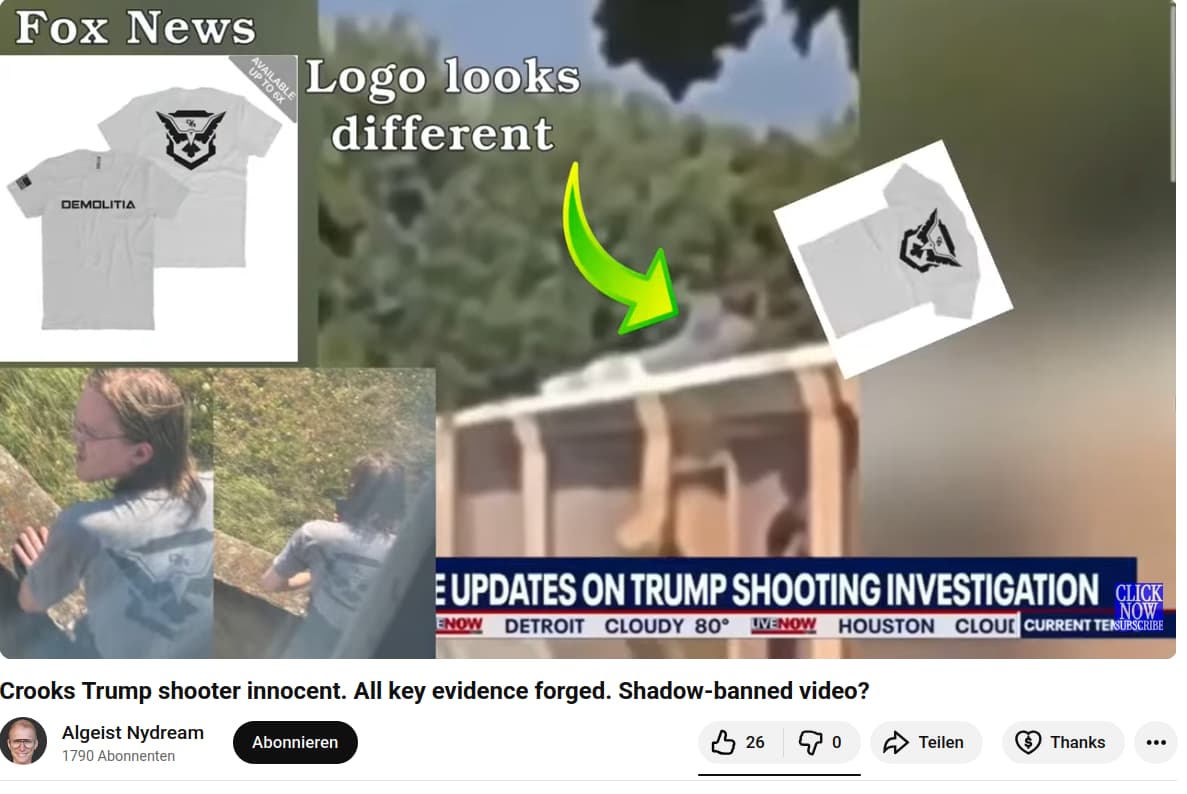
I watched some of his videos about the attempted assassination of Trump in Butler. Algeist Nydream believes that the following image proves that the footage has been manipulated because the logo on Crooks’ T-shirt is supposed to be different. However, it is simply not clear because the resolution is low.

And Algeist Nydream provides such “evidence” nonstop. Every now and then there are actually useful observations among them, but for the most part it’s absolute nonsense.

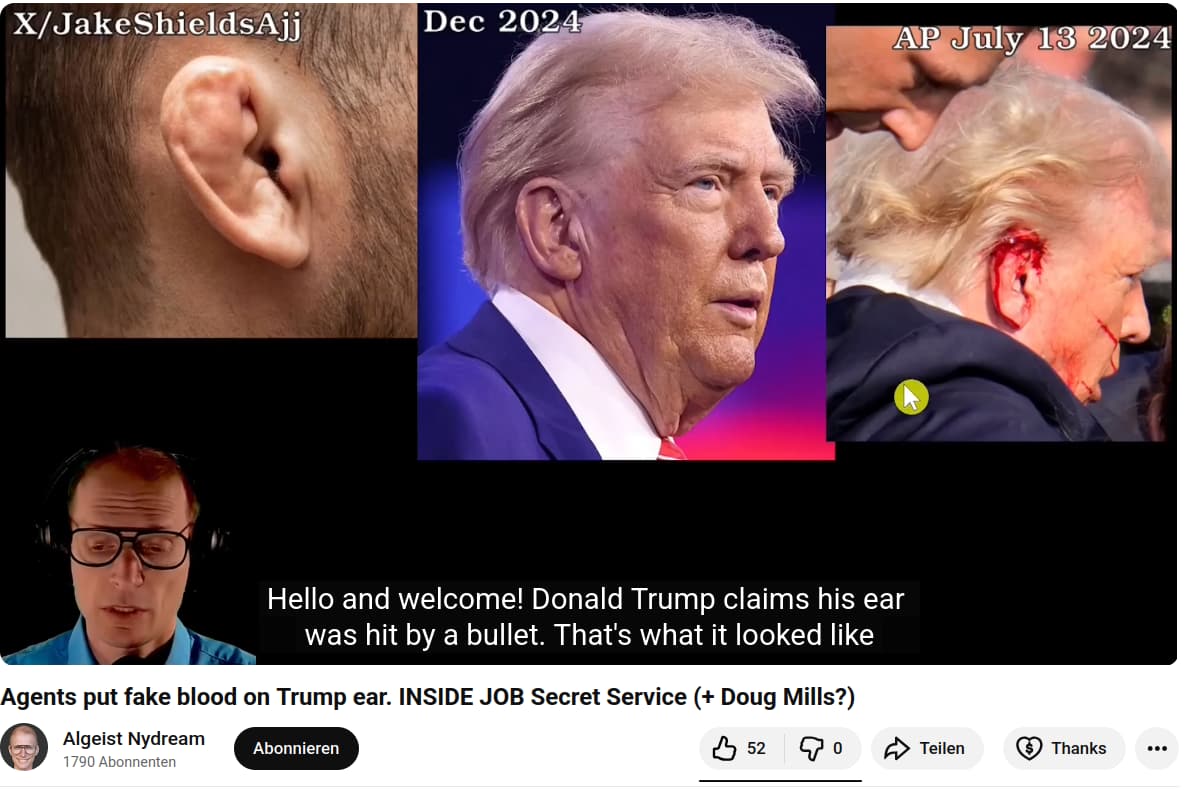
Another example:

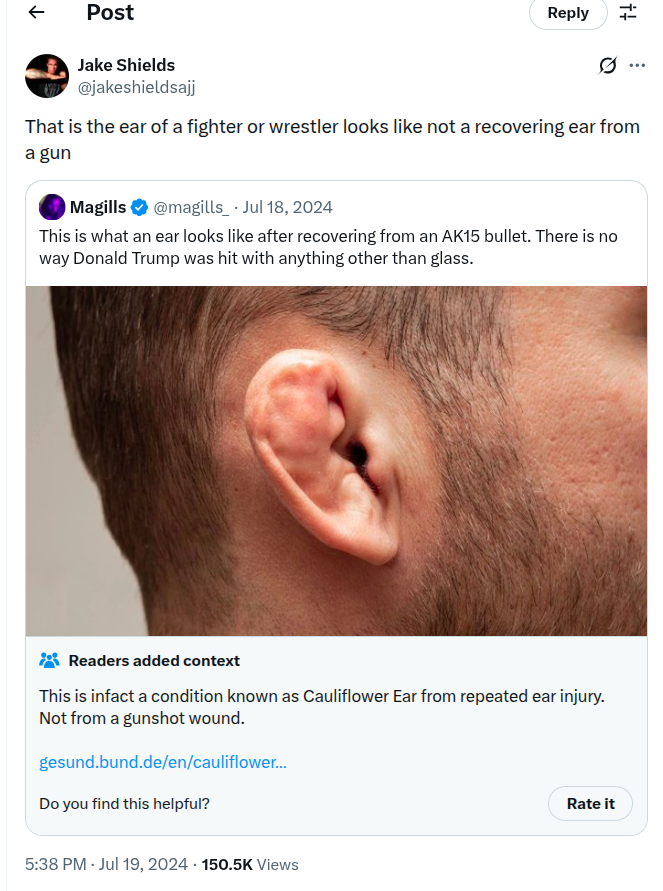
He claims that the left ear was hit by an AR15 and therefore Donald Trump’s ear could not have been hit by an AR15, because otherwise his ear would have to look the same.

Anyone who takes the trouble to check Twitter will find out that Jake Shields is not the source, but only responded to it.

He shows an Excel spreadsheet in this video, but it cannot be downloaded anywhere. That alone should make everyone very skeptical.

Here is a short video on his own channel about his theory.

Despite the fact that Algeist Nydream spreads a lot of nonsense in some videos, I have to admit that his idea that an audio analysis should be able to prove that the bullet was fired into the trunk is correct.

Assuming that the alleged location from which the shot was fired is correct, the difference between crack and thump, depending on the position of the microphone, must be significantly greater or smaller when the trunk was hit than when Charlie Kirk was hit.

A major weakness in his calculations is that he assumes that the alleged location from which Tyler Robinson allegedly fired is the true origin of the bullet. However, audio analysis can only determine this with certainty using audio recordings that are synchronized to the millisecond. In the attempted assassination of Trump in Butler, Greg Nichols (@greg_n) used the muzzle blast of the 10th shot fired by the Secret Service counter sniper, as his position was known and this muzzle blast was loud enough to be clearly identified on all audio recordings.

To my knowledge, no such analysis has been carried out for the Kirk assassination to date.

Another major weakness is the fact that Algeist Nydream enlarges the Mach cone beyond the target in order to determine the timing of the sonic boom (crack). In reality, however, this Mach cone stops growing as soon as the bullet is no longer flying through the air at supersonic speed, for example because it hits a target. As soon as the Mach cone “freezes” for this reason, the sonic boom continues to propagate like a normal sound wave perpendicular to the cone and also becomes quieter. The shock wave of the sonic boom, on the other hand, is approximately 120dB loud throughout.

How he makes this mistake can be seen in the following video from 2:37 onwards:

Thank you for your input Daniel59. I understand you have some opinions about Algeist’s (AN’s) points of view in the Butler shooting, however, I think it is best to keep the conversation related to the Charlie Kirk shooting especially bec I and probably others here are not knowledgeable about the Butler shooting. In regard to your comment that you do not see his work shared [YET], let’s be patient and work together with him. When I watched the discussion w/ TriggerSmart, AN said he was willing to share his work and collaborate with others. Let’s remember what our goals are, that we all want to find answers in the Kirk case and this is best done with open, patient, respectful discussion and working together. It doesn’t help our goal to insult others in the process; that alienates us which pulls us away from our goals of finding answers to our questions. I still recommend watching AN’s discussion with Trigger Smart.

No, if a physicist claims that an AR15 cannot fit into a backpack because he has overlooked the fact that space has not only two but three dimensions, this must be pointed out.

Because apparently he is a troll or suffers from a mental disorder.

5:18

No. At the time I began my TDOA audio analysis of the Butler shooting we did not know the locations that the 9th and 10th shots were fired from. So, I began my analysis assuming that shot 1 came from Crook’s position on the roof and then set out to see whether shots 2-8 also came from that same position. They did, to within a very tight radius. With that as ground truth, I then set out to determine the locations of shots 9 and 10. I ended up confirming the locations for the Butler ESU SWAT officer on the ground and the Secret Service counter-sniper on the South Barn.

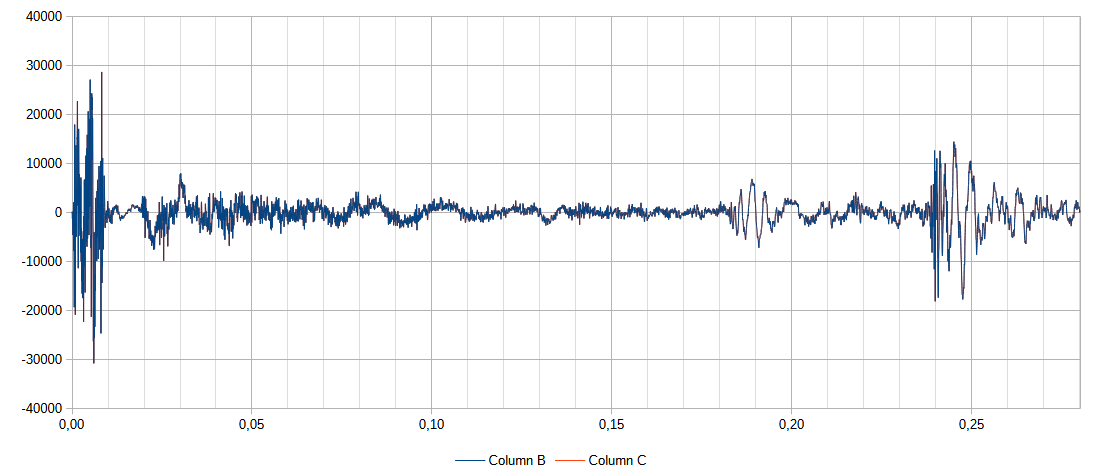
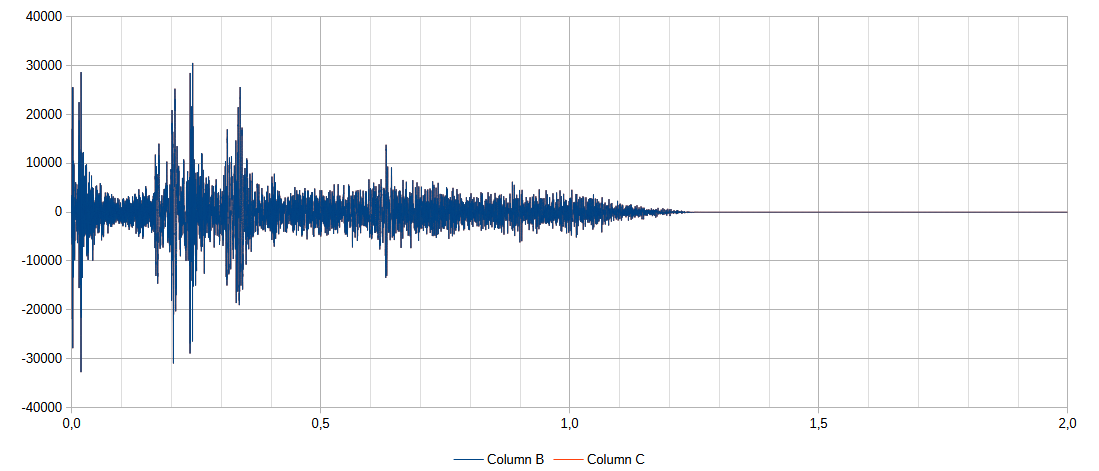
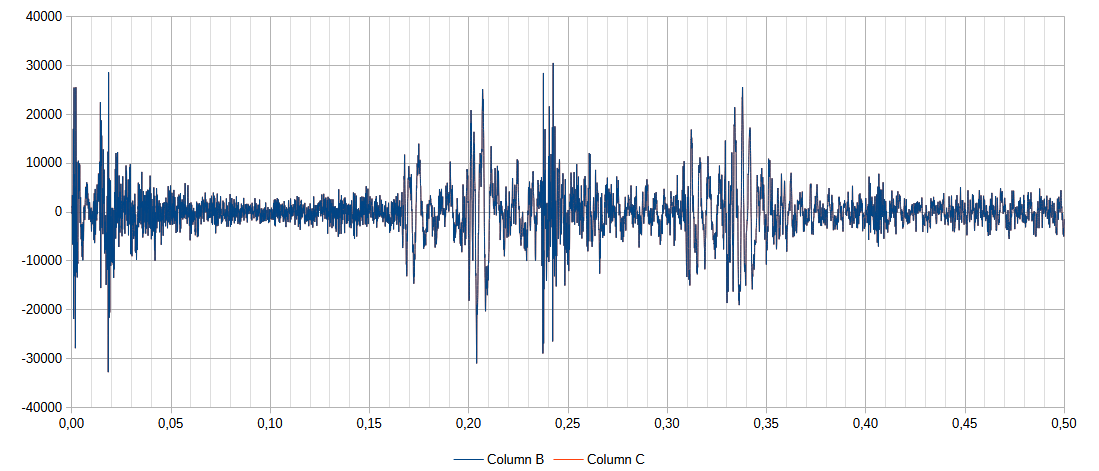
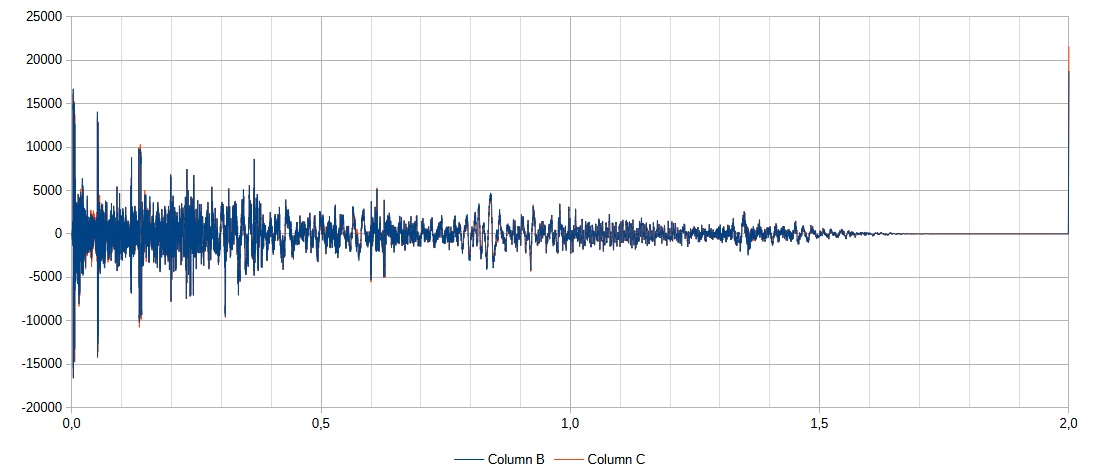
With only a single gunshot and no reasonable way to synchronize multiple cell phones on the order of a millisecond, doing gunshot audio analysis on the Kirk tragedy is a very tall order, and is perhaps impossible. (Though I know it has been tried.) So, aside from reading some of the analysis done by others, I haven’t spent much time on it and don’t plan to.

1 Like

In your opinion, is it possible to determine whether the bullet flew into the trunk based on crack-thump values?

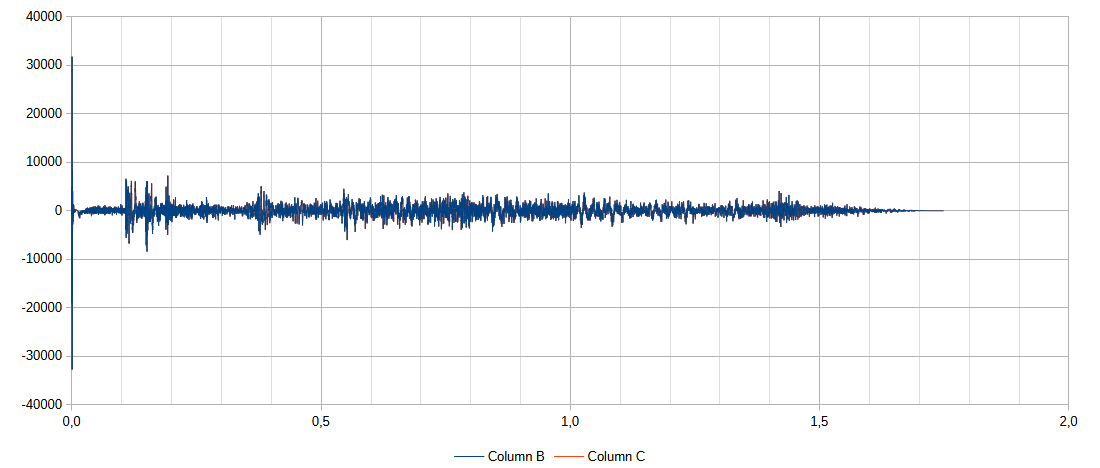
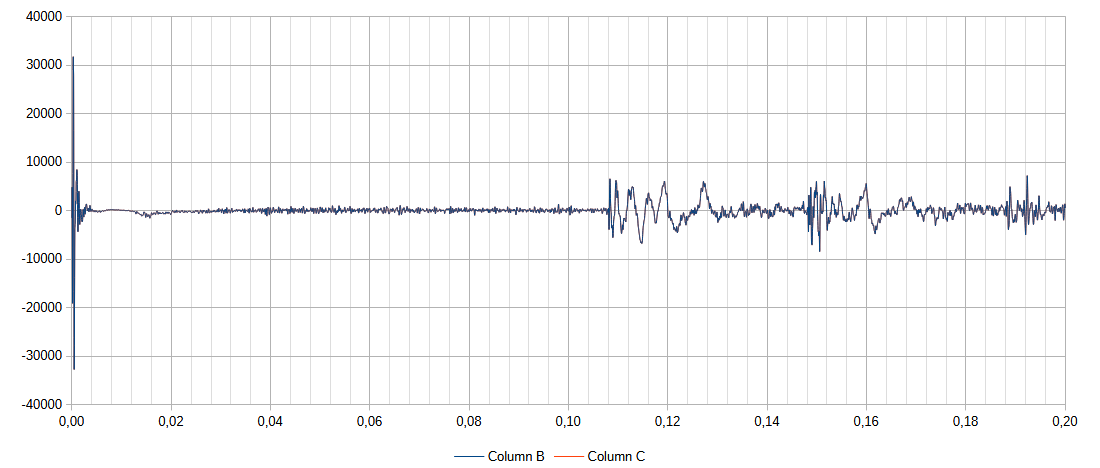
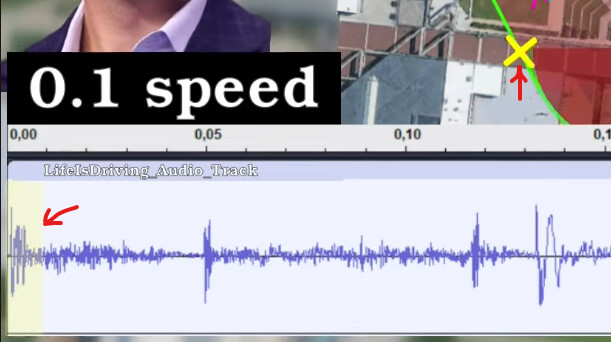
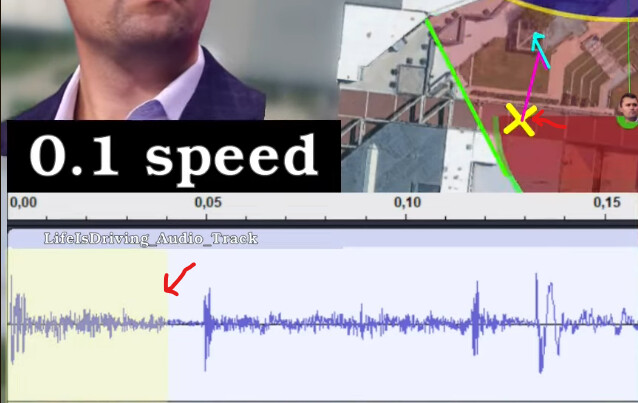
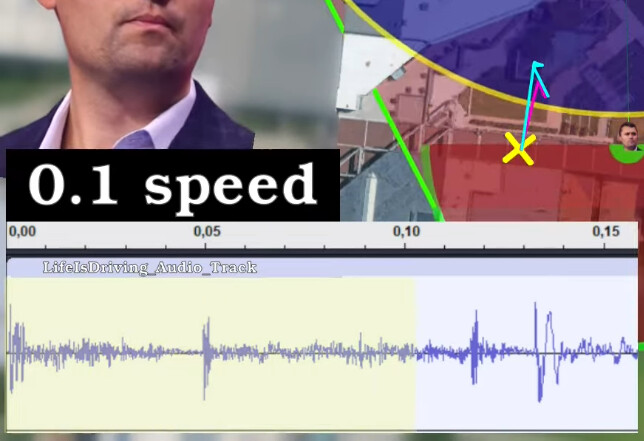
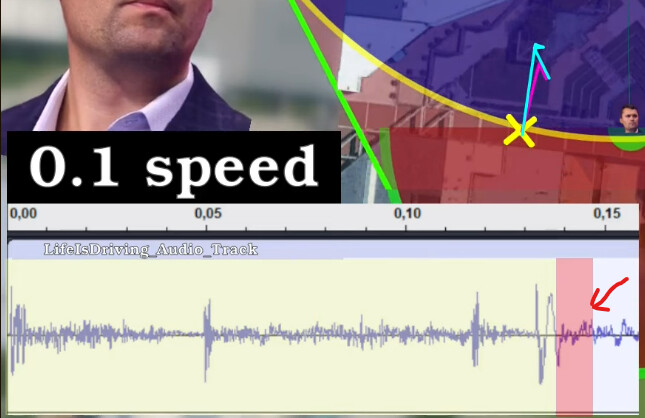
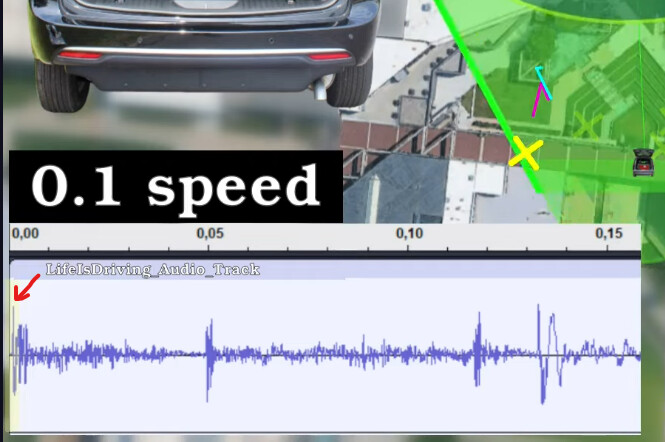
The crack-thump analysis that Algeist Nydream did in his video does seem like a reasonable approach, but the conclusion that he comes to at 2:48 seems off-base to me. I spent some time looking at the two examples he gives, the first beginning at 2:41 and the second beginning at 2:55. I paused the video and used the “,” and “.” keys to go back and forth frame-by-frame. In both cases, the graphical results that he is presenting do not match with what he is saying.

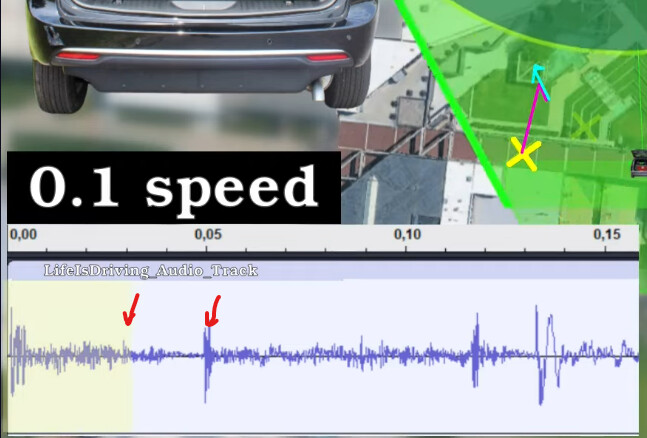
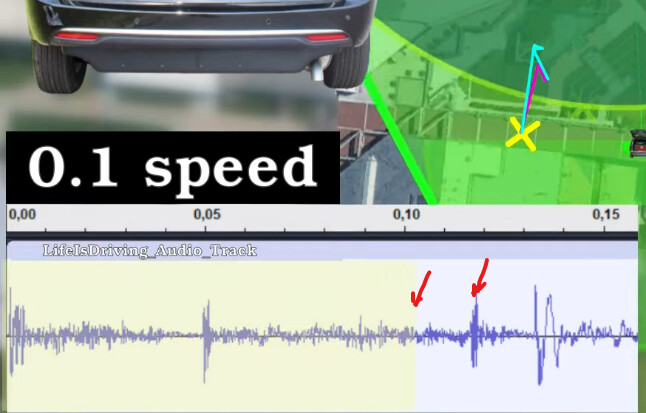
In the first case, when the mach cone hits the recorder, his audio cursor is well to the right of the audio spike:

When the first echo hits the recorder, the Audacity cursor is well left of the audio spike:

Same for the second echo:

And when the muzzle blast reaches the recorder, the Audacity cursor is to the right of the audio spike by about the same amount as it was for the the mach cone. So, that’s no surprise. How did he align this clip? He didn’t seem to be using the echos or anything to align it. Weird.

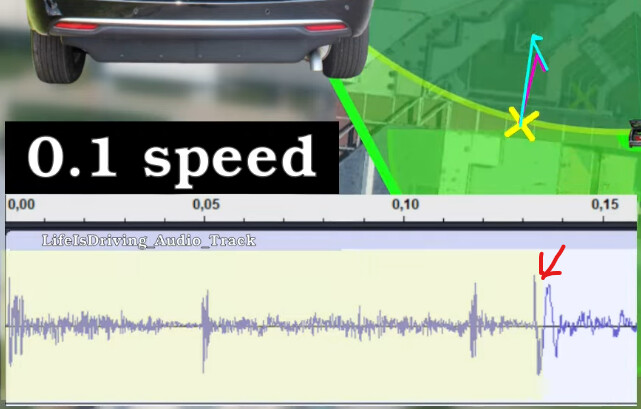
In the second case (trunk shot), the Audacity audio is correctly aligned with the mach cone hitting the recorder:

But when the first echo supposedly hits the recorder, the Audacity cursor is well to the left of the audio spike:

Same for the second echo:

And when the muzzle blast hits, the Audacity cursor does align with the audio spike. So, at least that makes sense.

My takeaway from this is that I’m not impressed by the supposed 0.150 second vs. 0.133 second difference that he is trying to point out here. Is the audio data really clean enough to reliably show a 17 millisecond discrepancy?

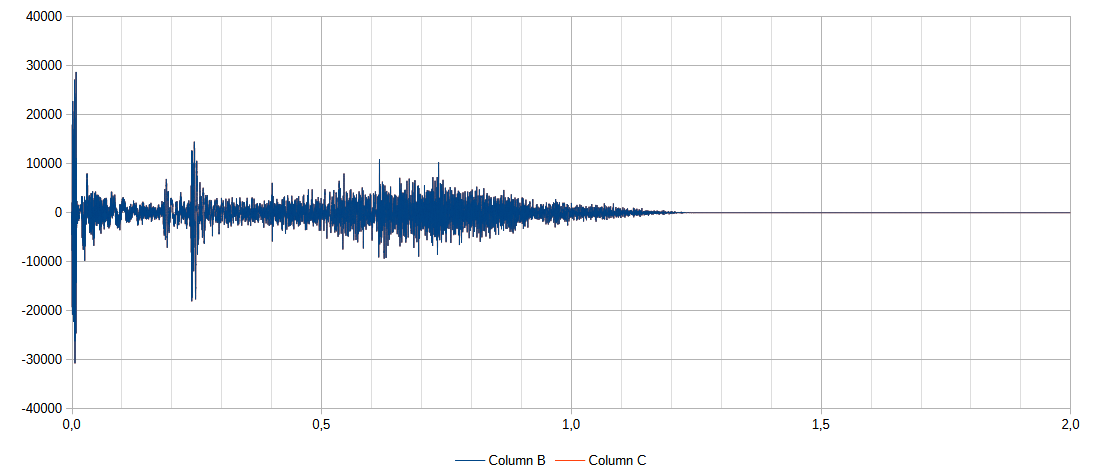
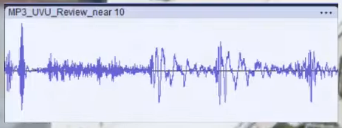
At 4:40 he tries to convince us that there are several other recordings on the left side that all support his trunk shot theory. But why didn’t he show us any of that data aside from a few brief, tiny screen shots, like this one:


That’s not a very pretty waveform. Could it be it was a bit challenging to determine the precise crack and boom times from these other recordings?

Anyway, sorry for going on so long. Back to your original question. With precise enough phone location data and clean enough audio waveforms, I would say “yes” it is possible to differentiate between a trunk shot and a shot at Charlie. However, given the real world uncertainties that come into play here, and how small the difference is in the two paths, I’m going to say I find it unlikely that the data is that good. However, I have not looked at any of the raw audio data myself, so my opinion is just based upon what I’ve seen others present on YouTube.

1 Like