Anybody know about small portable solar? Any advice?
Ecoflow has a good reputation, from what I can tell.
Stay away from Jackery, they haven’t kept up on technology.
1 Like
Thank you!
know how many watts you need to run for how many hours. Many of the portable units will actually list watt hours.
400 watt fridge x 12 hours (assuming you have sun everyday) x duty cycle (assuming 50%) = 2400 watthours. You can use a plug in device called Kill-A-Watt to track energy usage over 24 hours of any device(s) you plug into it.
Hybrid use, you run a petroleum generator for a couple of hours to help supplement solar panels on the solar generator to charge it up.
Add up the wattage on everything you have to run, and make sure it’s big enough to handle your largest use… like a coffee maker. The tough part is figuring out duty cycle.
It’s about understanding your loads, and managing expectations. With a fridge or even a freezer, if you allow for wilder swings in temperature, but manually plugging in and unplugging, you can cut the amount of time something runs, but that can be a bit more challenging.
1 Like
Thanks so much, I will share all of this with my husband, I really want to get some small solar.
What do you mean by this?
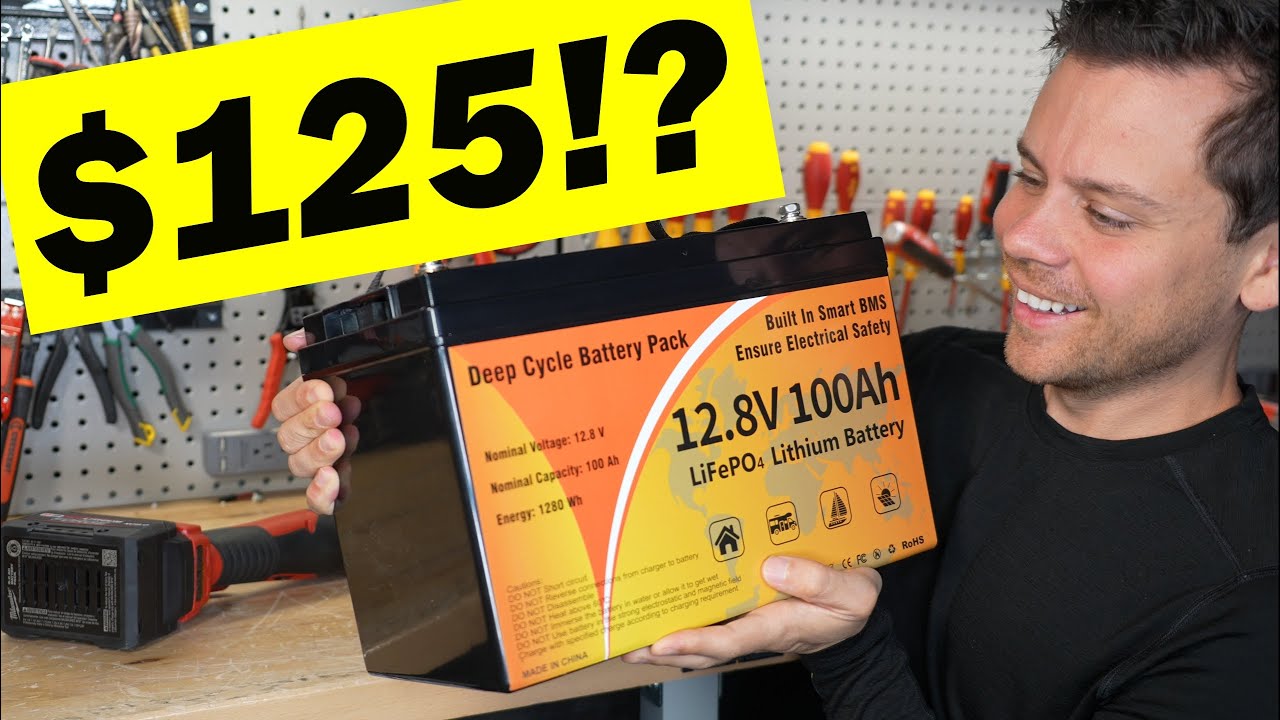
Watch all of this guy, many solar videos:
2 Likes
As far as I understand, their battery and charging technology and features are not competitive these days. They sell products with specs that were great back in the day, but not in today’s product landscape.
In my case, I have two separate “kWh bank accounts” with the local utility. I can deposit to, and freely withdraw from, the 3pm-10pm M-F high-use-period account during those hours. All other deposits and withdrawals are made to the low-use-period account. If an account goes to zero, further grid use during that period is charged at the applicable rate; there is no borrowing from the other account.
Once per year I receive a check for the total of the unused balances, which is paid out at roughly the average of summer and winter low-use-period rates (0.09/kWh). There’s enough April sun here in Utah to immediately build up the 3pm-10pm M-F high-use account balance without having to pay for actual energy used, assuming I delay-charge my Leaf EV after 10pm. I have received 6 checks so far totaling $2,700.
3 Likes
My city in AZ dropped that option, and only will pay you a couple of pennies per KW. No new configs can have a “bank”.
I thought maybe you were referring to the fact that their products were not LiFePO because they did lag a bit in upgrading from Li to LiFePO, but they are all that now.
I’m not sure what you mean by the specs not being competitive, but maybe this is an area in which I just don’t know enough.
In any case, FWIW @chiara-fjm we’ve used Jackery for years and they have always been very reliable and easy to work with. We have a few of them.
It doesn’t mean the “old” equipment isn’t good. It’s just not the best bang for the buck TODAY.
Look, I bought Goal Zero back in 2012. They were the only game in town back then.
It’s not that I wasn’t happy with what it delivered back then, but for purchases today, I would never recommend it.
Goal Zero, just like Jackery, developed a brand name, and then rested on their laurels. The addition of LiFePO4 for Jackery was badly needed. It’s good that they did it.
Ecoflow has higher solar efficiency and faster charging rates. For stationary / home / off-grid use, Ecoflow is better. For occasional light use, portability, camping, Jackery will do the job.
Thank you, I’m assembling the info and will give a Power Point presentation to the hubby. Just kidding, but I will give him all the info I get, this is really his area to make a decision. Above my pay grade, anything technical.
1 Like
You might be right about higher efficiency and faster charging rates with Ecoflow. I’ve never compared the two and so don’t have any data.
I know what you mean about Jackery for camping, RV, etc. FWIW, I think Jackery has made strides to offer larger systems for home back up. We have a 2,000 with two 2,000 battery packs attached (so 6,000 total) to run our fridge and chest freezer in an outage. We don’t take that sucker camping!
I know this is a WAG but what do you guys think electric power costs are going to do over the next 10 years? Double? Triple? Trying to do an ROI on a way to expensive solar system setup with 3 Tesla batteries…
Hard to justify with current rates but I know they aren’t gonna stay
1 Like
I don’t think a traditional ROI calculation should be the main . only criteria.
E.g. what if energy prices DON’T go up, but you have rolling blackouts multiple times per week ?
How much is not having blackouts worth it to you ? This can’t be easily captured in ROI, but is a possible outcome for lack of energy supply.
3 Likes
Roi is decades. As stated above, you can’t put a financial number on self sustaining
2 Likes
I don’t think the ROI model applies. For example, the numbers say you shouldn’t buy life insurance because you could just save the money and give it to your family. On average, you’d be better off.
What you’re solving for is - what if normal turns upside down?
In an insurance model, you ask, “What would I give up now, to know I’m covered later?”
I asked myself these two questions:
- “If some idiot in power managed to screw it up so I have no electricity, at any price, what would I be open to paying to turn it back on?”
- A LOT.
- If my only option was ‘camping mode’ worth of power, what would I pay to upgrade that to a level I don’t think about anymore?
- Also A LOT.
Food, power, water. They are cheap, now. It doesn’t provide intuition as to it’s value, only its price.
3 Likes
I’m in a state that does data centers, Pennsylvania. Our costs have already gone up to the point that some houses in our neighborhood that have electric heat paid $600 to $800/month in winter. And that’s before the next increase that’s baked in the cake already. We heat mostly with wood but with the minimal heating system usage mostly to circulate the air, our bill is @ $350/month in winter. My husband works from home so we pay the electricity for computers running a lot.
It’s not enough to justify installing solar on a short timeframe ROI. But we’re awaiting the permits to come through and we’re going solar with battery backup. We still have net metering but our utility is looking to phase that out since it doesn’t make them money. The batteries will be useful when we can’t bank summer production with the grid.
But we came to the same calculus that Chris laid out in a previous post that I’ll paraphrase badly. If nothing goes wrong in the world, it will be okay to have solar. If things go badly in the world and prices skyrocket it will be really good to have solar. If there’s disruption in the grid it will be great to have solar.
I’ll say from experience with long term loss of electricity during Hurricane Sandy that having some electricity vs. no electricity is life-changing. I’m just hoping we can get everything installed before the supply chain breaks and/or something else prevents installation from happening. We chose an installer that isn’t one of the big chains. The numbers come out as more upfront cost but none of the financing/leasing shenanigans. Plus we felt comfortable with their experience with electrical engineering skills. Most of the big solar companies aren’t really geared towards batteries. In a power outage and the grid tie is broken, most of their systems give one outlet that only operates when the sun is shining and the panels are putting out enough juice as an add on option. That might work for an outage of a couple of hours but didn’t seem worth it for us.
3 Likes
I have an Enphase IQ solar system with two relatively small IQ batteries (10kWh total). That’s far short of whole-house backup at night when the panels are not producing. The reason I bought small batteries is because, according to the company’s latest announcement, Enphase is bringing out a bi-directional EV charger sometime this year. It makes your EV’s battery look like just another IQ battery to the controller, so it integrates seamlessly as a backup battery. In my case, this will add a 62 kWh backup battery that I had already bought (we also have a gas-driven car for when the EV is “otherwise engaged”).
2 Likes