Originally published at: https://peakprosperity.com/ai-sovereignty-the-final-frontier-of-self-sufficiency/
Before reading, we encourage you to read, watch, or listen to The AI Horizon: Existential Risks to Work, Wealth, and Currency, Chris’s deep dive into artificial intelligence.
You learned to grow food because you understood supply chains could fail. You stacked gold because you understood fiat could collapse. You built community because you understood institutions would betray you.
But if you are not building with AI right now, you are already behind. And the gap is widening every single day.
Chris Martenson is right. AI replaces human cognition the way the Industrial Revolution replaced human muscle. But here is what most people miss: the Industrial Revolution took 200 years. AI is doing it in two. And unlike the last time around, the people orchestrating this transformation have been planning it for decades.
The technocrats are prepared. You are not.
This Did Not Start with ChatGPT
The technocratic movement, the idea that society should be managed by technical experts rather than democratic governance, has roots that most people never bother to trace. Elon Musk’s grandfather, Joshua Haldeman, was the head of Canada’s Technocracy Inc. party. That is not conspiracy. That is Canadian parliamentary record. The ideology that experts should manage populations through technology is a family inheritance for one of the most powerful men in AI.
Peter Thiel built Palantir with CIA seed money through In-Q-Tel. Palantir is now proposed as part of the technocratic reconstruction of Gaza alongside Oracle. Jeffrey Epstein funneled over $1.7 million into MIT’s Media Lab, specifically into AI research. Not charity. Strategic direction of the technologies that would eventually enable mass surveillance and behavioral prediction. The same networks that funded Epstein-connected AI research at MIT became the foundation for today’s surveillance infrastructure.
Sam Altman has publicly discussed allocating OpenAI compute resources to “solving” the labor displacement problem. Their solution is not more freedom. It is Universal Basic Income, digital identity, and managed dependency. Musk has been pushing UBI for years. The Gaza blueprint, where Oracle and Palantir are positioned to build the digital governance layer for an entire population, is not a one-off. It is a proof of concept for how they intend to roll this out everywhere.
These people knew AI would displace labor before they built the first model. Their answer was never to empower individuals. It was to create a new class of managed dependents.

Who Controls Your AI?
Two competing AI ecosystems are forming right now, and most people do not even know they have to choose.
On one side, you have closed-source AI. OpenAI, xAI, Anthropic, Oracle, Palantir. You cannot audit their training data. You did not choose their guardrails. Every query you send feeds their model and their surveillance capacity. Trump’s Stargate Project committed $500 billion in taxpayer-subsidized infrastructure to OpenAI, Oracle, and SoftBank. That is not a free market. That is a corporate-state merger with your money.
Defense Secretary Pete Hegseth gave Anthropic CEO Dario Amodei an ultimatum: allow unrestricted military use of Claude AI for autonomous weapons and mass domestic surveillance of Americans, or face consequences. To their credit, Anthropic refused on both counts. The Pentagon designated them a “supply chain risk.” The message from the Department of War was explicit: you can build AI however you want, but the government claims the right to weaponize it.
On the other side, you have open-source AI. Chinese models like DeepSeek v4 and Kimi are open weights, open source. Mike Adams is building BrighteonAI as a self-custody, open-source model with no content moderation. Here is the part nobody in Washington wants to talk about: it is likely that Chinese open-source models will overtake US closed-source models this year. The fact that they are open weights is a massive positive for individual freedom. You can run them, audit them, modify them, and own them.
And then there is the regulatory squeeze from the middle. The EU AI Act mandates content labeling and training data disclosure with compliance burdens that crush small open-source projects while leaving Big Tech untouched. Trump’s “Woke AI” executive order mandates “ideological neutrality” in federally procured AI, which is just content control from the other direction. The GENIUS Act regulated stablecoins like USD1 and Tether, combined with AI-powered surveillance tools like Chainalysis, create a financial control layer that makes CBDCs almost unnecessary. They do not need a central bank digital currency when they can surveil every stablecoin transaction in real time.
Both the regulatory approach and the deregulatory approach concentrate AI power in institutions. Neither framework centers you.
What Happens When You Actually Build With AI
I am not writing this from the sidelines. I have been building with AI for 3 years, and the results are not theoretical.
My productivity increased roughly tenfold last year. I anticipate a similar jump this year. Mike Adams is right when he says AI adds about 20 IQ points, along with the ability to automate and improve your processes. That is not hype. That is my daily experience.
But here is the critical distinction most people miss. I do not use Big Tech training data to search my own knowledge. I store all of my content, every podcast, every article, every research document, on my own hardware. My AI system searches my data, not OpenAI’s data, not Google’s data. When I built the outline for this article, the AI pulled from my own podcast episodes about AI, my previous articles, and my advisory board sessions. It helped me craft an argument from my perspective, trained on my content, serving my goals. Not the other way around.
The benefits are cumulative. The longer you use and train your AI systems, the better they become. Starting later puts you at a real disadvantage, though the rate of improvement in the underlying technology may partially close that gap. But right now, today, people who are completely ignoring AI, who see it as anything from vaporware to a bubble, are going to be left behind. This is not like social media, where you could opt out and be fine. AI is infrastructure. Ignoring it is like ignoring the internet in 1997.
The technocrats are building with AI every single day. Are you?
What I Have Built With AI
I am not talking theory. I am building and shipping real products with AI every single day. Here is what one person with AI tools has built and deployed in the last year.
TechnocracyAtlas.com is a crowdsourced research platform for investigating technocracy and corruption. When you land on the site, you see a counter showing over 755,000 searchable documents and 75 million words of research across 26 collections, including court filings, government documents, books, podcasts, and video transcripts. The centerpiece is an AI research chatbot that lets anyone ask questions in plain English and get answers with source citations pulled from the full archive. There is no paywall. There is no corporate filter. The site also hosts the largest searchable archive of Epstein investigation materials, including over 95,000 photos analyzed by AI with over 1,000 faces identified. I used AI vision models running on local GPU hardware to caption every photo, and built a vector database so users can search images by description instead of scrolling through thousands of files. The AI does what would take a team of researchers months in seconds.
OwnNothing.org walks people through what I call the 8 Dimensions of Surrender. It is an interactive site where you take quizzes across eight areas where corporations and governments have quietly stripped away your autonomy: attention capture, money surrender, food control, health capture, government surveillance, school surveillance, ownership erosion, and contract capture. Each quiz gives you a personalized score. Four companies control 85 percent of meat processing. Insurance premiums are up 47 percent in five years. Fifty million students are tracked 24/7 by surveillance software in schools. The site makes these facts personal. It also includes a Contract Scanner that analyzes the click-wrap agreements most people blindly accept, showing you exactly what rights you are signing away. There is an AI Copilot that gives you personalized recommendations based on your results.
FreedomForge.io is the hub that ties the ecosystem together. It is a project incubator for building what I call parallel systems, freedom-oriented alternatives to mainstream technology, money, and healthcare. It hosts workshops on privacy tools, teaches people about privacy coins like Zano, and showcases community-built projects. The tagline says it all: They are building chains. We are forging freedom.
Oasara.com is a medical sovereignty marketplace. Americans pay three to ten times more for the same procedures compared to international facilities. The site connects patients directly to 518 internationally certified healthcare facilities across 39 countries, with savings of 50 to 90 percent. A knee replacement that costs $50,000 in the US costs $6,000 at a certified facility abroad. When you sign up, an AI-powered chatbot walks you through your options, asking about your procedure, budget, and preferences, then guides you to matching facilities. No insurance company middleman. No hospital billing games.
TheAaronDayShow.com is a full podcast media platform. Beyond the standard episode archive, it has an AI chatbot built on top of every transcript from every episode I have ever recorded. You can ask it a question, and it searches my actual words, my actual arguments, my actual sources, and gives you an answer with citations. It is not pulling from the internet or some generic training set. It is searching my content. This is what personal AI looks like in practice. The transcripts themselves are processed through my own system called RAGTIME, which runs on a DGX Spark GPU and converts audio to searchable text that gets stored in vector databases.
DaylightFreedom.org is the central gateway for the entire ecosystem. It connects all of the projects above, hosts the newsletter, and provides booking for speaking engagements and workshops. It also handles cryptocurrency donations through Zano, Bitcoin, and Ethereum for people who want to support the work with financial privacy.
Day2026.com is my campaign site for US Senate in New Hampshire. The entire site was built with AI tools. When you load it, a full-screen video plays the campaign anthem “Fan the Flame,” which was itself created with AI. The site tracks legislation, hosts campaign memes and music, and organizes volunteers. The message is simple: this is not about left versus right. It is about humanity versus technocracy.
I also produce AI-generated music. “Ditch the Dollar” is an anthem for financial sovereignty that was produced entirely with AI. I wrote the lyrics with Claude. I generated the music with Suno. I created the visuals with AI video generation tools. I assembled it into a 4K music video using a custom production pipeline. No record label. No production studio. No permission needed. One person and AI tools. You can watch it here: https://www.youtube.com/watch?v=Npv-2j595VA
And these are just the things the public sees. Behind the scenes, I run a 19-tool AI dashboard I built called Synaesthesia that handles my daily operations. There is a Podcast Orchestrator that manages every episode from initial research through final distribution. An Episode Pre-Production tool where AI advisory board personas challenge my framing before I even hit record. A Live Marketing generator that writes social media posts with viral hooks and identifies target accounts. A Visual Studio that produces slides, thumbnails, and avatar videos. A Post-Show tool that uploads finished episodes and syncs chapter markers to YouTube with one click. An Article Generator that runs a seven-phase writing workflow, which is how this article was built. A Music Video Generator. A Meme Studio. An AI Book Generator. An Audiobook Reader that turns documents into narrated audio. A Research Tool that pulls from multiple AI models simultaneously. And a RAG Chat that searches my entire personal knowledge base, every podcast, every article, every research document, stored on my own hardware and serving my goals.
All of this was built by one person using AI. That is not the future. That is right now. And if I can build this, imagine what you could build if you started today.
There Are No Political Solutions
Every political effort to address AI trends heavily against individual freedom.
Trump meets with Big Tech CEOs and commits half a trillion dollars to Stargate. His Defense Secretary threatens companies that refuse to build autonomous weapons. The EU AI Act creates compliance barriers that favor entrenched corporate players over individuals and open-source builders. International governance proposals through the World Economic Forum push toward a framework where a standing council of institutions manages AI development globally, with human sovereignty subordinate to institutional management.
There is even a proposed AI constitution being discussed in international circles where AI systems could hold rights. Think about that. A framework where the machine has standing, and you do not.
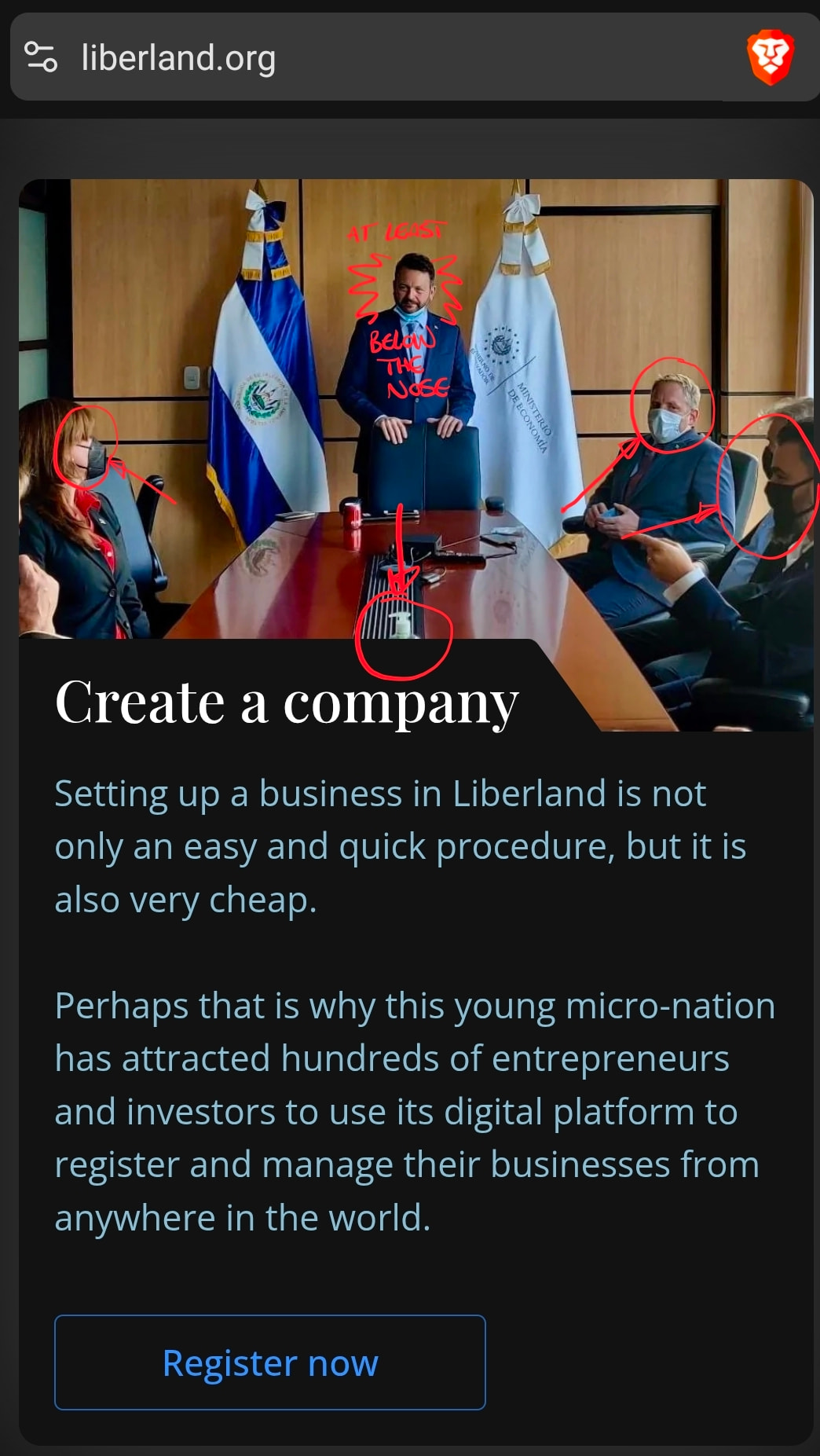
Meanwhile, Liberland, the micronation on the Danube, is running the most interesting experiment on the planet. They are implementing hybrid human-AI governance. AI judges handle preliminary arbitration. Ninety percent of bureaucratic processes run on blockchain and AI. Citizenship is consent-based. Participation is voluntary. It is the exact opposite of what the EU, the UN, and Washington are building.
The lesson is simple. Do not wait for politicians to protect you from AI. They are using AI to expand their own power. Build your own.
Your AI Sovereignty Roadmap
The most important thing is that you start now. The more you engage, the more sovereign you will naturally want to become. Think of this as a spectrum, not a single leap.
Start this week. Download Brightu.ai. This gives you a self-custody AI assistant that does not report back to Big Tech. Ask it questions. Use it for research. Get comfortable with having AI work for you instead of harvesting your data for someone else.
Start this month. Play with AI-generated video and images. Try Higgsfield.ai as a starting point. Create your first AI content. Understand what is possible and why the creative economy is about to be completely restructured.
Start this quarter. Download Cursor and start building your own software applications. I use Claude from Anthropic for this. It is currently the standard for ease of use and power, and it is the only closed-source model I still rely on. But keep an eye on DeepSeek v4, which could become the first free, open-source model that also leads the technological frontier. Building your own tools with AI is the ultimate sovereignty move.
Make it ongoing. Create AI music with Suno. Explore content creation across every modality. More advanced tools like OpenClaw exist, but start simple. Some advanced platforms carry security considerations, and you want to know what you are doing and create a separate environment to protect your data before you go deeper.
Each step moves you along the spectrum from consumer to user to builder to sovereign. The longer you wait, the harder it becomes to catch up. AI skills compound like interest. And right now, the technocrats have a massive head start.
The Final Frontier
You learned to grow food. You stacked precious metals. You built community. You did these things because you understood that systems designed to control you will eventually fail you.
AI sovereignty is the next frontier. Not because AI is the enemy. I build with AI every day. But because whoever controls your AI controls your information, your productivity, your creative output, and eventually your economic survival.
The surveillance infrastructure already exists. The technocratic lineage stretches back generations. The political class is not coming to save you. They are building the control grid with your tax dollars and calling it innovation.
But the tools for freedom exist too. Open-source models. Self-custody AI. Local hardware. The same technology they are using to build the digital control grid can be used to build outside of it.
The race started years ago. You are late. But you are not too late.
Start today.