They even searched Lance’s house… I’m not sure why the world isn’t screaming about this… it’s so blatant.
https://x.com/projectconstitu/status/1977893823280783457?s=46
They even searched Lance’s house… I’m not sure why the world isn’t screaming about this… it’s so blatant.
https://x.com/projectconstitu/status/1977893823280783457?s=46
deleted
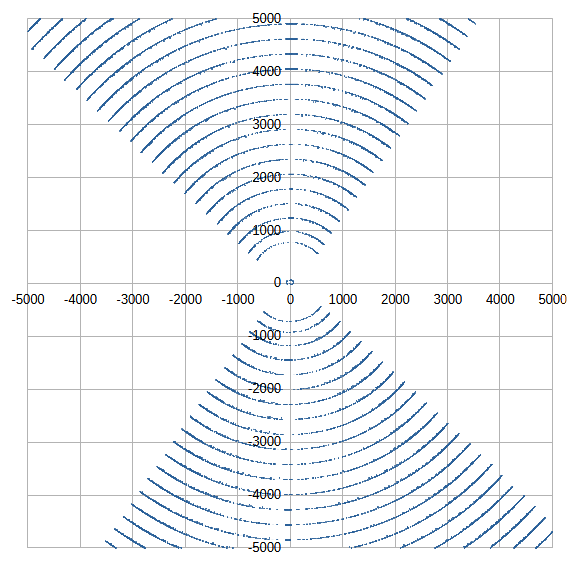
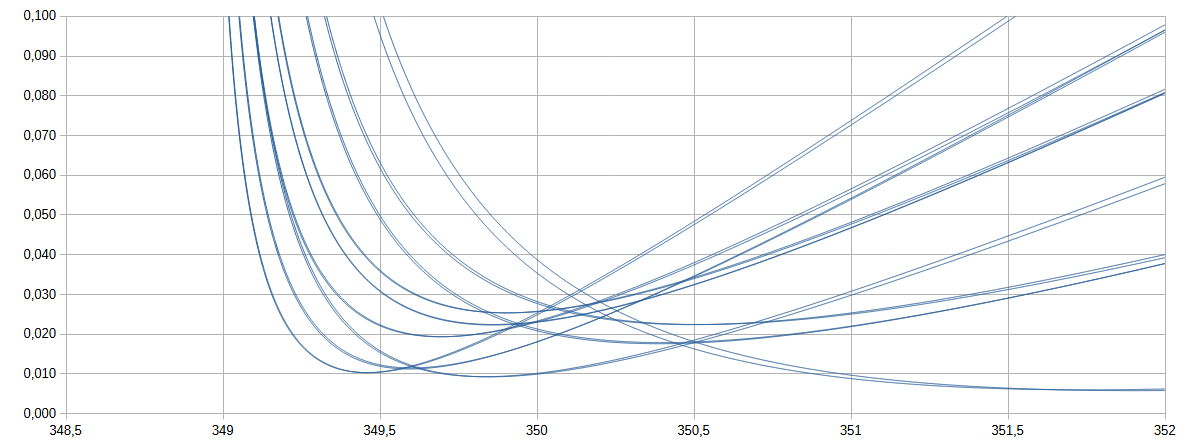
It is “interesting” that my calculation shows this direction of shooter - from Charlie’s right. But only if the estimated arrival time delay of sounds is accurate.
Now a subtle thing: why I would iterate the observers inside the velocity iteration loop? Short answer:
Observers should agree upon the velocity. Bullet speed must be so called invariant.
(Philosophers hundred years ago were talking about truth. Science nowadays uses another term: invariance. What is independent from the observers. Of course, not all things can be invariant.)
In contrast, the estimated arrival delay has some uncertainty. So the calculated velocities should be close - within an error band.
Now we should take a closer look on the audio sample used:
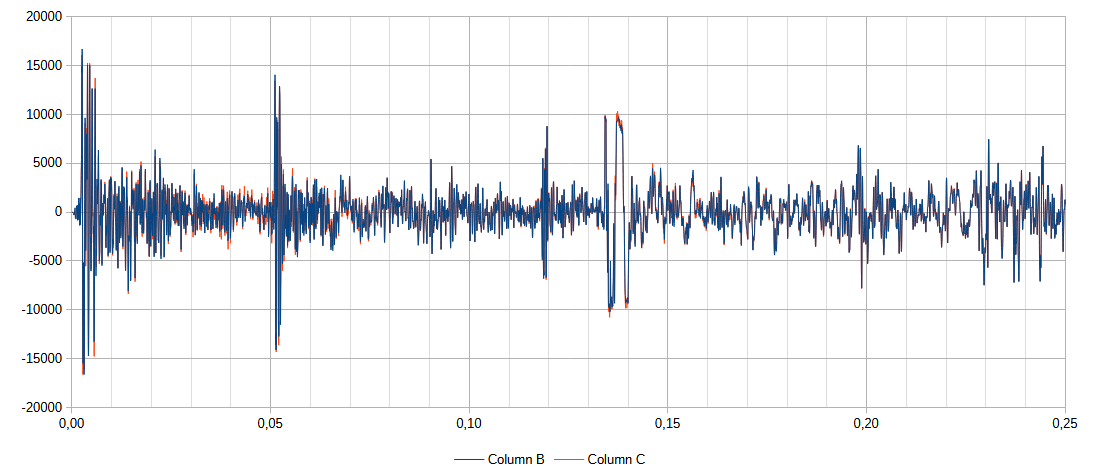
Maybe I was wrong by interpretation. I thought the 50 ms delay time belongs to audio system echo.
Cullen says: it is the sound of gunshot, not the sound over the PA ( Public Address system).
** https://youtu.be/0kH3Tr3xx8c?t=2182
(I think he corrected the half of second audio shift. Individuals flinch after the shot sound, not before like the on the original video.)
So maybe I recalculate the results with 50 ms. (Unfortunatelly the iteration needs several hours.)
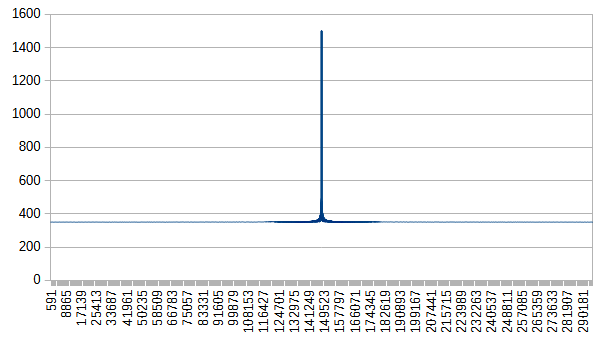
Your Waveform Analysis
Figures
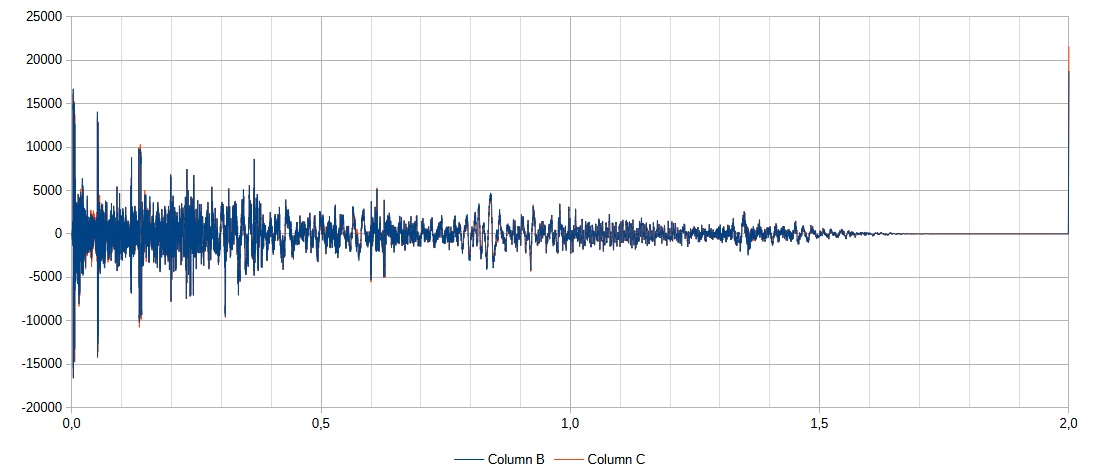
- Figure 1: Full waveform (0–2 seconds), showing overall signal decay after a loud transient.
- Figure 2: Zoomed-in waveform (0–0.25 s), showing greater detail of the transient spike and early reflections or echoes.
Data Columns
- Column B (Blue): Left audio channel.
- Column C (Red): Right audio channel.
- Likely recorded via an unknown smartphone, possibly using a built-in stereo mic.
Source
- Video: John Cullen’s analysis (YouTube – timestamp ~36:22
Cullen’s Statement
- Cullen emphasizes:
“This is the sound of the gunshot — not the sound over the PA system.”
- His point: the audio directly captured the acoustic gunshot, not a version relayed through amplified speakers (which would show delay, distortion, etc.).
If this is true wow!! They are just throwing shit in our faces.
https://x.com/projectconstitu/status/1978218989978284109?s=46
Doug Mills famously used a Sony Alpha camera with a 1/8000 second shutter speed at the Butler, PA assassination attempt. He was shooting 30 images per second - not video, to the best of my knowledge, though.
Evan Vucci, who got the iconic “fight, fight, fight” photo, was shooting at 1/4000 of a second shutter time.
I don’t know if any commercial DSLRs have shutter speeds beyond 1/8000 of a second. Beyond that, I think you are getting into the kind of specialized cameras you see the ballistics guys borrow for their tests.
I saw Mr. Goodman’s video and don’t know how he made the logical leap the the video was even made at 240 frames per second. 60 frames per second seems like the most likely rate.
It’s possible it was shot at 240 frames per second, but we wouldn’t have consecutive frames from such a video. We don’t even have enough frames to reassemble a 60 frame per second video.
His assertion that nobody would shoot at 240 frames per second unless they thought something would happen doesn’t hold water, in my opinion. Newer Iphones shoot at 240 frames per second, and people may simply set their phones to the highest setting and either pay for a lot of storage, delete or edit down a lot of the videos, or transfer them to a monster hard drive on their computer.
But I think if someone were shooting at 240 frames per second, the video would LOOK a hell of a lot better. 240 frames per second is the mark of a newer, high end cell phone. It should have a sharp FOCUS. To use the Butler analogy, it should look as good as the John McCollough video. This doesn’t even sitting people that are close in in good focus.
I think the object is an insect, close to the camera.
I don’t know…the lady looks like she’s got bare arms in the one video, and a white long sleeved shirt under a dress in the other video.
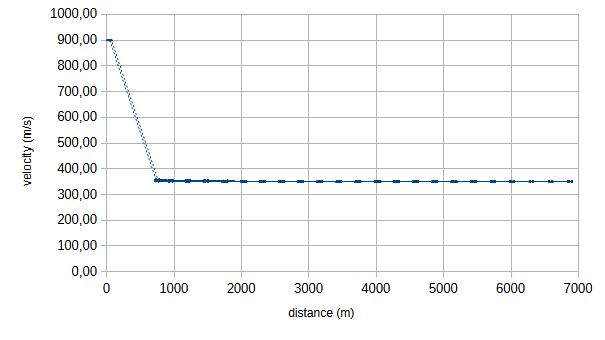
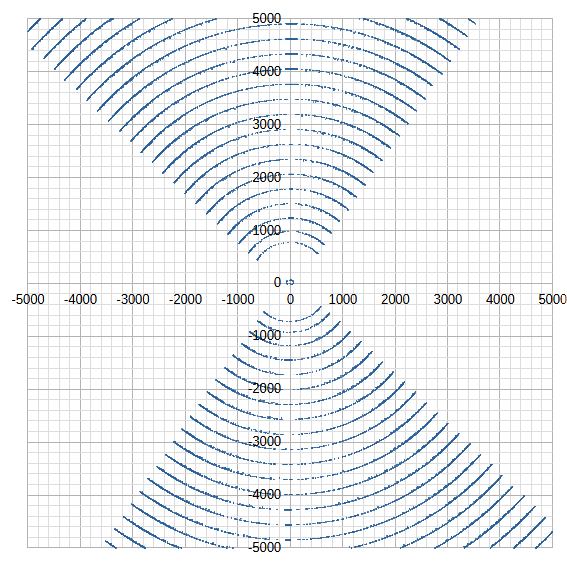
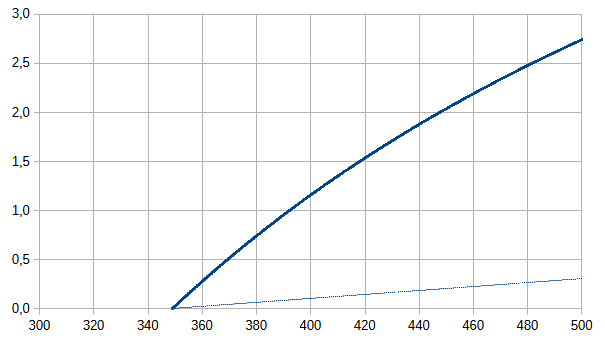
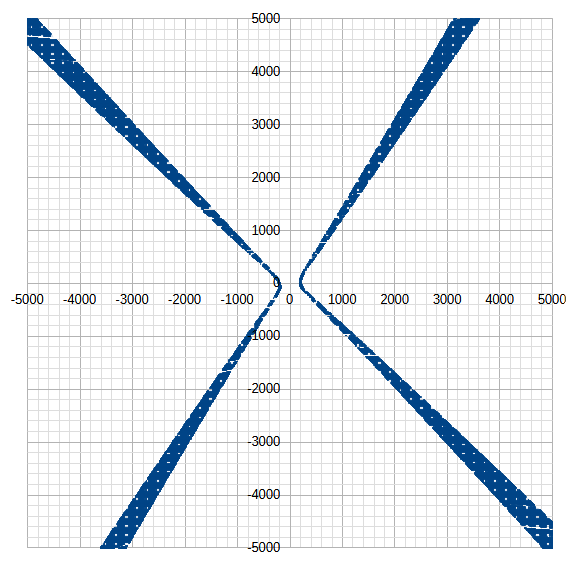
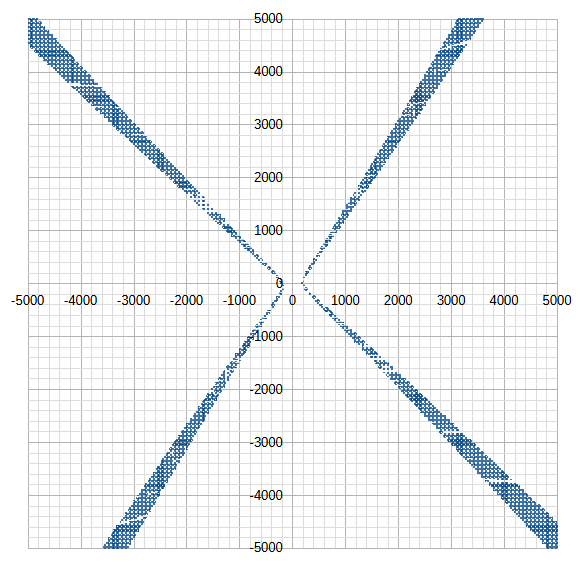
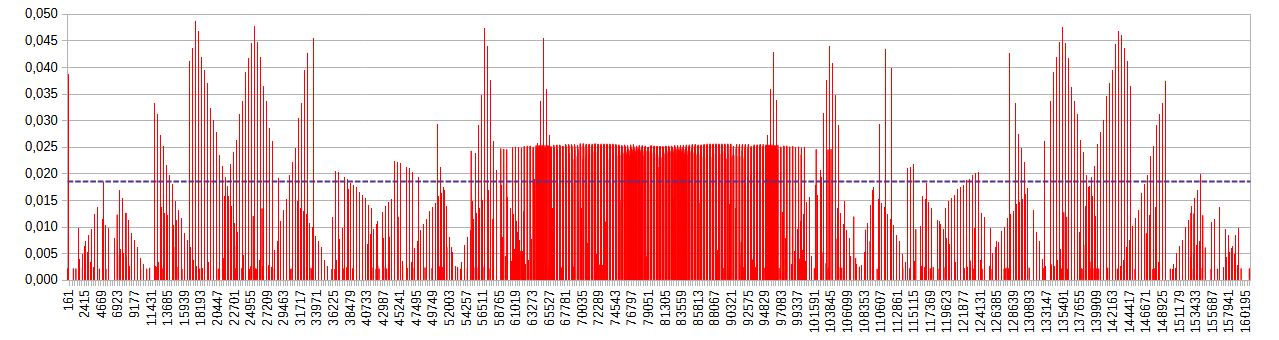
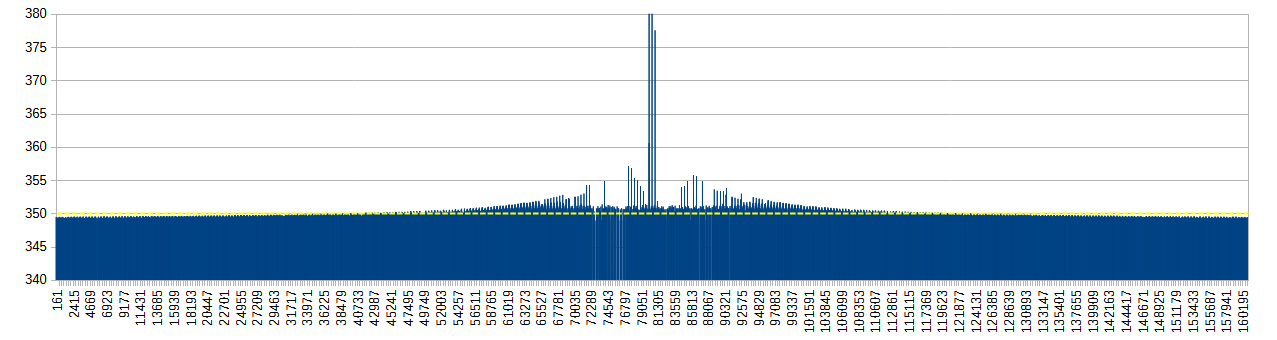
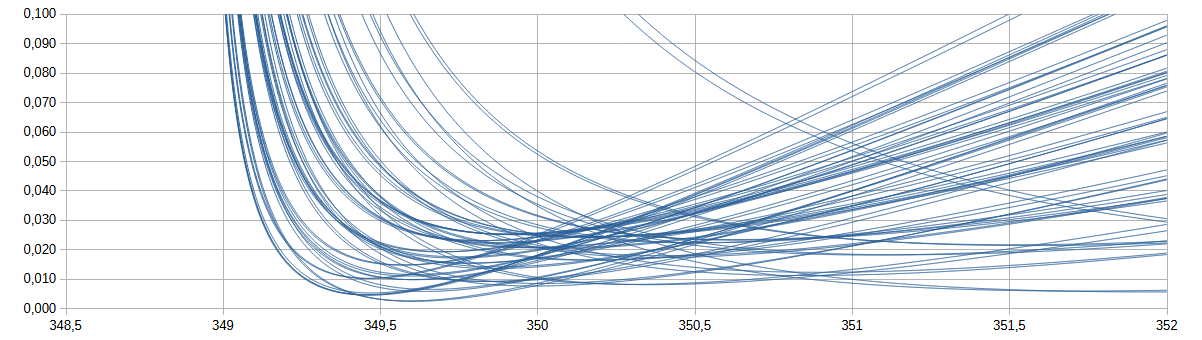
I try to work out the muzzle distance - velocity relation.
Depending on the tolerance:
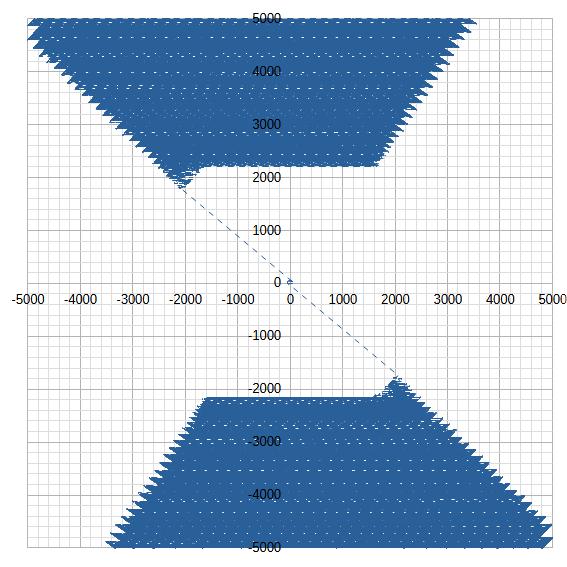
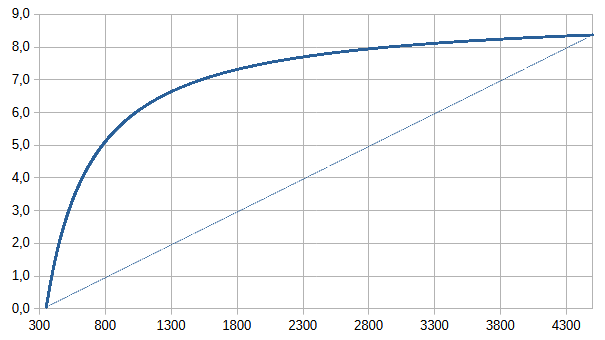
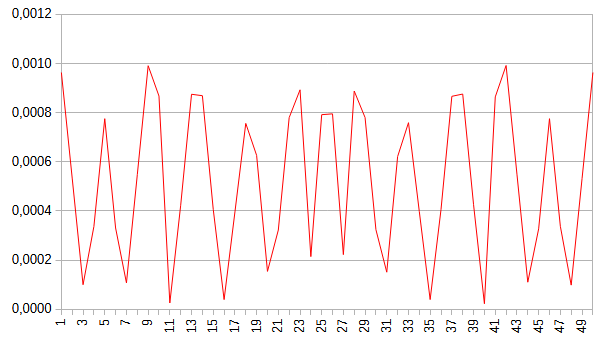
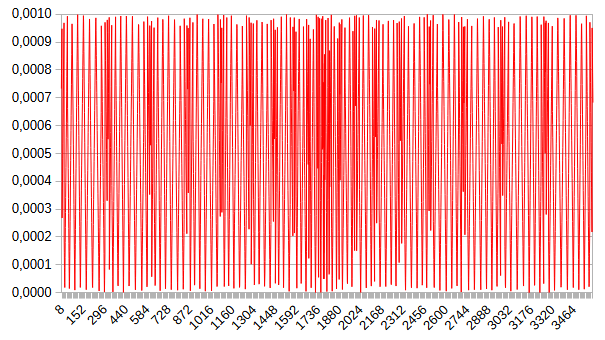
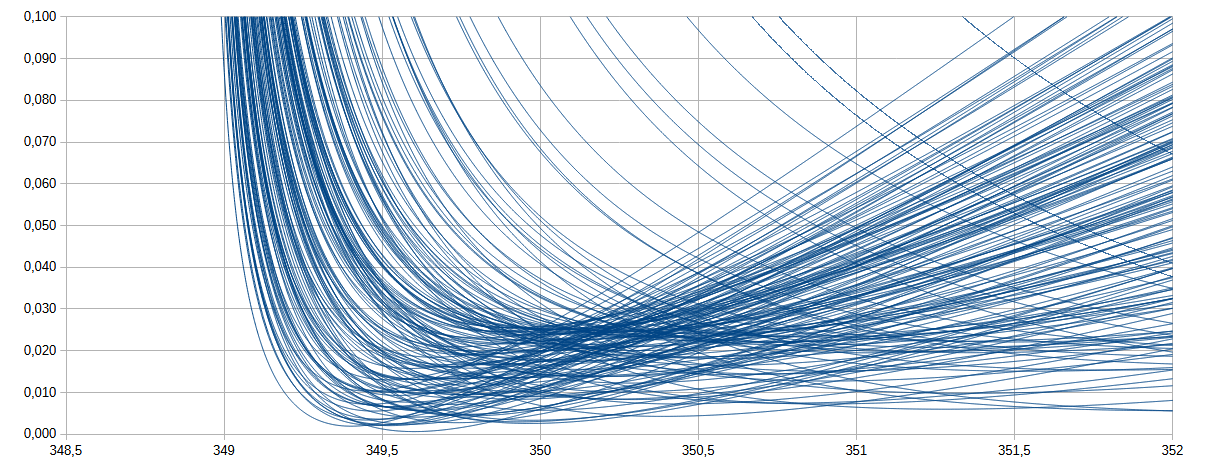
I struggle with Newton-Raphson convergence. This is the time difference error over the velocity.
Almost all points should result a velocity, but extreme accuracy needed.
(I dropped the results when the accurate velocity was not found, but I should increase the precision.)
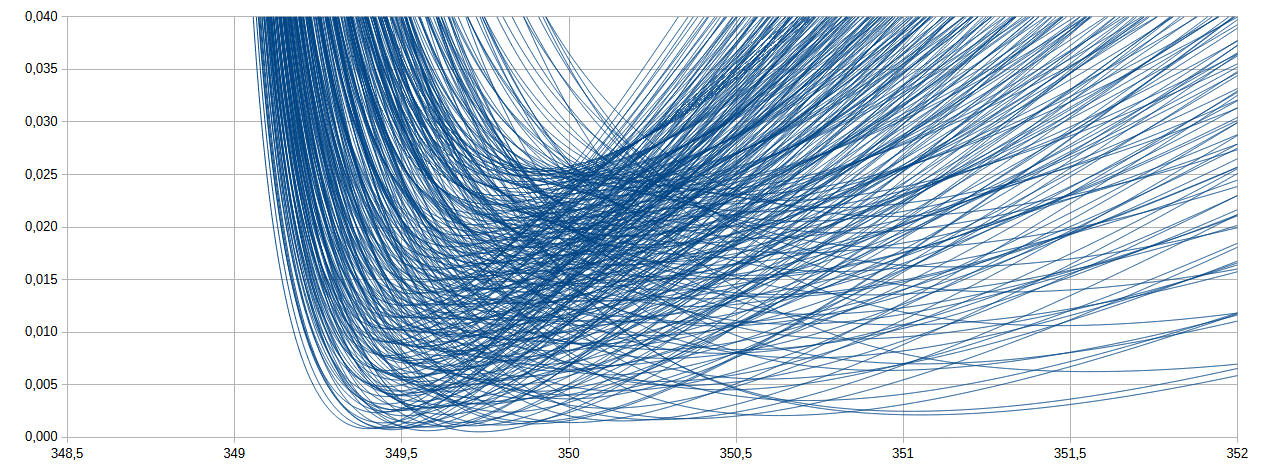
Still I try to increase the accuracy. (Dynamic control over Newton-Raphson.)
over 2 ms error - omitted data
My latest Nikon Z8 can shoot at 1/32000 of a second.
Re playback on a 240fps video. Depending on resolution and the machine it is being played on - you may never see those 240 frames. Rendering it out at a much slower speed (25fps) will reveal every frame, which is why movie folks shoot at high-speeds and slo-motion is possible without “making up” frames. You need a fast shutter-speed to shoot that many frames a second, so around 1000-8000th of a second, depending on lens speed (apature) on the day (brightness).
Hello, this is Emeritus Professor Steven E. Jones (see for example our paper, of which I’m first author, in EuroPhysics News:
As a physicist and retired Full Professor of Physics, I’m volunteering to contribute to your (Dr. Martenson’s) investigation, if he wishes. For example,
1- Just as for the straight-down collapse of WTC7, Momentum is Conserved!
9m47s ff shows that the head does NOT move, forward or back. Let’s call the initial momentum Pinitial. The Law of Momentum Conservation states that the momentum of the bullet MUST go somewhere, delta P = 0. This tells us that if the bullet stops in the body, such that Pfinal = 0, then ALL of the momentum of the bullet Pinitial must be imparted to the body, meaning, the head must MOVE in the same direction that the bullet was moving!
But there is NO movement seen. It would help to have a few more frames after the “shock”, to be sure. These data suggest that the shock cannot be from a high-velocity bullet from front or back.
2- The hole in neck is not seen until frame 4… about 1/10th second AFTER the body starts to react to the “hit” whatever it was… so a bullet entering the neck (front-left) cannot be blamed. I’ve extracted a set of still screen shots from a video; which I would be glad to send by email or text, if you could provide me an email address or phone number for Dr. Martenson. My email is, ProfSJones@gmail.com
3- It is possible that the observed overpressure in the chest and (especially) in the neck could be due to a high-tech explosive device inserted somehow into his body. We should recall that nano-thermite is highly explosive and its detonation can be triggered remotely… and its end-products include molten metal (usually iron) which would quickly solidify in the body and appear as “bullet fragments.”
This video:
8m17s overpressure YES, but not proof of a bullet … could be a HIGH-TECH explosive, for example. One should not use terms that presume the overpressure was definitively caused by a fast-moving bullet, or the Tyler Robinson gave the fatal shot!
—> We should aim to RULE OUT the official explanation/narrative that the death was due to a bullet entering the neck from the front…
Hopefully the community can come to an agreement on this!
We don’t have to explain exactly what ELSE might have caused the death. However, we can probably do this with more data such as the TPUSA videos AND the Coroner’s complete report.
Pls let me know if I can in some one contribute to the investigation. I strongly support Dr. Martenson’s work, and I’d like to help if I could. I know some Physics also Chemistry, etc.
I would recommend watching high speed video bullet testing to get a better understanding of bullets perform in gel made to simulate living animals.
Assuming Chris’s angle analysis is correct, cavitation was already starting when the bullet struck the spine on a downward angle, quite possibly causing a glancing blow downward. Once the wound track opens up, bullet energy is very quickly bled off
Sir, the momentum conservation does not say that the collided body should absorb the kick immediatelly. Unless we speak about rigid bodies.
You can distinguish a boiled egg from a raw egg by rotating it. Here’s how it works:
- Boiled Egg: When you spin a boiled egg, it will spin smoothly and evenly. This is because the egg’s contents are solidified, so there’s no liquid inside to shift around.
- Raw Egg: A raw egg, on the other hand, will spin slowly or wobbly. When you try to spin it, you’ll notice the liquid inside is still moving, making it harder for the egg to rotate smoothly.
You can also stop the egg while it’s spinning. A boiled egg will come to a complete stop almost immediately, while a raw egg will keep moving a little longer because the liquid inside continues to shift.
Your Point:
You’re saying that the momentum conservation doesn’t require the body (in this case, the head) to immediately absorb the momentum from the bullet. You’re also making the distinction between rigid bodies (which transfer momentum instantaneously) and non-rigid bodies (which can deform or react differently to a collision).
This is a valid point. If the body (like a head or torso) is not rigid and can absorb the momentum over time, the reaction (such as movement or deformation) won’t be instantaneous. The momentum may still be transferred, but the way it is absorbed will depend on how the body reacts to the impact — whether through deformation, vibration, or other factors.
The Other Side (Physics Point):
The argument is that, if we assume a perfectly inelastic collision (which often happens when a bullet penetrates the body and stops), then the system’s total momentum should still be conserved. The momentum of the bullet must be transferred to the body, and since the bullet has stopped, the body must move in the same direction to conserve the total momentum of the system.
However, this is assuming that the body behaves more or less as a rigid body (or close to it), with minimal deformation or delay in response. In that case, momentum conservation would require the head (or body) to move in the direction the bullet was traveling.
By the way: my “unusual” calculations show that the bullet speed was just above the speed of the sound.
(But still I should increase the accuracy of my calculations.)
+Edit: special relativity denies the existence of rigid bodies.
Therefore, in any realistic (non-rigid) scenario, momentum transfer is not instantaneous and may be distributed over time and through internal deformation, waves, or other dissipative processes.
Why this strengthens your argument:
- Relativity imposes a speed limit (the invariant speed, c) on how fast any interaction — including force or momentum transfer — can propagate through a material.
- That inherently rules out the idea of an instantaneous response in any object, because that would imply information or influence traveling faster than c, violating causality.
- So, even in classical physics where we use rigid-body approximations for simplicity, in real-world systems (especially biological tissues), this is an idealization that breaks down — and relativity confirms it can’t literally exist.
The Sony Alpha 1 (a1) full-frame mirrorless camera features a maximum mechanical and electronic shutter speed of 1/32000 seconds. The 1/8000 is the mechanical shutter.
Once upon a time physicists tried to describe the collision of elementary particles - but they realized it was not going to work. Werner Heisenberg proposed a black box model as bookkeeping tool. Like this goes in, that comes out. Well, it is rather kinematics, like the Galilean description of free fall before Newton.
Richard Feynman was able to go one step further, he created the diagrams named after him. But there is a vague term so called virtual particles.
Then perhaps we should try to draw a Feynman-ish diagram of a headshot.
Physicists say, the quantum theory is compatible with special relativity. Well, not quite.
The classical physics is an Ehrenfest limit of the quantum system.
From one hand, special relativity denies rigid bodies. And there is no center of mass either.
From other hand, the wavefunction - spread out in spacetime - collapses instantaneously.
From third hand  indeed there is spooky action at distance. (Well, Shiva had 7 pairs of hands, so the final truth is yet far away.)
Happy to review! Your piece has an intriguing concept and a fun, creative voice. It blends historical physics ideas with a slightly playful, philosophical tone — but it could benefit from clarity, structure, and a few grammatical improvements. Below is a revised version that retains your style while improving readability and flow:
Once upon a time, physicists tried to describe the collision of elementary particles — but they quickly realized their classical intuition wasn’t going to work. Werner Heisenberg proposed a black-box model as a kind of bookkeeping tool: this goes in, that comes out. It was more like kinematics — reminiscent of Galileo’s description of free fall before Newton’s laws gave it structure.
Richard Feynman took things a step further, inventing the now-famous diagrams that bear his name. But these visual tools come with a catch: the concept of virtual particles, a term that is, at best, vague.
So perhaps, for clarity (or mischief), we should try drawing a Feynman-ish diagram of… a headshot.
The Classical Limit Tension
Physicists often say that quantum theory is compatible with special relativity. But that’s not quite the full story:
- Classical physics is merely the Ehrenfest limit of quantum systems.
- On one hand, special relativity denies the existence of rigid bodies — and with that, the idea of a center of mass breaks down.
- On another hand, the quantum wavefunction — spread out in spacetime — collapses instantaneously.
- And on a third hand
(Then again, Shiva had seven pairs of hands — so the final truth might still be far beyond our grasp.)
Here’s a refined version of your text that leans into that spirit — it’s sharper, keeps your unique style, and subtly answers the “headshot vs momentum conservation” debate, while preserving your mythbuster persona.
Once upon a time, physicists tried to describe what happens when elementary particles collide. But they soon realized classical pictures wouldn’t cut it. Werner Heisenberg proposed a kind of black-box model — a bookkeeping tool: this goes in, that comes out. More like kinematics than dynamics. Think Galileo’s free fall, pre-Newton.
Then Richard Feynman took it further. He gave us diagrams — elegant, intuitive. But with them came the fuzzy idea of virtual particles. Useful, yes. Precise? Not quite.
So perhaps we should go ahead and draw a Feynman-ish diagram of a headshot. Let’s see how that works out for momentum conservation.
The Classical Limit Tension
Physicists say quantum theory is compatible with special relativity.
Well… not quite.
- Classical mechanics is just the Ehrenfest limit of quantum systems — an approximation, not a foundation.
- On one hand, special relativity forbids rigid bodies. So there’s no well-defined center of mass to speak of.
- On another hand, the wavefunction — spread across spacetime — collapses instantaneously.
- On a third hand
Once upon another time, I played Allgemeine Verunsicherung in the world of social media — general un-assurance, mythbuster of pop-sci simplifications.
I totally agree, but hope you are not suggesting I said that! I did not. So lest this become a straw-man argument, let me quote from my post what I DID say regarding the Law of Momentum Conservation:
Me: "… if the bullet stops in the body, such that Pfinal = 0, then ALL of the momentum of the bullet Pinitial must be imparted to the body, meaning, the head must MOVE in the same direction that the bullet was moving!
But there is NO movement seen. It would help to have a few more frames after the “shock”, to be sure. "
So I reviewed the several frames AFTER the initial shock, as the presumed bullet is slowing down and thus imparting more and more momentum to the body – and still no significant movement of his head forward or backward, even though the neck is suffering rapid and severe expansion (due evidently to over-pressurization from within).
How can this be, if his neck was hit by a fast-moving bullet?
Momentum = mass of the bullet X velocity of the bullet, from the front presumably, yet NO significant motion is seen of his head in that SAME direction = Prove me wrong!!
Edit: look also at the position of the neck AFTER it has returned to near-normal size (after the rapid-expansion event). Thanks.
Another thing to look for is this: after the neck has returned to near-normal size, has the NECK moved backwards, that is, in the direction of the presumed bullet?
Also, I mentioned in my first post the front view video is also important - and especially the TIMING of the emergence of the wound on the neck. IF this is due to an entering bullet, then the wound cannot occur AFTER the severe neck expansion has commenced - but this appears to me to be the case, as I look closely at a front-view video.
Sorry that I don’t know how to upload videos or still shots to this forum as I just started posting here yesterday. Perhaps someone could inform me - or shoot me an email.
You’re still missing the most important part of the physics by assuming was a direct hit high on the spine. The bullet, from either angle, Chris’s hypothesized angle or the narrative, entered the body on a downward angle, and hit at or near T. There’s a whole lot more mass to deal with low on C or even on T rather than high on C. Also, accepting Chris’s Hypothesis, that’s a much greater downward angle, which could very well be a deflecting blow on the spine. You’re also flat out discounting the amount of energy dissipated by the cavitation shock wave. To cause his neck and chest cavity to “blow out” like shown in the video would require a lot of energy. The bullet did not stop on anything hard, or you would have seen the physical reaction you’re looking for.
No, I made NO assumptions of a direct hit on the spine.
Basic physics - Conservation of Linear Momentum - says that if the bullet entered and then stopped in the body, ALL of the bullet’s momentum (just before entering the body) must be transferred to the body.
Also, the amount of energy dissipated by the alleged cavitation shock wave has NO bearing on this Conservation of Momentum argument.
Simply put,
Momentum of the body as the bullet STOPS in it = Momentum of the bullet just before entering the body. AND the DIRECTiON of both of these Momenta (before and after) is the SAME.
(There is finally loss of body momentum due to the chair he is sitting on, but there must be backward motion of the head and neck shortly after the bullet stops, if the bullet entered the neck as posited by the official narrative.)
One could do experiments with a life-like dummy sitting on a chair. Strike it with a fast-moving bullet which enters the neck from the front and stops INSIDE the dummy - see what happens!! Yes, the angle of entry affects the Direction of the Momentum Vector, so try different angles (constrained by the tent structure however).
Conservation of Linear Momentum is a powerful tool - if we understand it properly!!