Investing When Nothing Matters and Anything Goes

Originally published at: https://peakprosperity.com/investing-when-nothing-matters-and-anything-goes/

The recent US equity market rally has a lot of people scratching their heads, Paul Kiker and I included.

As of April 14th, the rally was not only strong, but in the 99.7th percentile for all 10-day market returns in all of the S&P 500’s history.
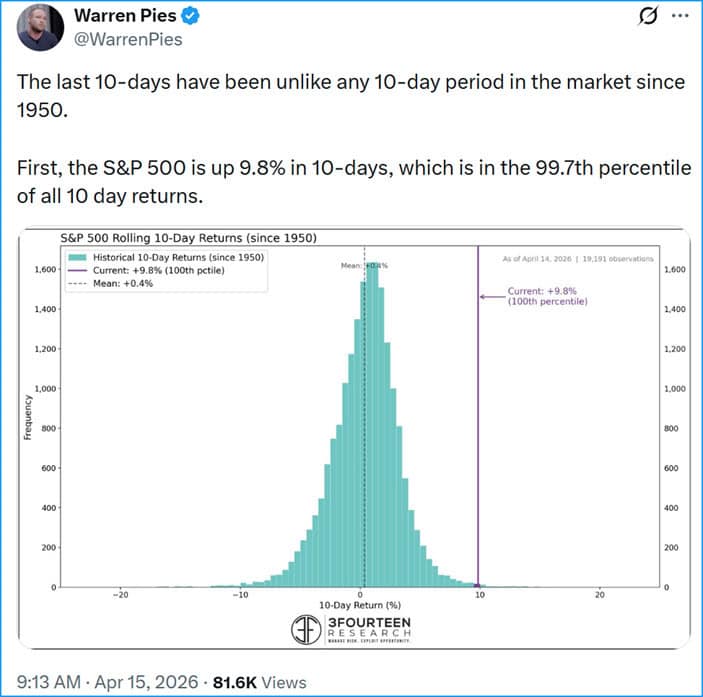
Are things really that awesome? Most people think not.

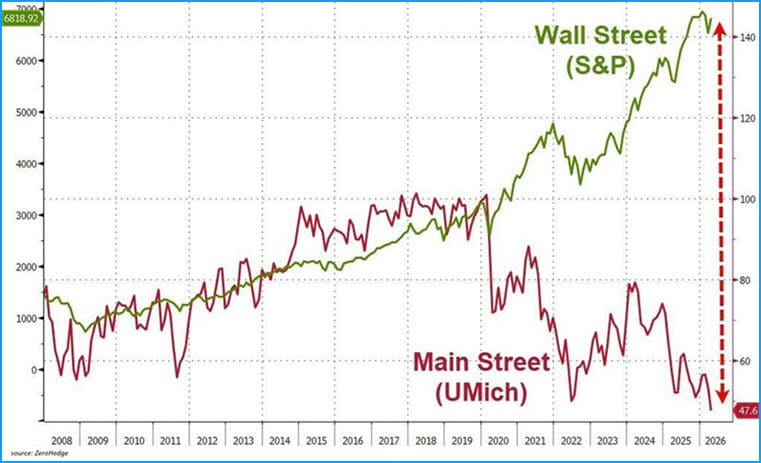
Especially Main Street, which is recording the lowest consumer confidence in decades.
That may be related to the fact that US housing sales are at “depression levels” according to Nick Gerli, who recently noted that the only worse month for March housing sales was March 2009.

This massive disconnect between Wall Street and Main Street is yet more evidence that the system which rules the financial and political spheres isn’t serving the majority, but rather a very narrow (and narrowing) set of interests.

Most people have been living with the reality of the sharpest single-month hike in gasoline and diesel prices on record:
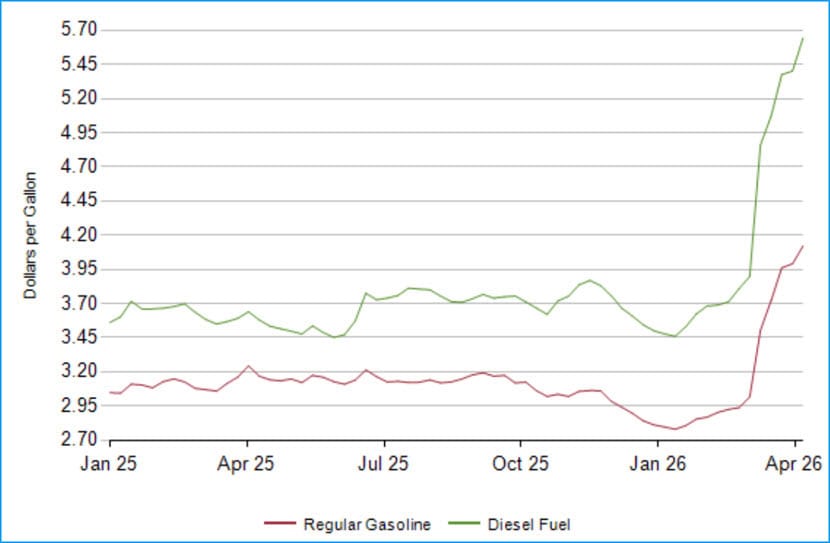
Of course, this is going to stoke inflation (as it’s measured), but in reality, this isn’t prices rising due to the overproduction of money (the definition of inflation), rather rising prices due to supply shortages.

Naturally and predictably, the US BLS agency came out with a laughable Producer Price Index (PPI) reading. In it, the BLS claimed that energy costs had only risen by 8.5% for producers during March, a month in which oil-related energy sources were up by 37% to 66%.
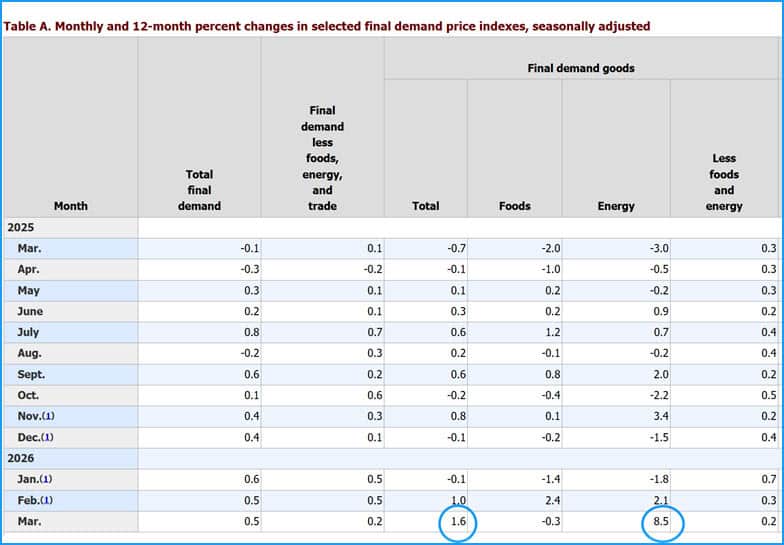
If you note the total for Goods inflation, however, standing at 1.6% for March, that would annualize out to 21% inflation were it to be sustained.

Now, we’d expect that to moderate, but that depends on the Iran war ending today. Every week that it drags on is another week of oil supply shock that will have to be resolved via ‘demand destruction,’ which can only come about by price increases.

Well, it can also come about by forced government rationing, but that never actually works out because that merely enforces economic destruction from the top down rather than letting the economy work it out from the bottom up.

It seems that fundamentals (housing, consumer stress, energy, inventories) no longer align with US equity market price action. Welcome to the Truman Show.

It is a time that calls for prudence, caution, and having a defined plan of action to navigate what has become a set of markets that are disconnected from reality. But they always have to realign, and when they do, it’s usually ‘chaotic’ to use a euphemism.


Timestamps:

00:00 Market Movements and Economic Indicators
14:57 Housing Market Crisis and Consumer Confidence
28:11 The Rising Costs of Insurance and Its Impact
29:03 Concerns Over Private Credit and Insurance Markets
30:53 Oil Market Dynamics and Inventory Flows
32:46 The Global Oil Market and Price Influences
34:22 The Need for Price Adjustments in Oil
36:37 The Risks of Market Manipulation and Rationing
39:27 Unpredictability of Economic Responses
40:55 The Discrepancy in Oil Pricing and Market Signals
42:53 Producer Price Index and Inflation Expectations
46:34 Energy Price Shocks and Market Mysteries
50:45 Inflation Expectations and Market Confusion
52:26 Navigating the Strait: Economic Implications of Conflict
55:40 The Complexity of Global Supply Chains
01:00:02 The Ticking Clock: Oil Supply and Global Stability
01:05:18 The Role of Passive Investment in Market Dynamics
01:10:57 Prudent Financial Strategies in Uncertain Times
01:17:31 Preparing for the Future: The Impact of AI on Employment


FINANCIAL DISCLAIMER:

The information contained in this video and the resources available for download through our affiliated website are not intended as and shall not be understood or construed as financial advice, nor should be interpreted as a solicitation to sell or offer to sell investment advisory services. No person who currently works for or contracts with Peak Prosperity or Peak Financial Investing is an attorney or accountant, nor are we holding ourselves out to be, and the information contained in the video and on the website is not a substitute for legal or tax advice from a professional who is aware of the facts and circumstances of your individual situation. While Peak Financial Investing is a registered investment advisor, please note that this podcast is not intended to be investment advice.

All information has been obtained from sources believed to be reliable, but its accuracy is not guaranteed. There is no representation or warranty as to the current accuracy, reliability or completeness of, nor liability for, decisions based on such information and it should not be relied on as such. We have done our best to ensure that the information provided is accurate and provides what we feel is valuable information. The views expressed are subject to change based on market and other conditions.<

No guests or clients appearing on the podcast receive any form of compensation for their appearance and obtained no other benefit from either Peak Prosperity or Peak Financial Investing.

All investing involves risks including the possible loss of capital. Asset allocation and diversification does not ensure a profit or protect against loss. Please note that out- performance does not necessarily represent positive total returns for a period. There is no assurance that any investment strategy will be successful. All investments carry a certain degree of risk. Dividends are not guaranteed, and a company’s future ability to pay dividends may be limited.

Additional important disclosures for Peak Financial Investing may be found in our Form ADV Part 2A, which can be found at https://adviserinfo.sec.gov/firm/summary/319672.


6 Likes

This oil and fertilizer situation gets worse by the day with refinery and fert factory fires and explosions. I was shocked to see prices lower at the pumps in my area yesterday. I thought to myself “this is what pumping the SPR into my gas tank feels like” and similar to what I imagine it might feel like to take money out of savings to gamble or party when you are out of work. I have been wondering when we will see rationing, and people thumbing rides. I imagine places in my county becoming park and ride lots where people meet to ride further on together to save fuel.

The mention of the fuel caddy by Chris reminds that I want to see about diesel storage options.

Can agree with the paying the house off concept. For most it makes sense, and brings peace of mind.

I was making order in my pantry while listening and realized I have been investing too much in Maple Syrup. Moving my efforts from stored food to permaculture feels like a leveling up. And while most of us could never come close to growing most of what we eat, we can certainly reduce what we spend by growing veggies, herbs, greens and fruits.

8 Likes

Hello and Good Bye Chris.
I’ve been with you since 2005 I believe.
Appreciate the Crash Course, your Covid coverage (I gave up a 22 year career at Mass General Hospital for refusing the shot which cost me at least 1/2 million dollars in future wage and pension earnings), your early coverage on which I began to wonder if you were in on it, but, you woke up and came through in spades. And lastly, your David Webb Great Taking dive, which I recommend to others as the best!
Sorry to say but the new price structure is to expensive for me.
This has become a website for the well to do investor, which is not me.
Good luck and best wishes to you all.
Dennis Gaudet
Ex-MGH RRT, RN, Neonatal, pediatric, and Adult ECMO Perfusionist.
No Regrets

1 Like

The new price structure only applies to new subscribers.

All prior subscribers, such as yourself, are grandfathered in at the old price, permanently (except for the information scout level (introduced in 2021), which we did away with).

The grandfathered Insider level is the same price I originally charged in 2008. Since you’ve been with me since the very early days, you are definitely not experiencing a price increase.

I’m glad you didn’t take the jab. Despite the lost earnings, the gamble with your life wasn’t worth it.

6 Likes

What the heck?!?

https://x.com/GoldTelegraph_/status/2044892653477642478

When they trot old Hank to deliver this message, what’s the true message?

9 Likes

Im trying to understand the math of Paul saying
to pay off your house. If you have a high percentage mortgage then yes it makes sense. If you have a low percent say 2.24 how does that make sense. Lets say you owe 200k left on a mortgage. Mortgage payments are 2k with taxes rolled in. You can make 3.5 in treasuries as a safe bet. And even regardless of that, if/when things go bad if you dont pay off your mortgage you have 200k in reserves. Thats 100 mortgage payments. Or 50 mortgage payments and a whole lot of wiggle room for inflation. Or 36 mortgage payments and a lot of money for big opportunities coming out of a crisis. Tweak the numbers to your situation, but am i wrong to say id rather have the money for opportunities coming out of any crisis?

7 Likes

Thanks for this presentation, especially the part about the reserve funds. I have a couple of questions from watching this episode:

  • What happens to gold if we get a deflation? I realize it may go down, but if the depression is 25 years, would it also stay down 25 years?
  • I know that Chris has said that you can have deflation and inflation at the same time, like housing going down and gold going up. I would be interested to hear both of your current thinking about the cross-currents of inflation and deflation ahead of us. It sounds like we can have very high consumer good prices while also having a lot of job losses due to AI and fuel prices. You said trades won’t be affected by AI, but they will by fuel prices. So for whatever it’s worth, I’d be interested to hear how you view inflationary and deflationary forces happening at the same time and what signals to watch for so you can skate to where the puck will be.
  • This episode also reminded me of a question I’ve been wondering about, which is if you are situated in physical allocated PMs, at what point would it make sense to take profits and shift some of the funds into energy stocks. The broader question is why you’d want to diversify your holdings, if they are weighted heavily in one direction. I hear that the PMs will one day be unobtanium, so it seems like not a great idea to let go of that position to get something that will also likely go up, but I’ve never heard anyone talk about oil as unobtanium. If you wait for the PMs to spike really high, oil may do the same in the same period, so any perspective on how to know when it’s a good time to shift from PMs to stocks would be appreciated!
2 Likes

If you had bought BIRD two weeks ago and anticipated their transition to AI, you’d be a very rich person right now :slight_smile:

As I’ve said several times, you want to make money, do exactly opposite of what I do :slight_smile: I’ve take a small percentage of my overly weighted IRA in silver (PSLV) and rotating into oil and electric stock. I {falsely?} believe energy stocks will out run metals.

1 Like

So now Elon is onboard the UBI train — or should I say the UHI train? He’s calling fur Universal High Income checks for everyone.

https://x.com/elonmusk/status/2044990537145753894?s=46

Elon explains his “logic”.

https://x.com/cb_doge/status/2045000631082197220?s=46

Bro…

5 Likes

Fed balance sheet going to the moon.

https://x.com/barchart/status/2044843665374478734?s=46

Call options are the canary in the coal mine.

https://x.com/barchart/status/2045051645772607986?s=46

3 Likes

That’s called a carry trade. Which works until it doesn’t.

Reframe it another way. Until you’ve paid off your mortgage, your house doesn’t belong to you, it belongs to the bank. Yes, even when you have 99.999% equity, it’s still their house.

Treasuries are a promise from the government. Which they can and do default on, partially or totally.

You can pat yourself on the back at squeezing out a percentage of vig on the carry trade. This might very well work out for you long term.

The other side of the coin is, you’re making monthly payments on the bank’s asset, which is theirs until you pay it off. You’re parking that money in government bonds, which are good until they say it otherwise. Governments and banks will always act in their own interest. When push comes to shove, the law and the courts will generally be bent towards their favor rather than yours.

I have two small loans that are 0% and 0.99%. I have the funds to pay them off sitting in t bills. Frankly I think paying stuff off is a matter of comfort. I’m fine carrying the debt and collecting the interest difference

If you pay property taxes you don’t really own your land even if the loan is paid off.

1 Like

Curious if there is an advantage to paying property taxes (years) early? You’d certainly lose what you could have earned but the great taking becomes the county’s loss not yours

1 Like

Picking up nickels in front of a steamroller always looks like a no-brainer. So easy why doesn’t everyone do it?

I think you really have to internalize the idea that when the chips are down, your counterparties typically aren’t really inclined or incentivized to play fair, and they generally have what you think will be your recourse to any comically blatant unfair play in their pocket on top of that. It always seems to be squawk at the blatant unfairness for the thousandth time until you find another shiny nickel to pick up, though.

I always pay early. If the financial system collapses, I can stay in my home, at least for the time that the taxes are prepaid.

1 Like

TBH, UBI sounds more like the bread portion of the bread and circus for the restless masses.

2 Likes

Does having a mortgage make your home vulnerable to “The Great Taking”?

My dad tried this and the county only allowed him to do one year ahead.

2 Likes

Good advice. In my case, paying off the mortgage was also a peace of mind thing.

Doing that for all your bills goes a long way to the 6-12 months of savings we should have in cash that financial pundits say we should have.

Years back I ended up in a moderate debit position on a credit card. Was getting dunning notices after a month or two. I know a few years back in Canada the interest rate the gov was paying on overpayed taxes was attractive enough that companies were dumping excess cash into tax payments. Can’t remember the details tho.