This week, I appeared on Mario Nawfal’s show as well as Jim Puplava’s Financial Sense. First, Mario and I discussed the structurally broken oil markets that no longer respond to fundamentals, the mounting risks from the Strait of Hormuz and other chokepoints, the accelerating drawdown of the Strategic Petroleum Reserve, and the broader dangers of drone warfare and geopolitical escalation. Later, Jim and I discussed the mysterious large seller suppressing oil futures prices, the extreme tightness in diesel and refined products, critically low inventories, and the decade of underinvestment that leaves global energy supplies highly vulnerable. Both videos are down below.
Our military leaders have apparently forgotten how effective it was when we supplied shoulder fired heat seeking missiles the Afghan’s to knock down multi million dollar Russian helicopters, thus helping to lead to the collapse of the Russian economy in 1991. I can’t help but see the same thing happening today, but the shoe is on the other foot.
Watching the Middle East gambit, I am struck by the similarity to playing a slot machine. With slot machines each “bet” is done knowing absolutely nothing about the payoff. Each “bet” is pure guess work. I have yet to see a layout of the risks and who/what party holds those risks. Wall Street gives me money flows, but in a casino, betting with the money flow is no better than putting money in a slot machine. Any thoughts on assembled risks and risk holders of the Middle East gambit?
I enjoyed watching both of these and agree that at some point it seems like there will be a harsh recking for oil and natural gas prices (higher.) The thing that continues to amaze me is the slowness at which everything continues to unfold. Trump himself said at the time of the signing of the MOU (I’m paraphrasing) “Good thing we got that done because in another 4 weeks all hell was going to break loose.” And yet here we are 4 weeks later, and oil is priced as if we are entering another long period of disinflation. Also there were the oil company execs saying a similar thing to Trump “a few more weeks and we’ll be at tank bottoms” while 300 million barrels in the SPR is not exactly a glut of oil, it is still very far from tank bottoms (70-140 million barrels) at the rate we have been drawing it down, that would be another 6 months until tank bottoms. What am I missing here? Something is not adding up…
I’m not sure that I can finish this book…too disturbing….
Apparently, one big motivation for Biological War is that it kills everyone in extremely gruesome ways, but leaves the infrastructure in tact. The Soviets were big pioneers of Biological Warfare. The Soviets were some “Really Sick F…cks”….
I think that the Imperial Japanese loved to use biological weapons on the Chinese people? It’s a kind of Fetish?
“Dr. Fauci, Dr. Fauci!!!”
So, “They” may use Biological Weapons to keep the oil wells in tact?
I read her other book “Nuclear War A Scenario.” Excellent book especially for those who want to know the “whole story”. America is just so totally unprepared for nuclear war as to make me scream! But, some pyromaniacs (since there is no such word for it) want to threaten other countries with US nuclear weapons.
And in Australia, it appears our incountry inventories are spiralling relentlessly down… with no one noticing, not the fuel prices, not the people, not the government…
todays figures are 24 days for petrol, under 20 for both diesel and jet fuel
It would have been a waste of missles. The U.S. fought the same war for 23 years, one year at a time. The victory was the war - drugs, drug money, and preventing Eurasian economic and industrial development. Hell, our own “side” was training, arming, transporting the opposition in Afghanistan in order to use “Islamic terrorists” in other theaters.
If your enemy started donating blood every day to pay for addictive drugs - would you stop him? After what we did to Russia when the USSR collapsed?
I think they also had a lot to deal with - recall all the former Soviet satellites and their “color revolutions” during that same time period (2001 to 2023), and the second Chechnyan war (ahem Islamist terrorists ahem), and the Syrian civil war (again w. the Islamist terrorists).
As a Yen shorter, this strikes me as blood in the water. My Yen short is very small, because it’s likely to be explosive and I’d rather not blow a hole in my account, but still, I’m tempted to short more, not less.
Japan applied intelligence efficiently and had a booming economy. Now they’re applying intelligence rigidly, subservient to tradition, and their economy is continuing to slide. They’ve removed all the internal buffers, so JPY is the primary way to bet on their economy. Monetary games can only make it worse. If I had to pick a direction for their stock market, it would be up, way, way up. As measured in debased currency.
I also read Annie Jacobson’s “Nuclear War”. But, I didn’t find it as disturbing as “Biological War”.
I think that Chris Martenson has full contingency plans for Nuclear War, and Biological War, but these aren’t mentioned in his book “The Crash Course”?
Chris should start a Peak Prosperity Book-of-the-Month Club?
Which of these Books (or similar books) best describes Chris Martenson’s and Michael Yon’s (Sobek’s) Vision of the Future?
Question for Grok:
Are there any novels with a story that involves a global apocalypse, war, pandemic, or genocide in which a Technocratic Elite emerges to rule over a remnant of surviving humans?
Grok:
Yes. Several science fiction novels feature a global catastrophe (nuclear war, societal collapse, pandemic-scale events, or similar) followed by a technocratic elite—scientists, engineers, or technical experts—emerging to control or rule over remnant human populations.
Clear examples
• These Savage Futurians by Philip E. High (1967) After the collapse of world civilization, advanced “Masters of the Island” (a technocratic group) maintain experimental villages of survivors under strict rules that forbid innovation or curiosity. Disobedience is punished severely. Rival groups of scientists also exist in a more “savage” form. This is a direct example of a post-collapse technocratic enclave ruling over a controlled remnant population.
• When the Moon Died by Richard Savage (pseudonym of Ivan Roe, 1955) A cabal of scientists prevents an impending nuclear war by destroying the Moon. They then establish a global scientific dictatorship / World Technocracy that rules the survivors. The novel is framed as a future recording of these events.
• Enslaved Brains by Eando Binder (serialized 1934; later book editions) Following earlier conflicts that enable a unified world order, a government dominated by scientists (the Unidum) takes power. It creates a dystopian technocracy involving eugenics, control over breeding, and the use of revitalized human brains to run machinery. Humanity eventually rebels against this “Cult of the Scientists.”
Related or partial matches
The broader post-apocalyptic / “Ruined Earth” tradition in science fiction often includes secret or open scientific/technocratic enclaves in otherwise primitive post-holocaust societies (noted in reference works such as the Science Fiction Encyclopedia). Other novels explore elite technical or billionaire groups positioning themselves to control survivors amid climate or technological catastrophe (e.g., elements in Naomi Alderman’s The Future).
These works typically treat the technocratic rule as dystopian or double-edged rather than purely utopian. The motif of technical experts seizing power after societal breakdown appears periodically in mid-20th-century science fiction and continues in more recent climate/tech-collapse stories.
Also, did you notice (in hindsight) that we left Afghan just before flying cheap drones into people became a thing? Afghans with drones would have been carnage.
It’s quite frustrating that there is no way to know what data is actually reliable for fuel. I’m completely done trying to track ‘how much is left’.
yes, 19 days, or even 50 days, its not enough. I compare it to how long your savings last if you lose your job … if its only 3 weeks, you are in trouble, even if its 3 months, you better start cutting back your spending NOW…
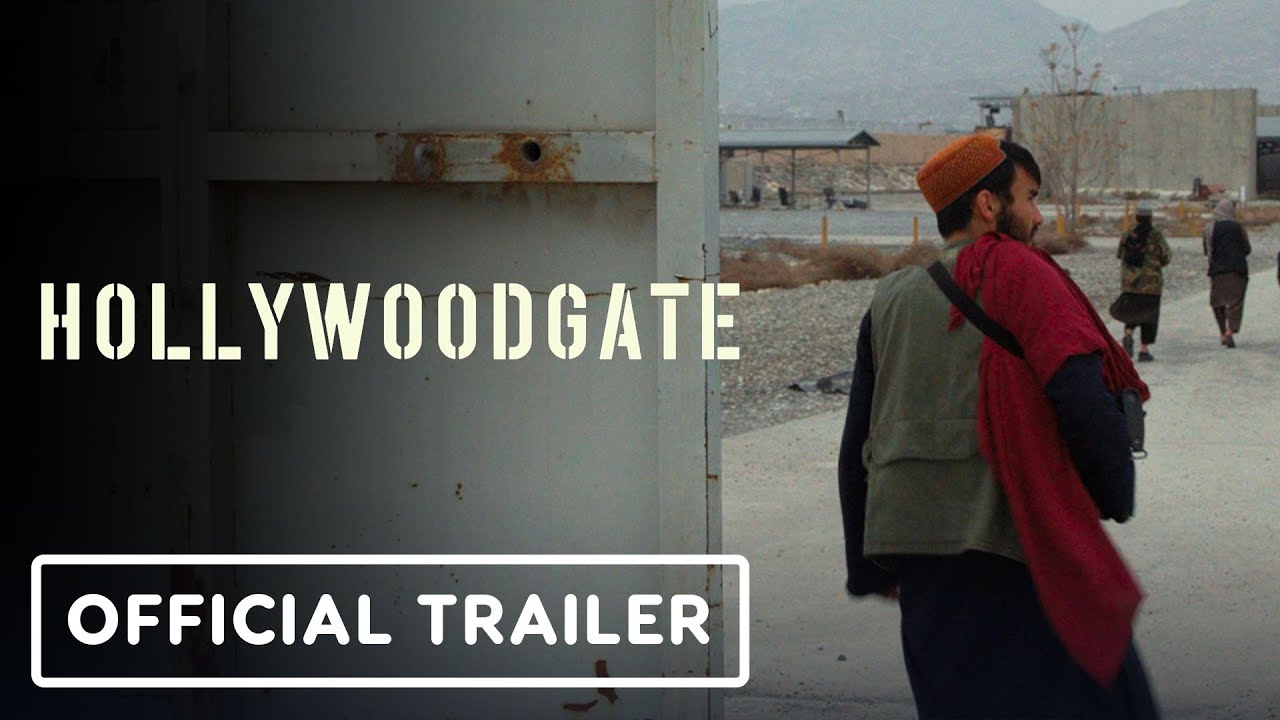
As a follow up on what happened in Afghanistan right after the U.S. left: a film by an Egyptian-German film maker, “Hollywoodgate”, shows on-the-ground the arsenal and treasure trove the U.S. left to assist in the further demolition of any attempts to develop regional trade or industrial civilization.