(The problem is: never found a footprint of the 2nd. (The thumb should have changed, to be hand from foot.) A biologist proposed a theory it happened in water, so we never climbed down the trees. I think it is plausible.)
2 Likes
I lost the link. It was nearby. (This ageng from other angle.)
But we already know it eas about 4 minutes after the shooting.
Greg said there have been hundreds of peopl at the fence.
3 Likes
It does look like a match to me. Near to the bottom of his nose, there is a line. This line appears on the photograph wearing the grey suit, and the photograph [second from left] wearing his uniform.
1 Like
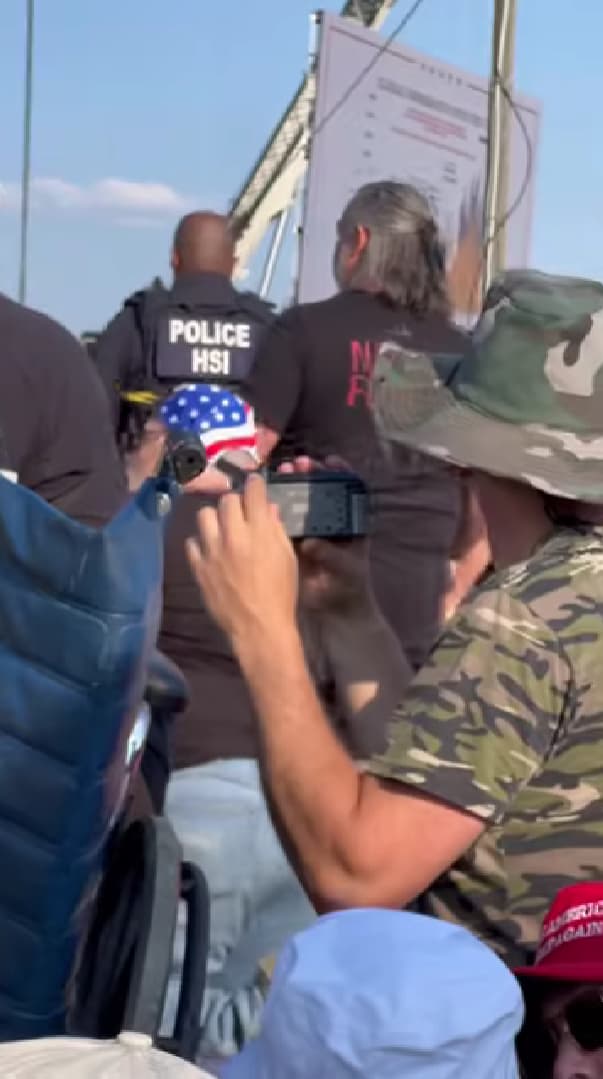
I was searching for something else and happened to catch this LEO putting on their tactical vest after arriving at the rally site. (7:48 Mark, Yerace Video)
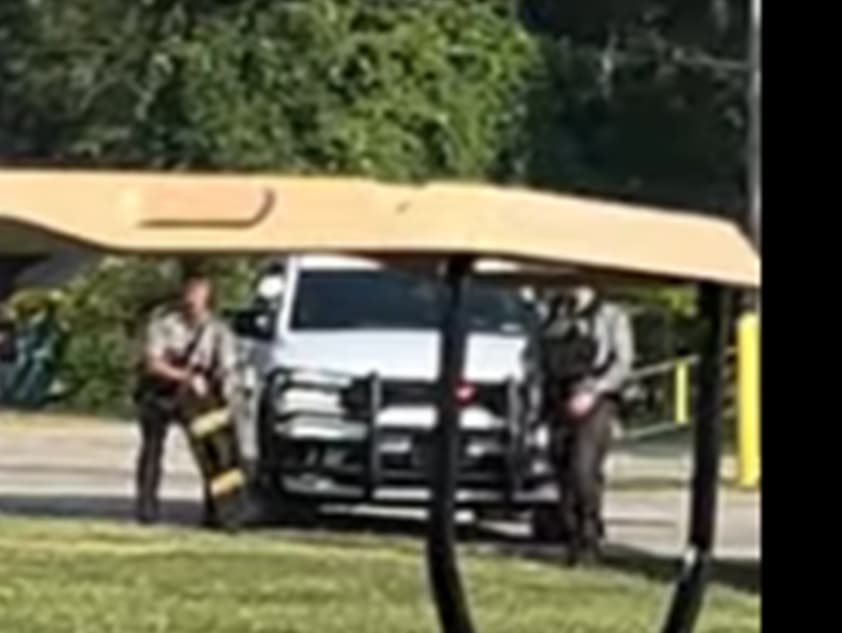
I’m just saying. 
2 Likes
My, that’s quite a neat find indeed! Nice catch! Thanks for pulling this video back out, I was planning on looking through it again to see if I noticed anything new!
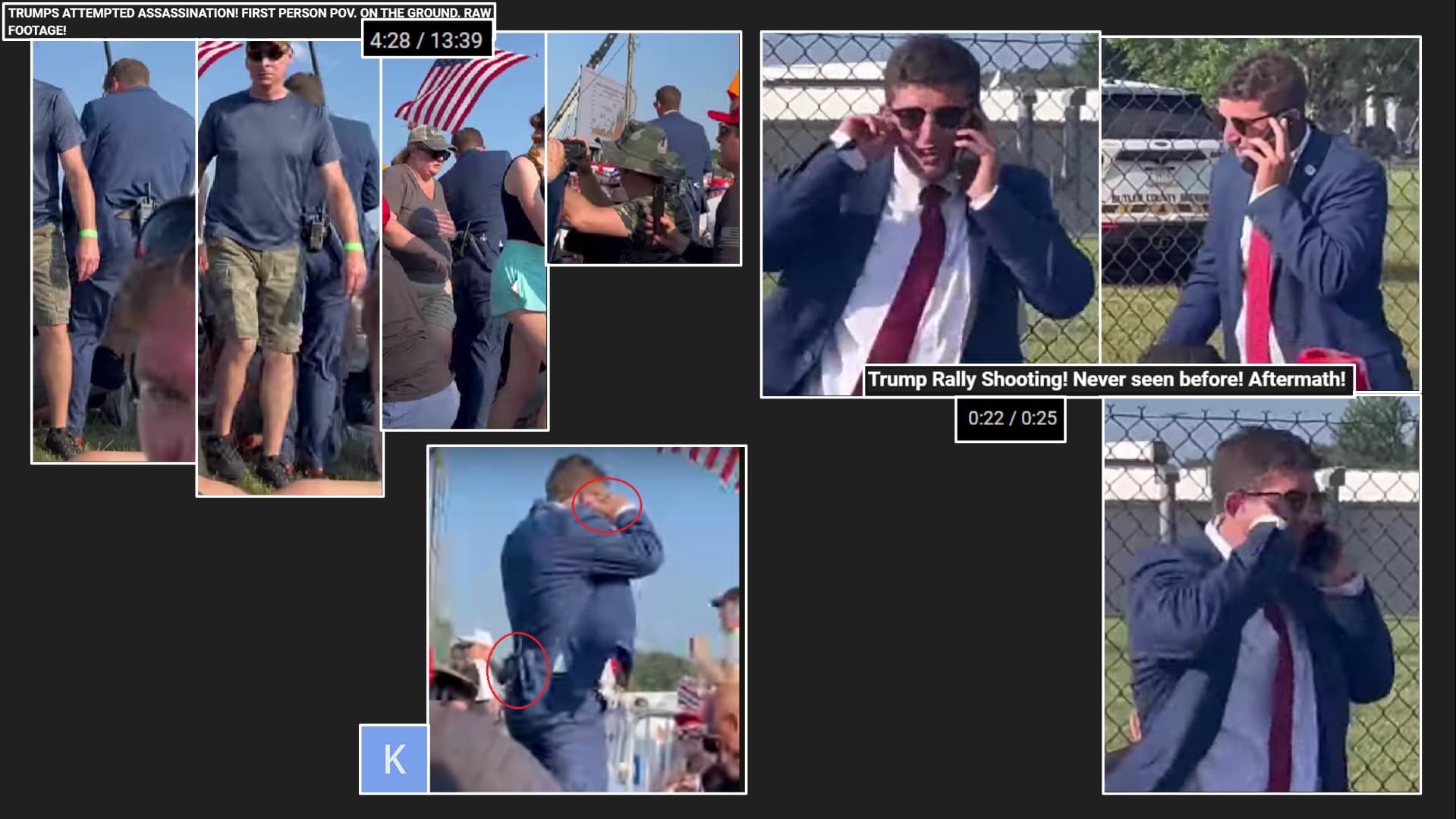
Not sure on an identity yet, but we’ve got a face!
2 Likes
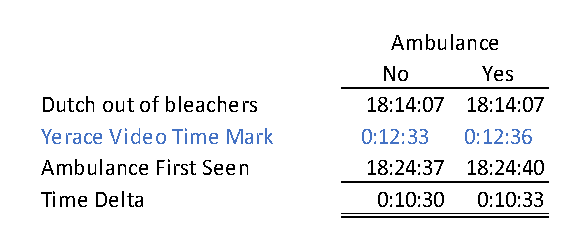
I was looking for the time when the ambulance arrived at the David Dutch treatment scene. Something I needed to fill in a missing data point for my current analysis.
I’m really hoping to post it tomorrow. I know I’ve said that before, but the more I looked, the more I saw, and the more I added to it. I’m shooting to keep it at 100 slides, which oght to explain how it grew over the past few weeks from about 50 slides.
2 Likes
Oh I bet! I find it quite remarkable how we can keep looking at the same footage and finding new and interesting details, I think it really speaks to the complexity of an event like this. I am very much looking forward to your upcoming release, but by all means release it when you are good and happy with it!
/
I’ve been working on a couple different things, I’ve got a DJStew + radio transcript cross in the works, I’ve got some tweaks I want to make and I need to extend it some, but it’s getting there!

/
So, from the

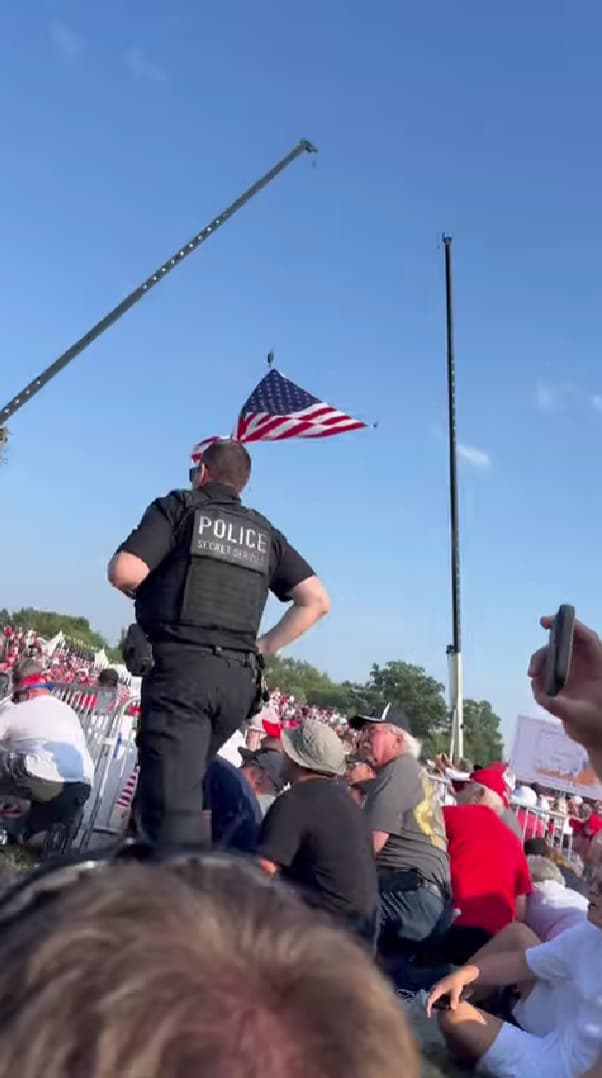
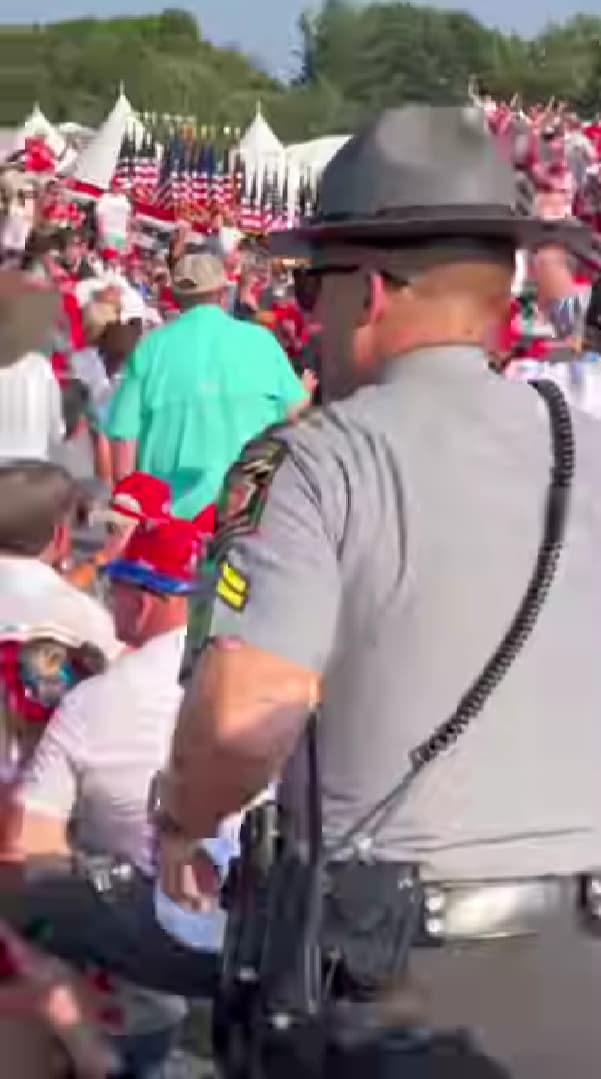
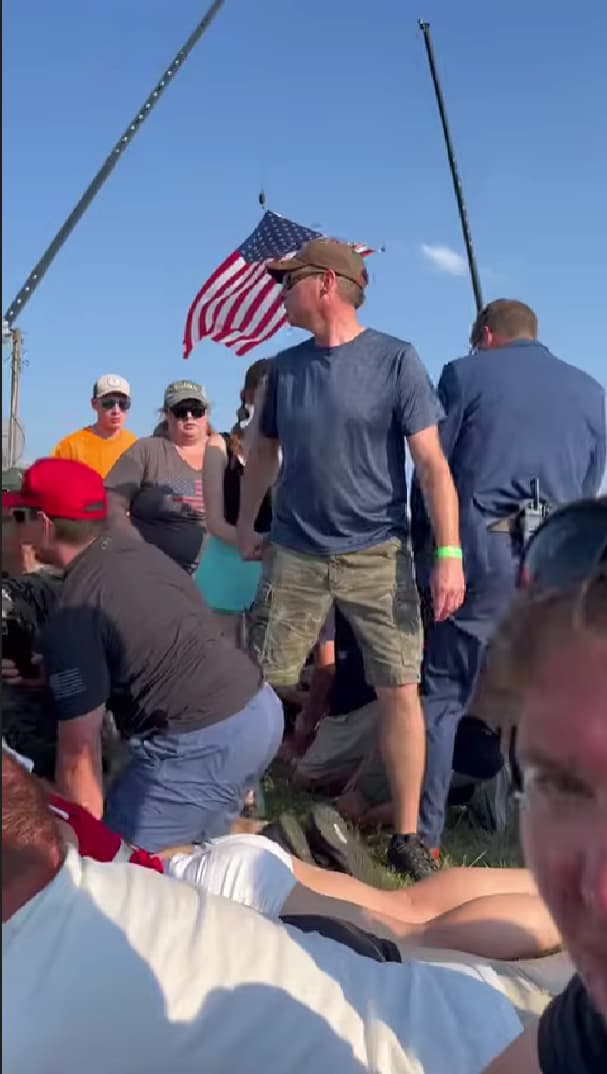
These are responding individuals running by, I think they’re in order though I think I missed a couple shots of USSS UD running by.
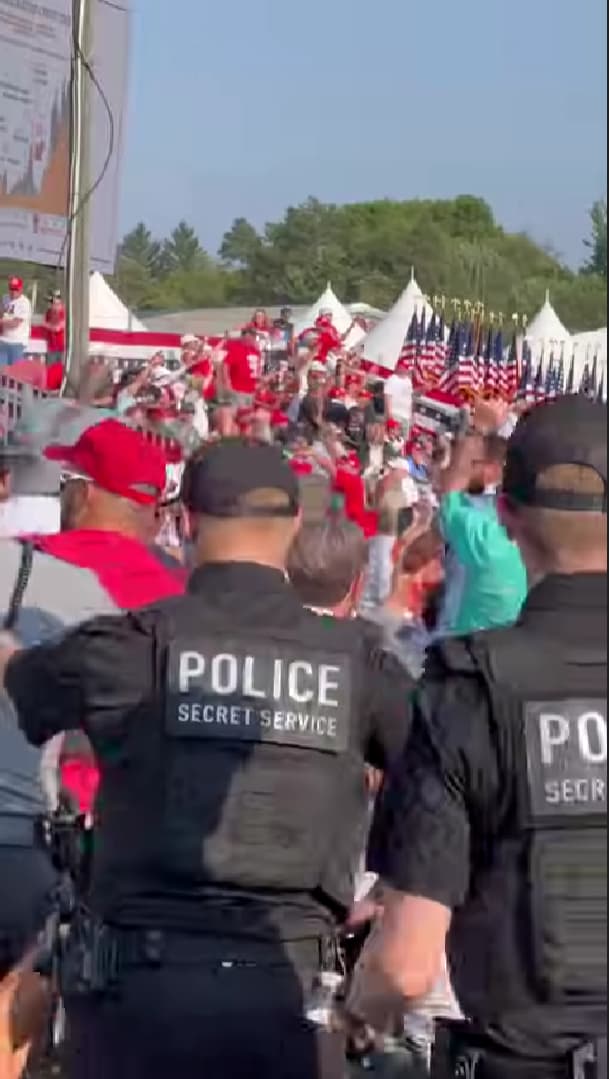
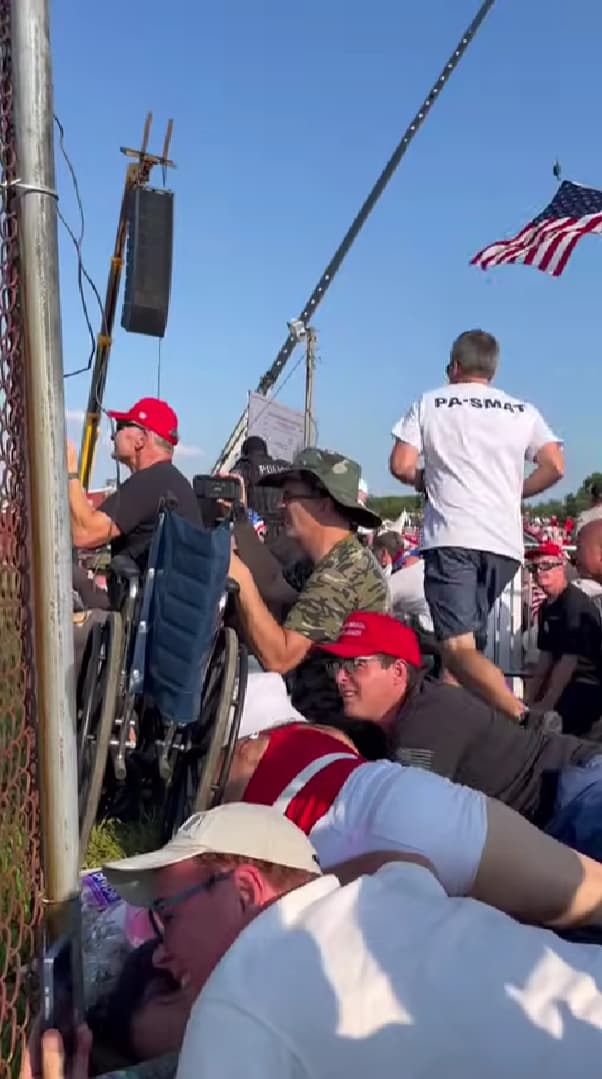
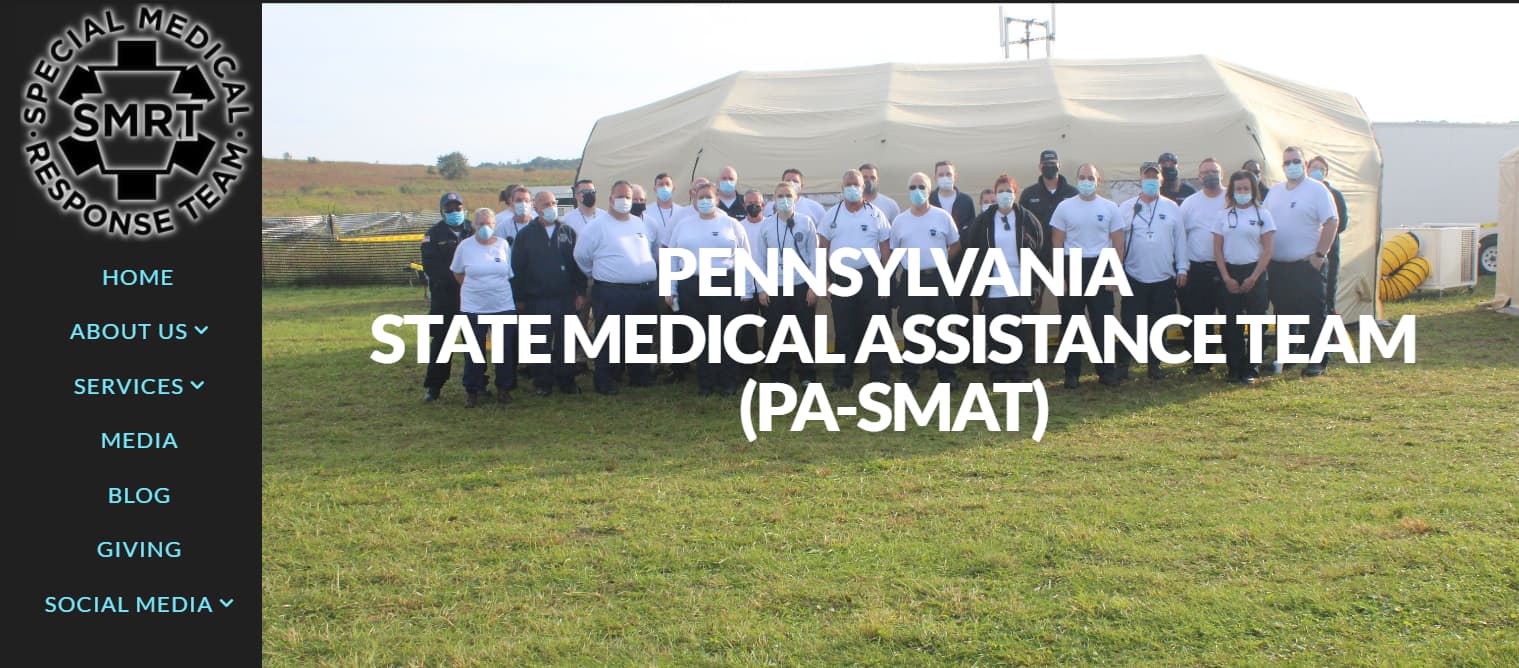
Special Medical Response Team - Pennsylvania State Medical Assistance Team (PA-SMA
/
I’ve also been on a hunt for Menster, and I first thought of this gentleman:


But now I’m wondering!  Menster:

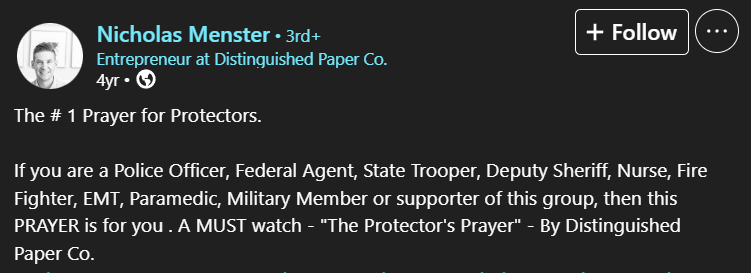
Post | LinkedIn
1 Like
That will be nice! My current analysis is my old “ESU Armor & Response,”, now titled “ESU Post-Shooting,” I do plan to do a “LEO Post-Shooting” analysis to capture PSP, Sheriffs, and Butler Twp. Your radio call screenshots will save me a lot of time on that one, I’m sure.
2 Likes
(Hiding behind that wheelchair, I don’t think it is bulettproof, just more than nothing.)
Q: [Murcko], how long have you been a part of the Butler ESU?
A: Since its formation
I cannot recall exactly when it was that it was officially formed. I believe it
was 2017.
Q: And what’s your role with the Butler ESU?
A: Currently I’m assigned as a sniper on the team’s sniper unit.
my primary law enforcement job. It’s with the Jackson Township Police Department.
Q: Okay. And how long have you been with that agency?
A: 13 years.
Q: And what is your role with that agency?
A: I’m a corporal.
Q: When did you first learn that the former President was coming to Butler?
A: I was on vacation, and I believe a group text went out, I want to say it was
July 5th, asking for availability.
I believe that came out through our notification system.
The original text I believe just mentioned that President Trump was going to be coming to Butler County, and they were asking for what operators would be available for the event.
An operator is a member of the SWAT team who is – a general operator is the guys on the ground that are making entry into houses. It’s kind of used as a loose term, with the snipers being included in that. Everybody starts out as an operator first, and then you, once you have time on, you specialize into certain areas.
Q: Okay. So it’s fair to say there are different subgroups under the broader umbrella definition of operator?
A: That’s correct.
Q: Were you involved in the advance planning for the visit prior to July 13?
A: I was not.
Q: Did you attend any planning meetings?
A: I did not.A: I mean, after the incident, obviously, I have been made aware of information. Obviously, , , , , . I believe there were several others, , .
Q: And prior to July 13, did you do any walk-throughs of the campaign rally location?
A: I did not.
For team leaders and command staff, yes, they would do the walk-throughs. The other levels of members of the team, no, that’s not something we would generally go out and do unless there’s specific circumstances, I would think.
Q: Were you aware that there would be two command posts on July 13?
A: I was not.
Q: Did you ever become aware of that?
A: I was made aware of it on July 13th.
I believe once I arrived at our command post, it was – I was made aware of that, that our command post was separate from the Secret Service and the Pennsylvania State Police.
Q: Did any discussion of the AGR building come up in any conversations prior to July 13?
A: Not to me it did not.
The only thing – I wasn’t aware of where my position was going to be, my assignment, until the day of the event.
There was – once I arrived at the AGR building and was explained to what my position was going to be that day, there was no real further discussion after that as to the building itself.
I was not made aware of any type of – how that was all going to be set up. I wasn’t part of any of that conversation.
Q: Were you then told on July 13 how communications with Secret Service were to occur?
A: It was – I wasn’t specifically told. I was aware that our team leader, , was in communication with the Secret Service’s counter sniper team leader via text.
My understanding was they (Secret Service counter sniper team) were supposed to stop at our command post to be issued county radios so they communicate directly with us. But, to my knowledge, that never happened.
For direct communication with our group.
Q: Okay. And retrieval of those radios would have also then enabled the Secret Service to listen in to local law enforcement radio communication?
A: Yes.
Q: Okay. To your knowledge, sir, was communicating with the Secret Service over texts?
A: Yes, he was.
Q: Did , to your knowledge, use any radios with the U.S. Secret Service?
A: Not to my knowledge.
Q: Did the Secret Service provide Butler ESU with any advance planning or detailed information about what was needed from you?
A: I wasn’t aware of anything that the Secret Service provided Butler ESU until, obviously, after the day’s events and things unfolded the way they did.
My arrival on scene that morning at 10:30, I was taken to my post and was told where I was assigned, what I was to be doing, and that was it for the day.
Q: Did you or any other law enforcement personnel ever express any concerns to the Secret Service regarding planning or anything that day?
A: No. I had no contact with the Secret Service prior to that day.
I arrived that morning. I did not have details of the complex or anything other than our – the –
Q: Did the Secret Service have any type of approval process for Butler’s ops plan?
I’m not aware.I did not make the operational briefing that morning. I believe that was held at 0900.
My arrival was at 10:30 a.m. When I arrived on scene, I was met in the parking area by another sniper on our team, , who informed me of what my position was going to be that day.
He then took me over to the AGR building, took me upstairs, showed me where my position was going to be. And then that’s where I set up for the day, and I did not leave there until later on that evening.
Ex. No, 1
Q: When did you receive this slide deck, sir?
A: Or 2 days prior to the event.
Q: Did you have time to review it?
A: I did. I looked through it.Q: Sir, was it your understanding that counter assault teams were comprised of the snipers –
A: No.
So a counter assault team and our members that were assigned to that are, like I mentioned before, general operators. They are tasked with response to an active threat, directly intervening with that threat.
The snipers, we hold a different role in the sense that the majority of our job is to provide information. Should a threat arise and we have the opportunity to stop the threat, we can do so. But short of that, our main primary objective is to provide information back to command and back to our operators.
Q: So as a sniper, if you had identified a threat, you were empowered to then take action to address the threat?
A: That is correct.
Up to and including deadly force.
if I would have observed Mr. Crooks with the rifle, then I would have intervened at that point.
Q: Did you at any point spot Mr. Crooks with a rifle?
A: I did not.
Q: Did any of your team members, to your knowledge, spot Mr. Crooks with a rifle?
A: Not to my knowledge.
I do not believe it is accurate that the candidate arrived at the airport at 1505. I believe he was, I want to say, an hour behind schedule, roughly.
“Butler ESU Counter Assault Team (6 Operators).”
Q: Sir, is that an accurate sort of depiction of where you were located?
So the AGR building, this – where it says here the Butler and Beaver TEMS 3, that is correct, that was part of that complex, but that’s not the building I was in.
Q: Can you mark – is it on that map where you were?
A: Yes.
[Witness marking.]
Q: And what was your understanding as to your responsibilities on an assault on former President Trump?
A: My understanding of my responsibilities were to intervene, if possible.Q: At any point on July 13, was there any information shared with you by the Secret Service regarding communications to the agency if you saw something suspicious or needed to alert them of something?
A: No, I had no communication whatsoever with the Secret Service until after the shooting.
My instructions were I was taken to the second floor of the AGR building.
At that time Operator and from Beaver ESU were already on scene. I was given several windows to choose from to pick the best vantage point over the crowd.
My assignment was to communicate any type of disturbance, suspicious people, packages, anything out of the norm back to command.
Q? Did you ever inquire as to whether anybody would be posted on the roof or whether there was any assigned post on the roof – of the AGR building?
A: I did not –
I did not inquire about that.Q Was that an area that you thought needed coverage?
A: No.
Q: And why is that?
A: Because of what our task was that day. Our task was to provide information.
There’s – can I get into the Secret Service counter snipers’ role versus our role?So included – you know, in answering your question, our role that day, like I said, was to provide information to command as to what was going on in and around the event. We were to report any type of civil disturbances, fights, suspicious people, packages back to command, in which case our QRF would have handled that or uniformed officers.
What I mean by handled is it would be up to either uniformed officers or our operators to make contact with the individual or individuals or suspicious packages to essentially stop the situation if there was a disturbance or investigate a suspicious package or that sort of thing.
Q: And, sir, just to quickly ask a follow-up question here, however, snipers were able to and were also responsible for addressing threats?
A: Correct.Q: Did you communicate with any U.S. Secret Service counter snipers on July 13th?
A: No, I did not.
--------------- 8< ---------------
p20
This is one of the guys in Donald Trump’s personal body detail. He’s the first guy that covers him after shots are fired.
From the ASAIC-DTD transcript:
Pages 96-98
Q During that whole period we just talked about, him going up to the stage, did you hear anything about a suspicious person, a rangefinder, a local law enforcement concerns?
A No.
Q And then he starts speaking, right? He starts addressing the crowd?
A Yes.
Q And then at some point shots rang out, right?
A Yes.
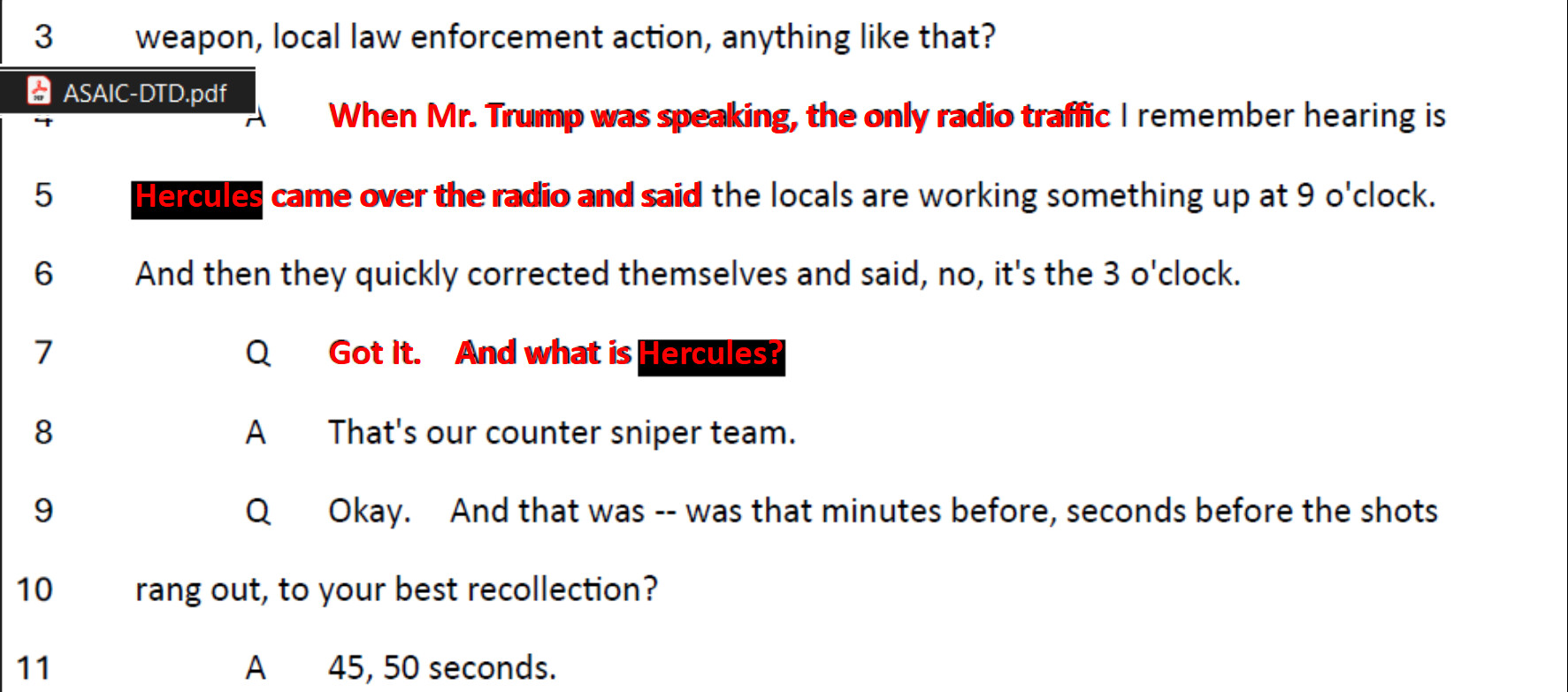
Q Before the shots rang out – sorry to keep asking you this – had you heard anything about a suspicious person on any form, your radio, your cell phone, verbally from another person, suspicious person, rangefinder, a person on a roof, a person with a weapon, local law enforcement action, anything like that?
A When Mr. Trump was speaking, the only radio traffic I remember hearing is [Hercules 2] came over the radio and said the locals are working something up at 9 o’clock.
And then they quickly corrected themselves and said, no, it’s the 3 o’clock.
Q Got it. And what is [Hercules 2]?
A That’s our counter sniper team.
Q Okay. And that was – was that minutes before, seconds before the shots rang out, to your best recollection?
A 45, 50 seconds.
Q Okay.
A So right around a minute.
Q Right. So quick succession you heard this –
A Yes.
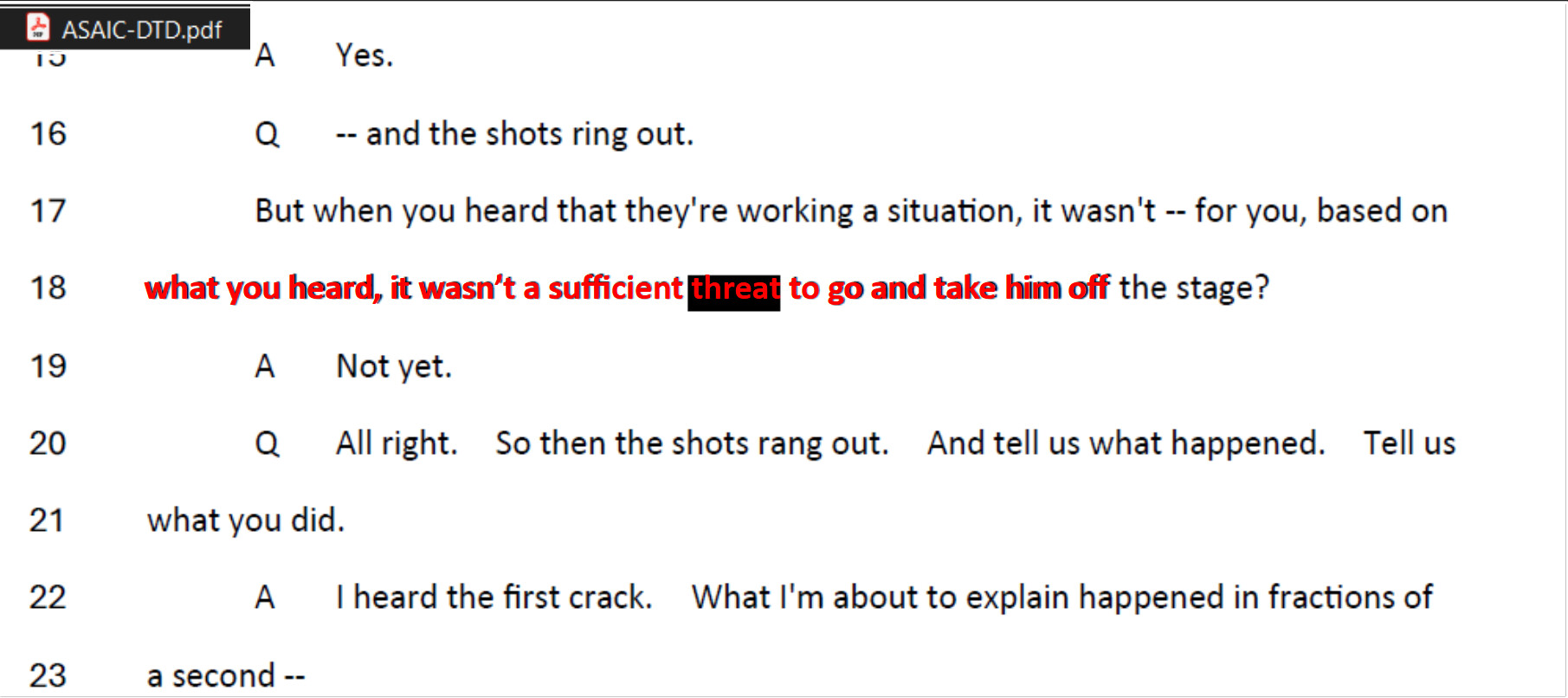
Q – and the shots ring out. But when you heard that they’re working a situation, it wasn’t – for you, based on what you heard, it wasn’t a sufficient [redacted] to go and take him off the stage?
A Not yet.
Q All right. So then the shots rang out. And tell us what happened. Tell us what you did.
A I heard the first crack. What I’m about to explain happened in fractions of a second –
Q Yes.
[He thinks of fireworks]
…
A And so I’m waiting for somebody to say something over the radio, “heckler,” something, and then I heard nothing. And then I heard the second shot go off, second crack, and I just instinctively just went up there, and I yelled at the President to get down. I said it three times: “Get down. Get down. Get down.” And I shielded him the best I could with my entire body and pushed him up towards the [about three words redacted]. We had [almost a line is redacted here].
So I wanted to get him as close as I could to that [about three words redacted] of any potential [redacted] and I just held him by his head and his neck and his upper torso.
And as that’s happening SAIC [Redacted] is kind of crashing on his lower section, kind of zippered in, and then you see [Redacted] coming across over the top. And that’s what I did.
Q Right. And then – so were you the first person to actually physically reach him, as far as you know?
A I was.
page 129:
Q My colleague in the majority had a couple hypothetical questions for you, and I have one more to make clear.
9 You never heard at any point that the officers had their weapons drawn. Is that right?
A I did not.
12 Q Okay. Have you ever worked an event where you’ve heard a call out that local law enforcement has their weapons out?
14 A Never.
15 Q All right. And fair to say that’s something you would expect, if someone saw that, to put that over the radio?
17 A Absolutely.
18 Q Can you say – and if you don’t feel comfortable speculating, fair enough – but can you say what your reaction – if you have a protectee on stage and you hear that local law enforcement has their weapons drawn, is there a protocol that at that point, "Hey, we’re Obviously, it’s up to the lead, but how would that go from there, typically?
…
A I think it’s just instincts. I think it’s discretion. Law enforcement have a lot of discretion. You have to remember why we’re there, right?
It’s a political function. If we the stage, we got a headline. And that doesn’t hurt us. We’re not afraid to do that. But it is certainly a factor you have to weigh in. If somebody said, though, officers have their weapons drawn, and I had just heard that they’re working something at the 3 o’clock, I’m going to go on the stage.
So - at least one member of the personal detail heard the Hercules 2 sniper talk about something working at the 3 o’clock. The Hercules 2 sniper clearly saw at least one police officer running around with a gun drawn, but didn’t mention that. The other three Hercules counter snipers didn’t think to mention anything at all.
Edit: The Hercules 2 sniper claims he only saw one police officer running around, and didn’t say anything about a pistol drawn. It’s the Hercules Team Leader who saw police officers (plural) running around, at least one with a pistol drawn. He didn’t communicate anything. I thought I had read the CS team lead transcript earlier, but I guess I just read what I thought were the relevant bits. He got caught in a lies a couple of times.
3 Likes
It’s back pain. Be nice.
3 Likes
Murcko, p20
So that being our role, our role was we were to be hidden inside of the building, which is completely different than what the Secret Service counter snipers’ role was.
And what I mean by that is, as a counter sniper, you are going to be positioned near the individual you’re protecting, looking out, whereas where we were positioned, we were outside looking in, reporting what we could see going on within the rally.
What I – we were inside the building looking out. What I was referring to is we were outside the perimeter.
That being said, the Secret Service counter snipers – the way a counter sniper sets up is they are protected from the rear. In their case they had a very large field behind them, and their visibility or their silhouette would have not been visible, I don’t believe, from the roadway outside of the perimeter of the rally area.
If we position somebody on the roof of the AGR building, we would have a security issue 360 degrees around us, which is not a very wise decision in placing a sniper or counter sniper.
Like I said, the counter snipers from the Secret Service were protected from the rear. They didn’t have to worry about what was going on behind them.
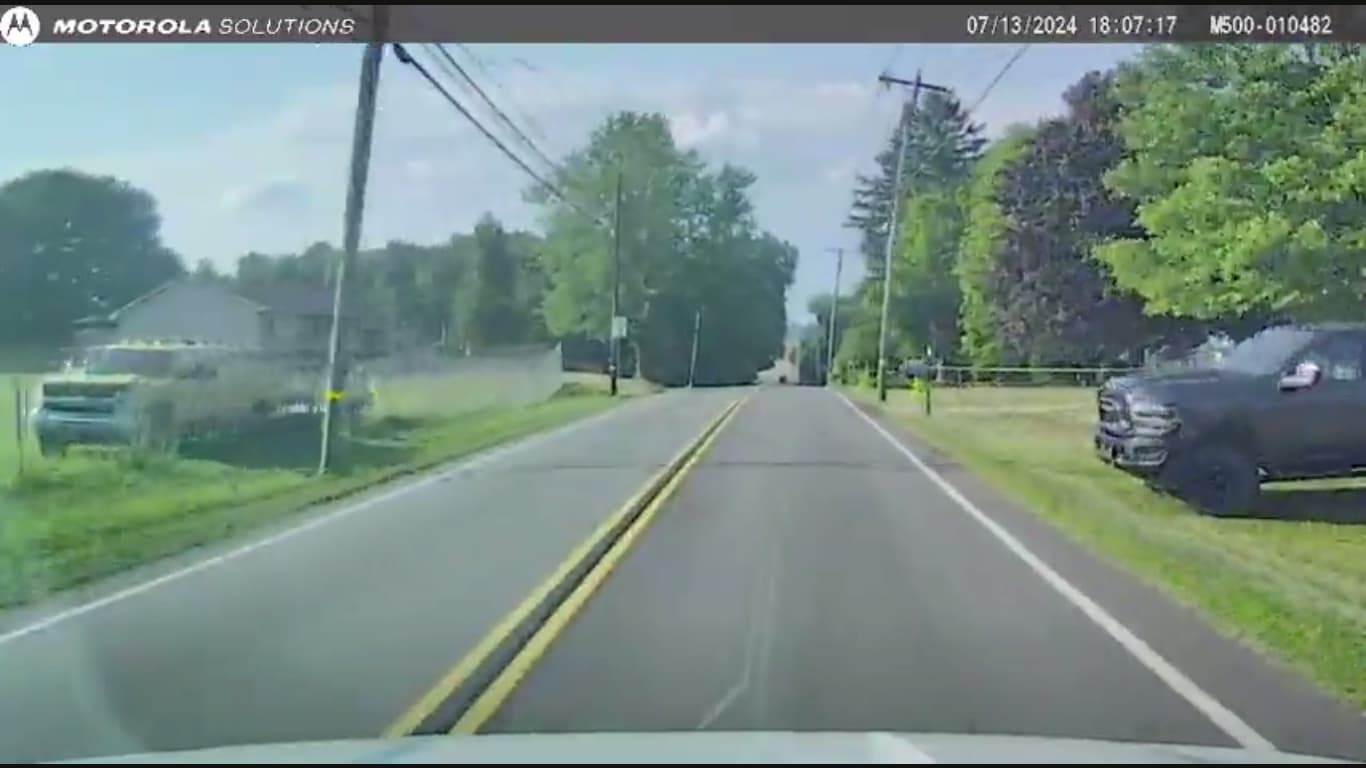
(ehh?) (pict: Tyler’s dashcam)
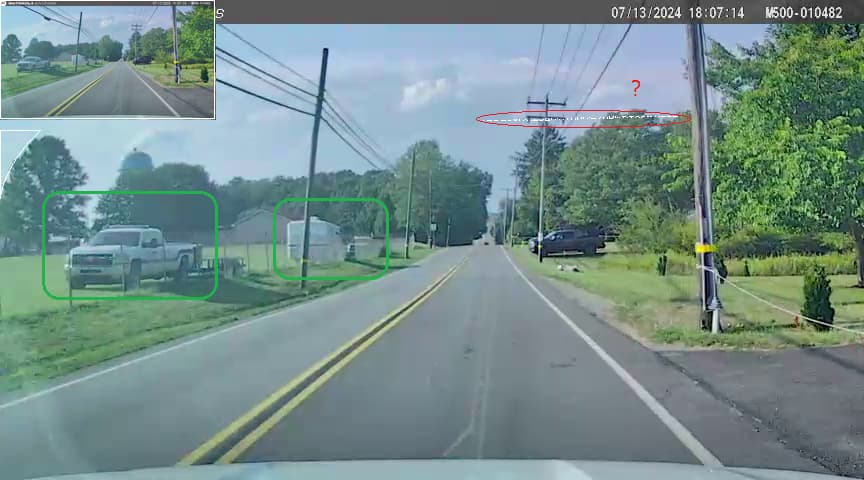
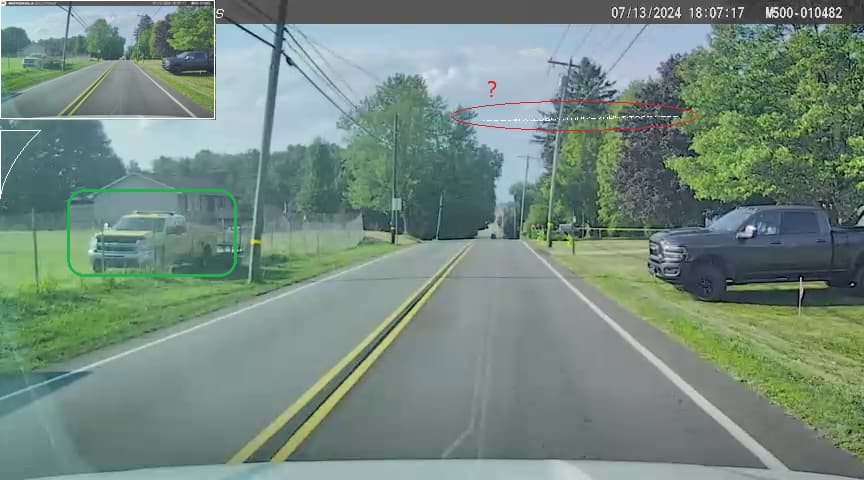
(I think these are some guards at the backyard of the rally.)
Putting yourself completely outside of the perimeter area on the roof of a building where a threat could come from any direction, now instead of focusing on the rally itself and the people inside the arena, you have to be worried about what’s going on behind you, to your right, to your left, which is – it’s, in my opinion, a very dangerous position to be in. You wouldn’t position somebody in that scenario.
Q: Would it be fair to say that your assigned post inside the AGR building, that was in line with your expectations in terms of where a reasonable or diligent post would1 be for a sniper?
A: Correct. Yes, it is.
Q Okay. Did you ever share any pictures of a suspicious person with the U.S. Secret Service counter snipers?
A: I did not.
Q: And for the record, again, did you receive any ops plans or information from U.S. Secret Service counter snipers?
A: I did not.
Q: Have you ever worked with Beaver ESU in the past?
A: I have. Multiple times.
We’ve done trainings together. We’ve assisted them on several incidents in Beaver County. They assisted us on a shooting in Butler County. So multiple times.
Q: And if you could go back, sir, can you describe specifically your assignment location?
A: So I was on the second floor of the building. I believe it was the southern side of the building, second floor, third window, going west to east.
The home team will have the lead. The other team is to be assisting. So if an incident occurs in Beaver County and we are asked to assist, we show up and do what is asked of us. And that’s the way it’s supposed to work both ways.
Q: And in this particular situation, how did it work?
A: They – I can’t speak to the other operators from Beaver County that were there that day. I can only speak to my interaction with and .
set up for observation on the window at the end of the hallway facing west. We had our area of responsibility. And that’s what we were to focus on that day.
Q: How many snipers were on your floor?
A: Originally three.
Q: And then did that change?2
A: At approximately quarter after 4, [Woods] had to leave. I believe he was attending an event with his family, and he left that day.
So the way we were set up in the office, my rifle remained at one window all day till, obviously, the shooting; the same with . So we were able to move throughout that second floor window to window with binoculars to get a better observation of what was going on around the building.
Q: Did anyone come to take over [Woods]’ spot?
A: No.
- ([Woods]') (So one might guess the last letter is an s.)
Q: So to be clear, you and were sort of going between or sort of moving between the three locations, then, rotating?
A: Correct.
Q: Okay. And can you go through what the rotations, the timing, how that all worked out? Did you stay at a certain point for a certain period of time? Or can you go into detail on that?
A: So not specifically. I was at my position, my window, from 10:45 that morning until probably about when [Woods] left.
The only time I left my – I had two windows in my office – or I’m sorry. I had one window in my office, and then there were two other windows that I rotated amongst which was in a matter of 20 feet, rotated between those windows. Short of using the restroom, that was the only time I left.
Q: What communication resources or devices did you and others from Butler ESU have available on July 13?
A: We had our county radio system as well as our telephones, cell phones.
Q: During July 13 were you able to communicate with other law enforcement personnel?
Other members of the team. Yes, absolutely.
Beaver County’s ESU members were also issued Butler County radios so they could communicate.
On the channel that we were using, ops 4, that would have been all operators and sniper personnel on scene that day were on that channel.
Q: Do you think you need a map to refresh any recollection?
A: I would – in all honesty, I would like a map to show you guys exactly where my position is. I think that might clarify things –
Q: I have four different maps, and I’m happy to give you all four, and you can just choose whichever one you like best.
Actually, there are two maps, two pictures.
--------------- 8< ---------------
p25
1 Like
There appears to be some artifacts that sometimes generate when using the VLC interactive zoom, and from what I’ve encountered, a similar broken line along this area of the video.
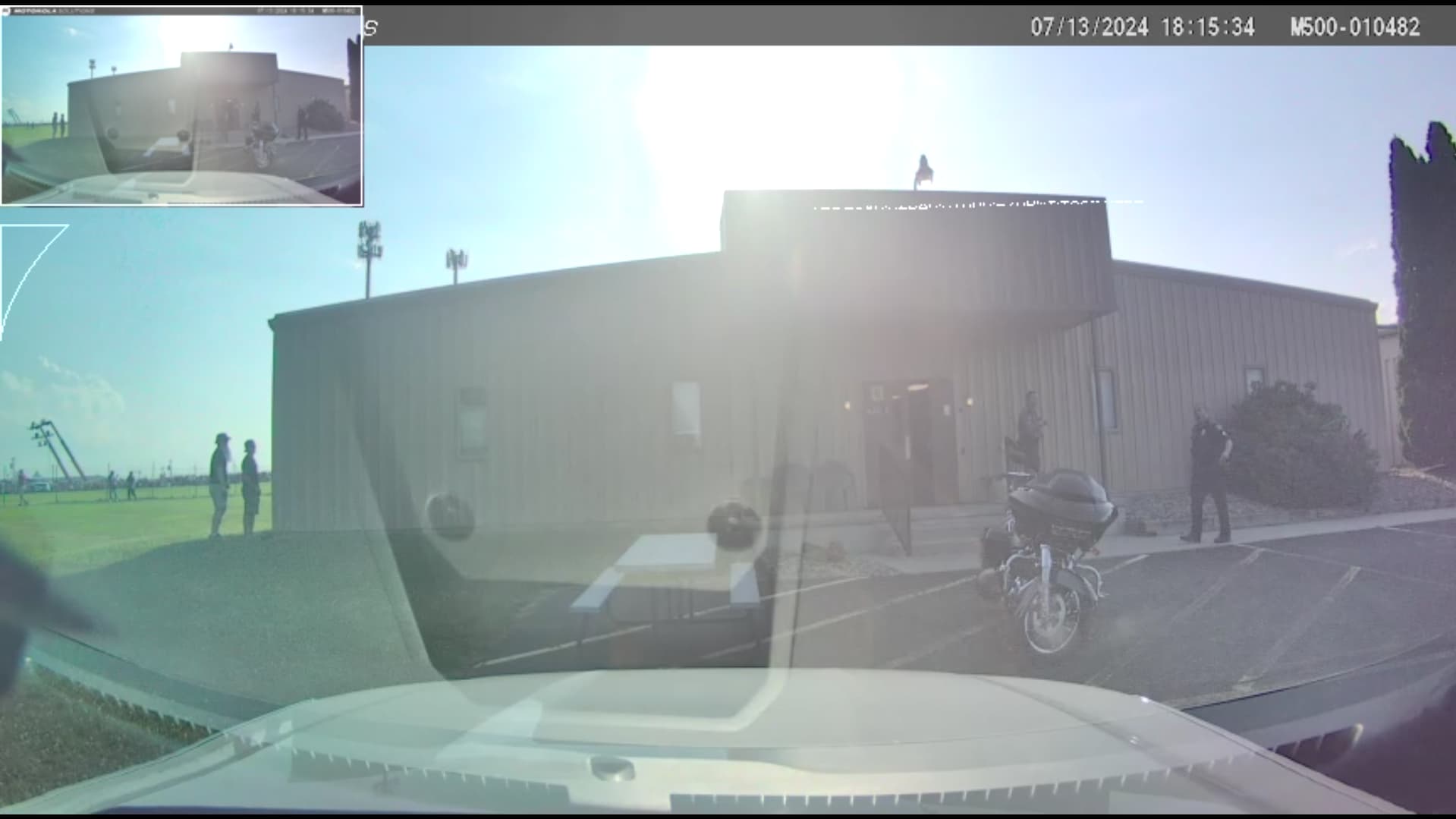
It doesn’t appear in every video I try to zoom in on, so I’m not exactly sure where it comes from, but I imagine it’s part of the coding in the zoom function causing artifacts.
/

3 Likes
Playing directly from dropbox it is not there.
(It looks like the raw detector signal from tomograph. Might be interesting to decode.)
Not alwasy encountered.
Probably I’ll try to decode, maybe it has some metafile info.
2 Likes
Unfortunatelly this document does not contain a glossary, where you might find the redacted word.
1 Like
I don’t even know what that is, but I’m intrigued! I have seen a line like this appear multiple times, though only through using the interactive zoom in VLC player. Honestly I haven’t noticed it change in appearance ever, but there may be slight differences in not picking up on.
1 Like
Great, that gives us confirmation on Sean Curran, as well as another agent’s face and role on the detail. I’ll start filling in that slide some more in the Recognition Tools.
3 Likes
It is quite easy, almost.
(You wanna see a “slice” of a body. You can reconstruct it from sequences of silhouettes. You need as many angles as rows in the picture are. (It is just matrix calculations. I can do it with 64x64 images only, it needs a lot of memory.)
So you get a columnvector of numbers, multiply by the inverse matrix of the transform, and the slice there it is. And you can get the matrix with ray tracing. When a ray encounters a pixel, you need to add 1.)
1 Like
p25
Q_ And for the record, before we start delving into these, just to make it very clear for anyone reading this because they’ll have the transcript, but looking at A, can you confirm that is an overhead, sort of looking north on a north-south orientation over the farm grounds and then the AGR building right in the middle?
A: Yes, I can confirm that.
Q: Can you turn to B, please? B is also north-south, kind of an overhead of the entire area. Is that right?
A: Correct.
Q: All right. Can you turn to C? C is looking southwards with AGR at the bottom of the page with the farm ground in the background. Is that right?
A: That is not –
Q: Oh, I’m sorry. Did we get that switched?
A: Yeah, I believe so. C – D is the one –
Q: D is the one I just described?
A: Right.
Q: Okay. I got that switched up. kay. So C is looking northwards, farm ground and the barns in the lower right-hand corner, AGR kind of in the middle at the top looking north.
A: That’s correct.
Q: And then D is looking south with AGR at the bottom, farm grounds on the top?
A: Yes.
Q: Have you worked any prior political rallies or political events?
A: I have not.
Q: Have you ever worked in any capacity with the Secret Service before, any similar event?
A: I have not.
Q: You said you met about 10:30 on July 13th. Just about where did you meet him?
A: So I met him off of Brady Paul Lane. One of the fields there behind the barns was used as a parking area for officers and EMS personnel.
Q: And then he brought you to the AGR building?
A: Correct. I took my patrol car over, which all my equipment is in, and I parked it near the CONEX box at the – in the AGR parking lot.
Currently I’m looking at A.
[Witness marking.]
Q: And you proceeded inside the AGR building where you set up – I believe you set up at the third window from the left?
A: Correct.
[Witness marking.]
Q: Exhibit C may have a better view of that if you’d like. Defer to you.
[Witness marking.]
Q: At any point did you ever think you would be in a counter sniper role that day?
A: I did not.
Q All right. You show up. You meet . tells you, hey, you’re going to do crowd oversight essentially. Okay.
Do you have any sense of whether Secret Service knew of that role that you would be occupying?
A: It was explained to me that the Secret Service would know where we were positioned.
I don’t recall exactly what was said to me. I mean, they knew we were snipers assigned to the second floor of that building and what windows we would be occupying.
Q: Did you talk with Sergeant or Sergeant about the crowd oversight role and your location in fulfilling it, about whether that was good, whether that was bad?
Any thoughts on sort of how you were set up?
A: No, I didn’t have a discussion with them as far as what our role was that day.
Q: All right. Did you ever have a discussion – was Patrolman ever in the AGR building, to your knowledge, early in the morning on the 13th?
A: I don’t know if he was in the building that day or not.
Q: What’s your understanding of the security around AGR, either who would be doing it, whether people would be there, how that would be handled?
A: It was explained that there were to be uniformed officers in the area that day. To my knowledge, that didn’t take place.
If I recall, it may have – I’m guessing. It may have been .
Q: Okay. Did he say which uniformed officers and from what agency?
A: No, he did not.
Q: Okay. Just someone will be around here.
Q: Communications plan, you said you had a cell phone. So you had your cell phone with you?
You were on the group cell phone text thread with the snipers?
A: Yes.
Q: Do you have FirstNet?
A: No, I do not. I have Verizon.
It didn’t seem to affect me, to my knowledge. I was able to receive and respond to text messages from the snipers.
Q: All right. And then you also had a radio?
A: Correct.
Q: And those are the local radios that can go between the different channels. Is that right?
A: That is correct.Q: So you can do ops 4. You can switch to ops 3?
A: Yes.
Q: What were you on most of the day?
A: Ops 4.
Q: Do you ever do the scan, or were you guys just on ops 4?
A: You can set the radios to scan. I did not have my radios set to scan that day.Q: In other words, you said earlier you’re on ops 4. If you have a problem, you report it, and then command relays it out. Is that right?
A: That’s correct.Q: What is your impression of, let’s say, patrol on ops 3 has an issue, what was your impression that day of how that type of information would get to you?
A: My understanding would be that would be relayed on to command, and command would put that out over ops 4.
(I think i is oversimplified view. I’ll try to find an image. No need to invent tapwater.)
Q: id you ever see any drones that day?
A: I don’t recall seeing any drones flying around.
Q: [Woods] leaves approximately 1600, you said, 1620?
A: Correct.
Q: Did he ever send you a text message?
A: Yes, he did.
Q: What did he say to you?
A: He sent a text message just to myself and stating that there was somebody that had, quote, followed our lead into the parking lot and saw leaving the building with his rifle so he knows we are up there.
Q: Okay. Did he ever come back in and alert you of that?
A: I don’t recall if he did come back in the building or not.
Q: Did he ever give any ideas or thoughts on what to do about that, or was he just like, hey, we’re kind of – someone has seen me?
A: Just somebody had seen me.
Q: All right. Let’s walk forward, kind of more into the 1700 time frame. What happens next? And at any point did you observe Mr. Crooks?
A: I did. For the record, I’m referring to my after-action report. Shortly before 1700 hours is when I observed Crooks initially.
Q: I’m sorry. You said 1700?
A: Yes.
What I observed Crooks doing was – to me he looked – he stood out. He was walking around the grassy area between AGR and the secondary fence line, kept looking up, looking at the building. One point that is what raised my suspicion is he was looking directly at the window I was positioned at.
Q: Do you have that in front of you?22
A: Yes.
[Witness marking.]
Q: Sort of in that little gap between the first and second buildings of the AGR complex. Is that right?
A: Yes.
To the west of the building.
Q: How many people other than Mr. Crooks were around that area at the time?
A: So initially throughout the entire day nobody was in that area.
In that whole area between the AGR and the outlying fence.
The final speaker stops speaking, and there was a period of time where they were playing music and stuff prior to President Trump arriving. That is when people started gathering in that area. Roughly 4:30 p.m. people started gathering along the fence. Initially it started off with two or three people, and then the crowd started to grow from there.
Q: At its peak or, let’s say, moving it to 1800, about how many people were there, give or take estimate?
A: I would estimate 150 people.
Q: Lots of folks?
A: Yes.
They have had set up lawn chairs. There was a female riding a horse back and forth with a flag up and down the fence line.
Q: Did that raise any concerns for you, any thoughts about, hey, what are all of these people doing here?
A: I understood what they were doing there. I didn’t understand why they were allowed to be there.
I will say the Pennsylvania State Police and a trooper and a female sheriff’s deputy attempted to get them to leave the fence line. But as soon as they walked over and asked the people to move, they started moving. As soon as the officers walked away, the people went right back to where they were at.
And at one point there was a maintenance – the gentleman from AGR that was in charge of maintenance that let us in the building originally, he also showed up along the fence line trying to get people to move, and they weren’t having it.
Q: Essentially there weren’t enough people to disperse that crowd?
A: That’s correct.
(I thought he was not the owner.)
Q: Okay. To your knowledge, was that ever radioed in prior to the shooting, that, hey, we need some help out here and, hey, get those folks away?
A: I’m not aware of that.
Q: Let’s go back to your first sighting of Mr. Crooks. So you see him kind of wandering around. What happens next?
A: He – like I said, he looked up at the window I was positioned at and kept looking at it. He walked directly towards the window and underneath of it up against the building to the point where I couldn’t see him.
That made me feel as though he was looking or could – was potentially looking at the window to see if there was somebody inside the building. And when he went up against the building to where I couldn’t look down on him, I found that to be very suspicious.
Q: Now, I think this has been made clear, but you were not – your rifle was recessed from the window. Is that right?
A: That’s correct. And there was a screen in the window.
(curtain?)
Q: To your knowledge, would it have been possible for him to have seen up into the window where you guys were?
A: Potentially. I can’t speak 100 percent. I can tell you that having screens in the windows with the lights out in a given room that that window is part of, it is very difficult to see inside the room.
Q: Did Sergeant ever observe Mr. Crooks around that time?
A: So what had happened was I had observed him. When he disappeared along the lower edge of the building, I couldn’t see where he went any further. I walked over and spoke to , and I asked him if he had seen this individual. And I described him with the long hair, gray T-shirt, khaki shorts. At that time had not observed him.
A short time later tells me that he does see the individual I described.
So I walk back over to , and at that point had showed me – he had taken two photographs of Crooks. I identified him as that was the individual I was describing earlier. At that time he was sitting on the concrete wall at the southwestern edge of the AGR building that we were in scrolling through his phone.
Q: Okay. And you guys see him. You take the picture. What’s the next interaction or involvement you guys have with observing Mr. Crooks?
A: At about – it was minutes later. I had returned back to my post in that office. [Nicol] yells to me, “[Murcko], he’s out here again. He has a rangefinder.”
I would estimate about 5:10 p.m.
(About 1707 - he had a performance with Elvis.)
Q: And now maybe I missed this. Approximately when was the first time you saw him? I thought you said 1700, so obviously I misheard that.
A: Well, what I have written here was shortly before 1700.
Q: So you guys see him, see him with the rangefinder. Tell me how that reaction happens from there?
A: So once had seen him with the rangefinder – I did not personally observe him with the rangefinder – he again returned to that cement wall area of the AGR building. And then, according to , he walked north along the western side of the building.
[Witness marking.]
p35
--------------- 8< ---------------
- He appears on Malis’ dashcam, the time is an issue (at least 12 hours shift).
- Murcko saw him minutes before 1700, thought.
- Walks into the Elvis clip around 1706
- Murcko saw him again around 1710.
- Minutes later Greg saw him with rangefinder.