Mr. and Mrs. Nobody!
The Crack-Report delays are the following:
Shot 1 : 182 ms
Shot 2 : 180 ms
Shot 3 : 177 ms
Shot 4 : 178 ms
Shot 5 : 178 ms
Shot 6 : 175 ms
Shot 7 : 173 ms
Shot 8 : 178 ms
These delays are consistent with the distance between Corey and Crooks so about 116 m or about 381 feet.
2 Likes
That’s very small because Corey was almost in the path between Crooks and Trump. It’s on the order of a meter.
1 Like
When you watch the GIF animation, you can see that after shot 3 is fired from vent 1, Crook’s head remains visible on the roof, always in the same position.

1 Like
According to my calculations, shot 1 misses Trump’s head very close at 1:18.69, shot 2 at 1:19.54, and shot 3 at 1:20.22.
Trump begins to raise his hand to his ear between 1:19.83 and 1:19.87, or about 1.16 seconds after shot 1 and 0.31 seconds after shot 2, so I think his ear was hit by shot 2 because 1.16 seconds seems like a very long reaction time if it was shot 1.
What do you think?
Times indicated are those of Corey’s video.
1 Like
Do we have Corey’s video, or do we have a recording of Corey’s video?
Helen’s 2:42.31 TV interview, 23.98 frames/second contained a 23.98 frames/second recording of Corey’s video.
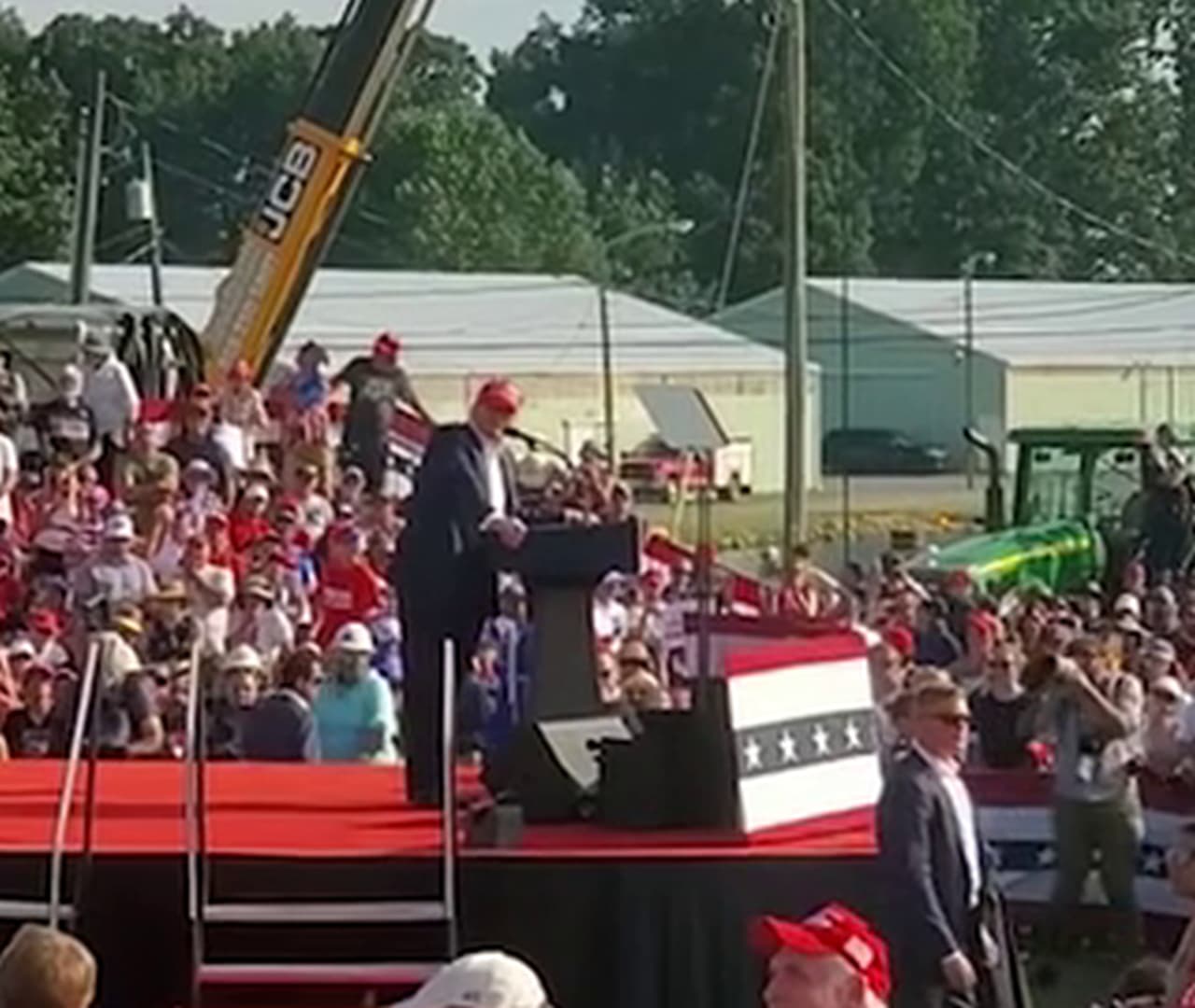
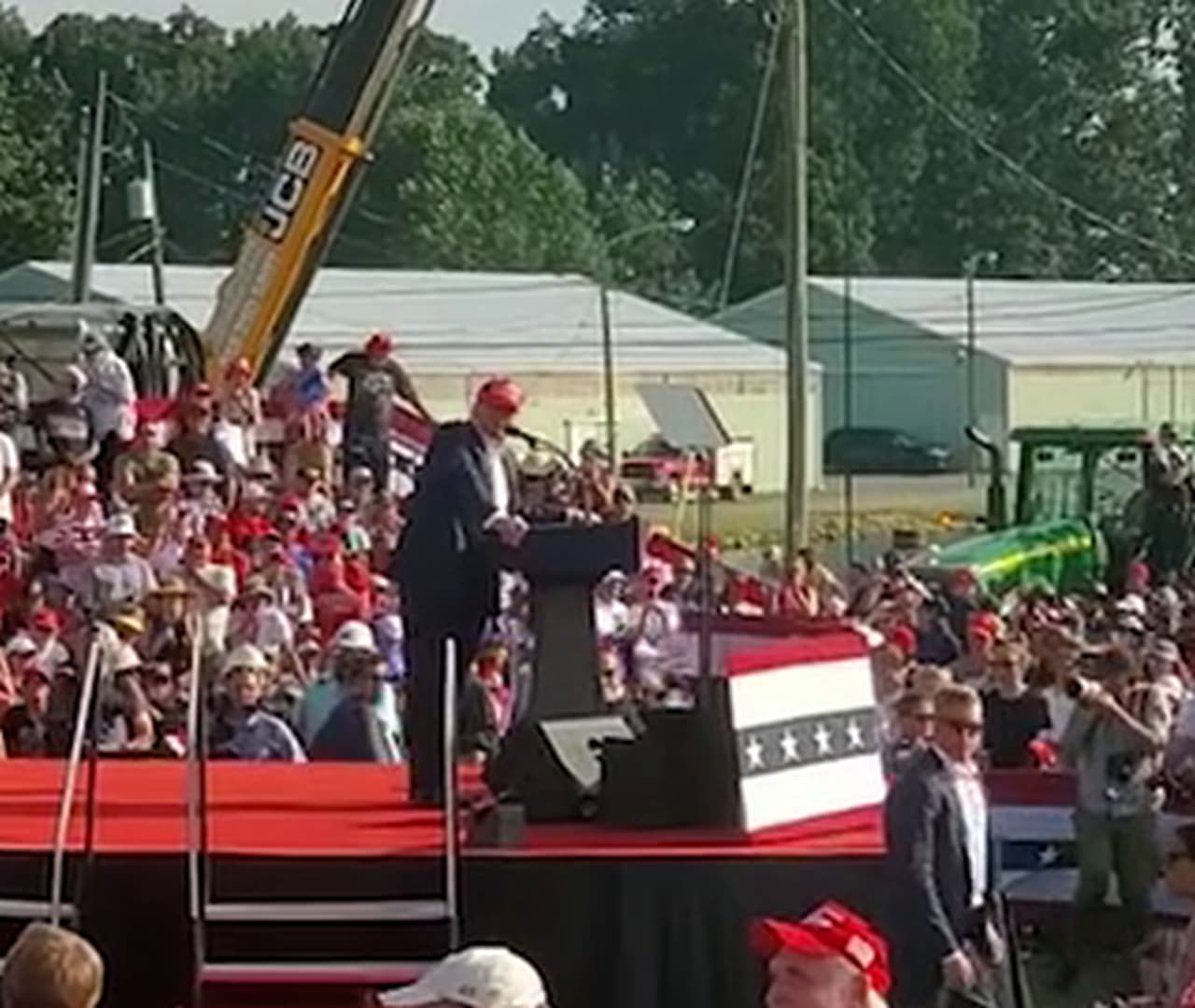
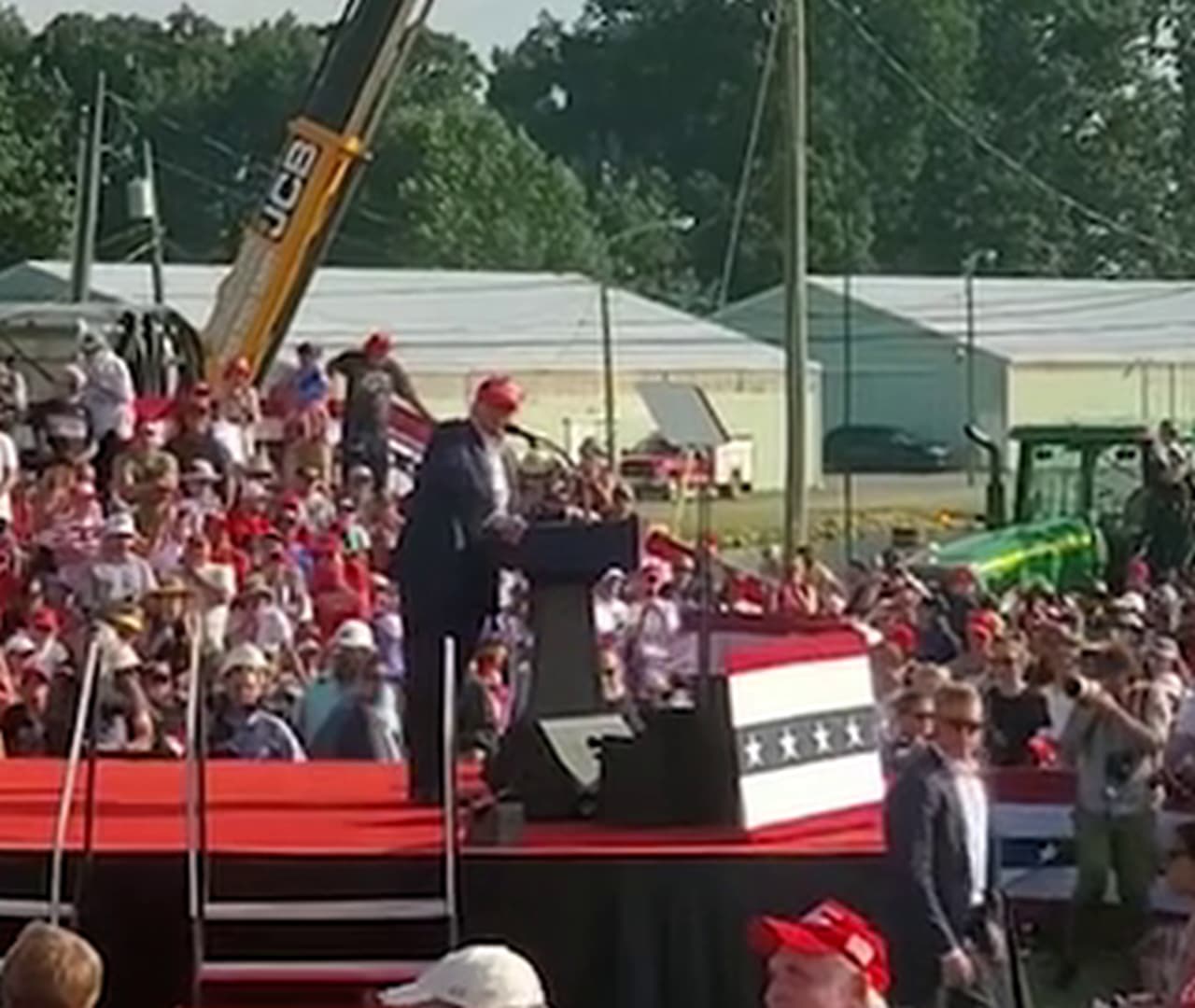
at frame 168 of my frames extracted(Trump makes a shoulder feint).
at frame 178 of frames extracted, and his hand is off the lectern at frame 179:
Analysis of Stage and Shooting Trajectory
Stage Positioning
When we measure from the corner of the stage, we get a distance of 129 feet from the middle barn’s right corner.
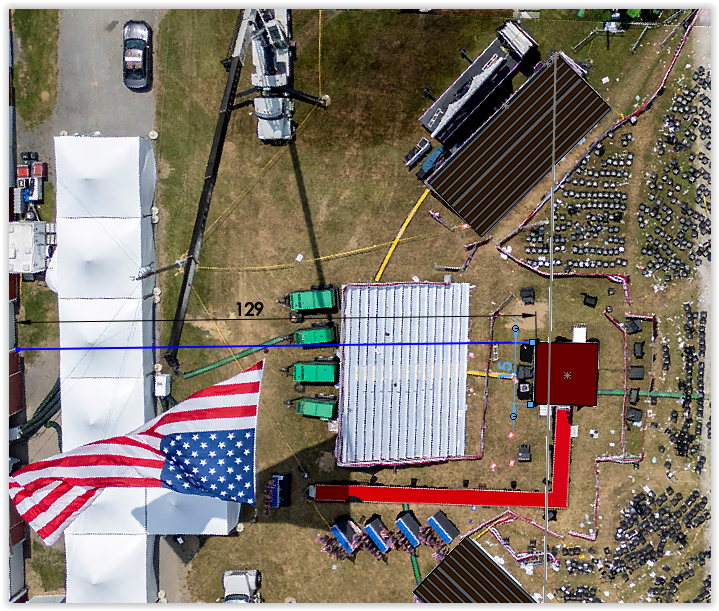
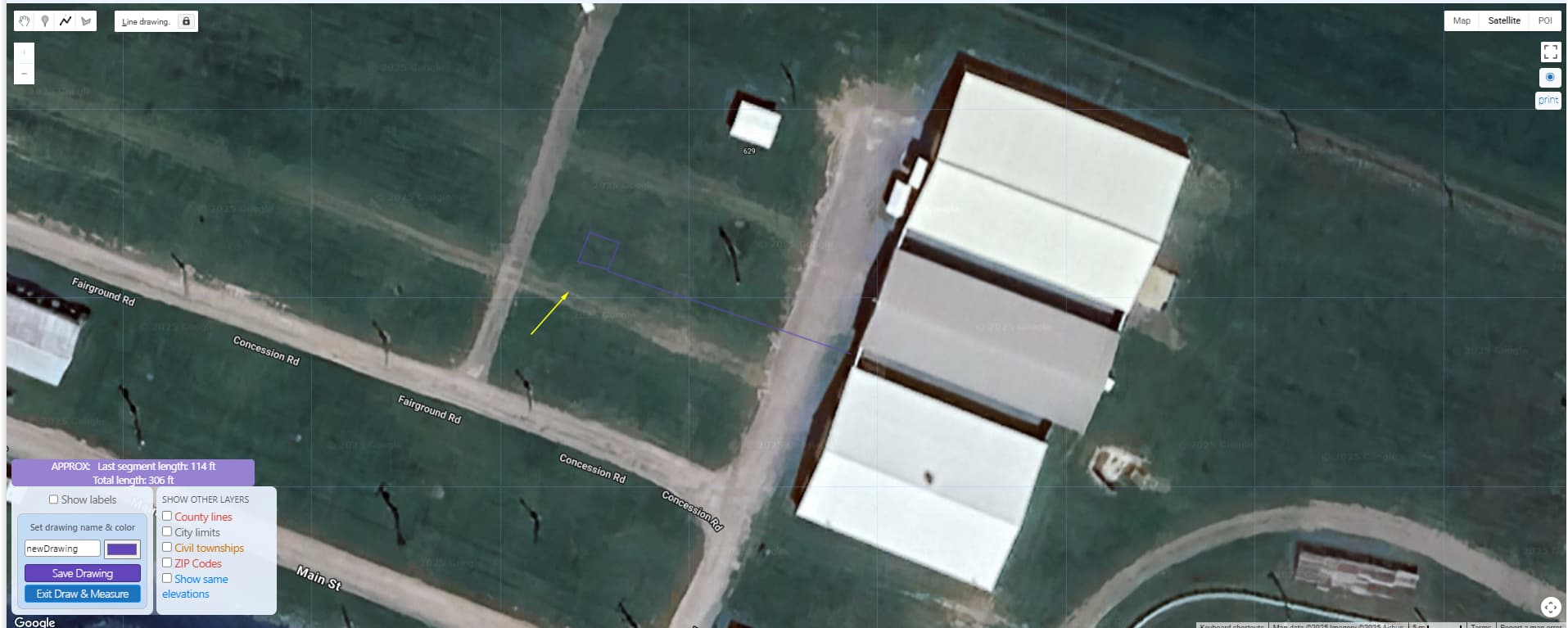
In the randymajors map tools (using elevation profiles), we first draw a line from the middle barn’s right corner, measuring exactly 129 feet.
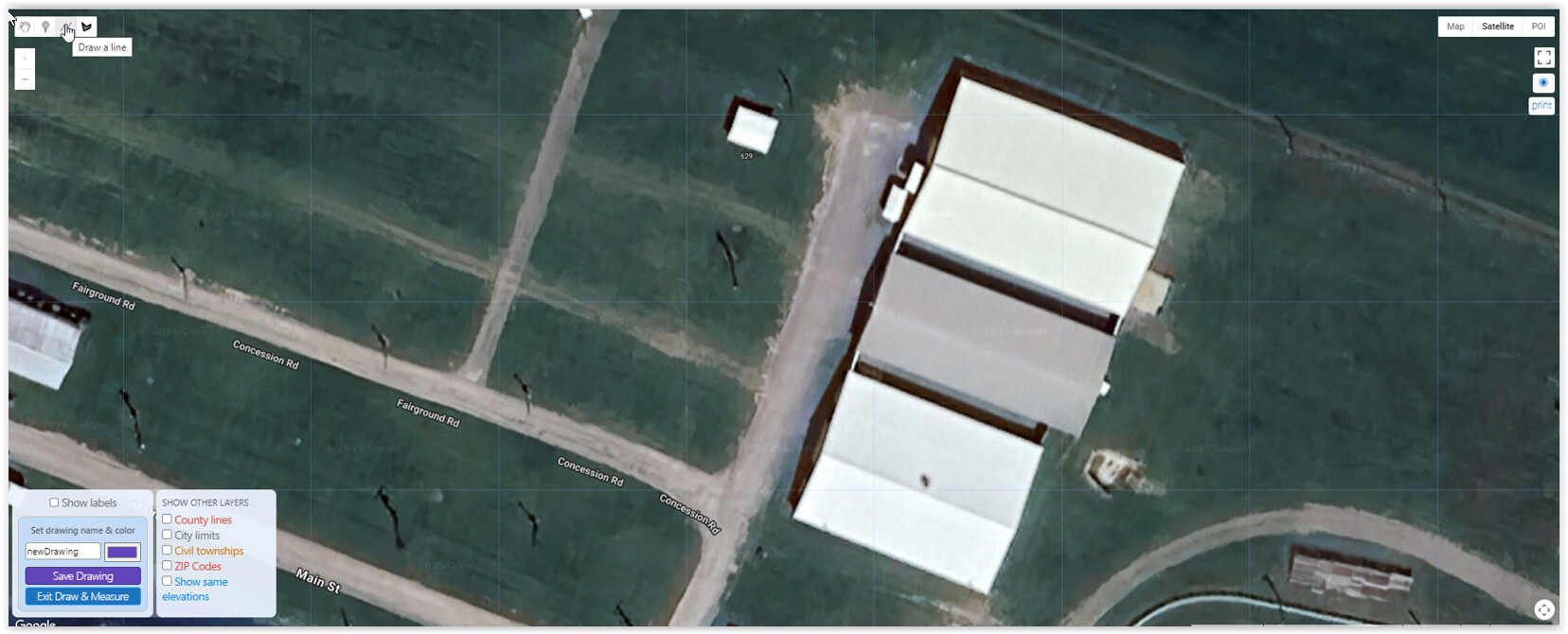
The drawn line precisely defines the distance to the front edge of the stage:
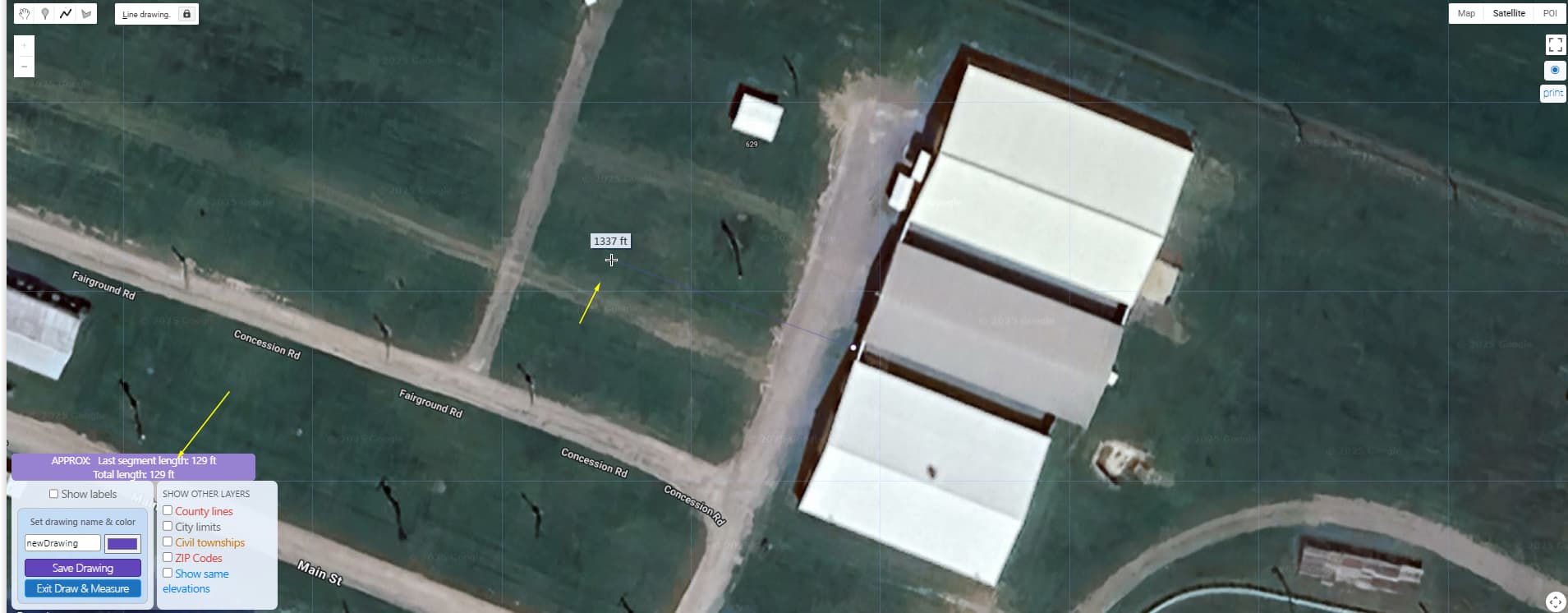
Simulating the Stage
To simulate the exact position of Trump’s stage, we draw a 15-foot square at the end of this line, accurately representing the stage footprint.
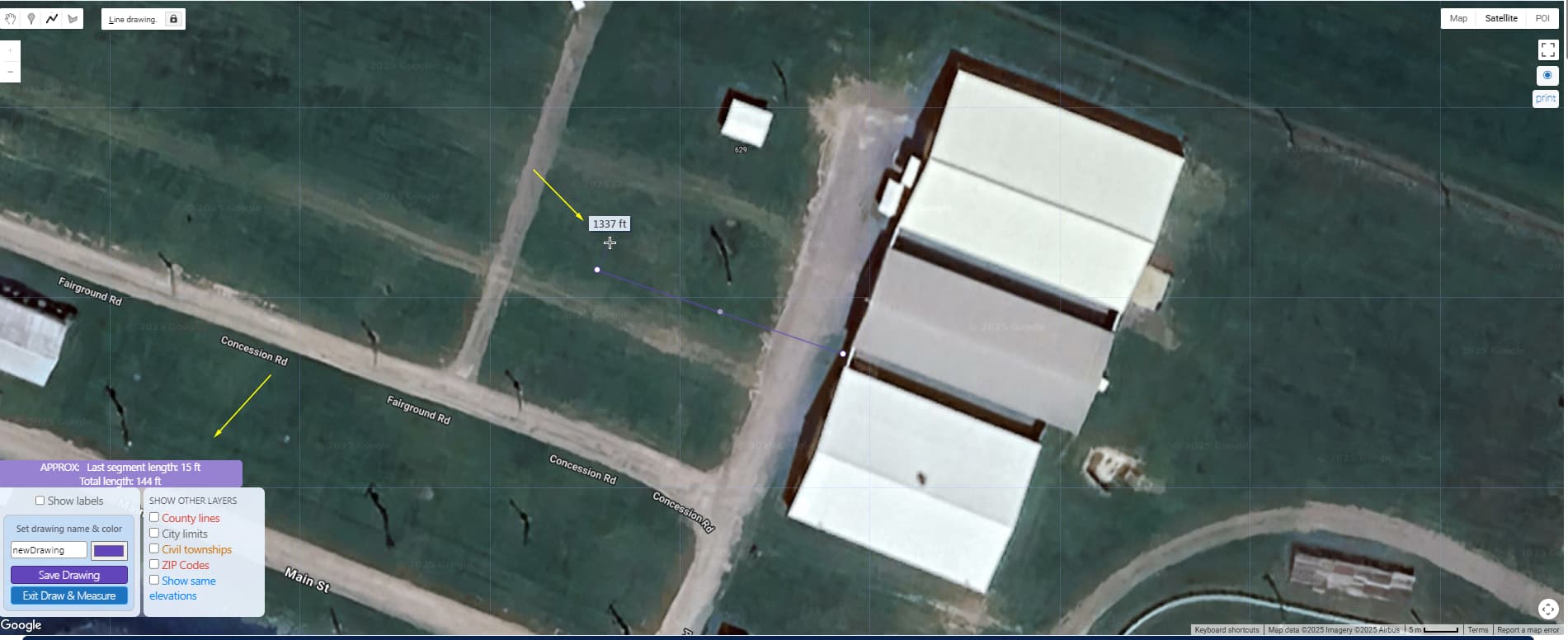
Marking Trump’s Position
Next, we mark a very short line using the “elevation profile” tool to indicate the exact position where Trump was standing during the shooting.
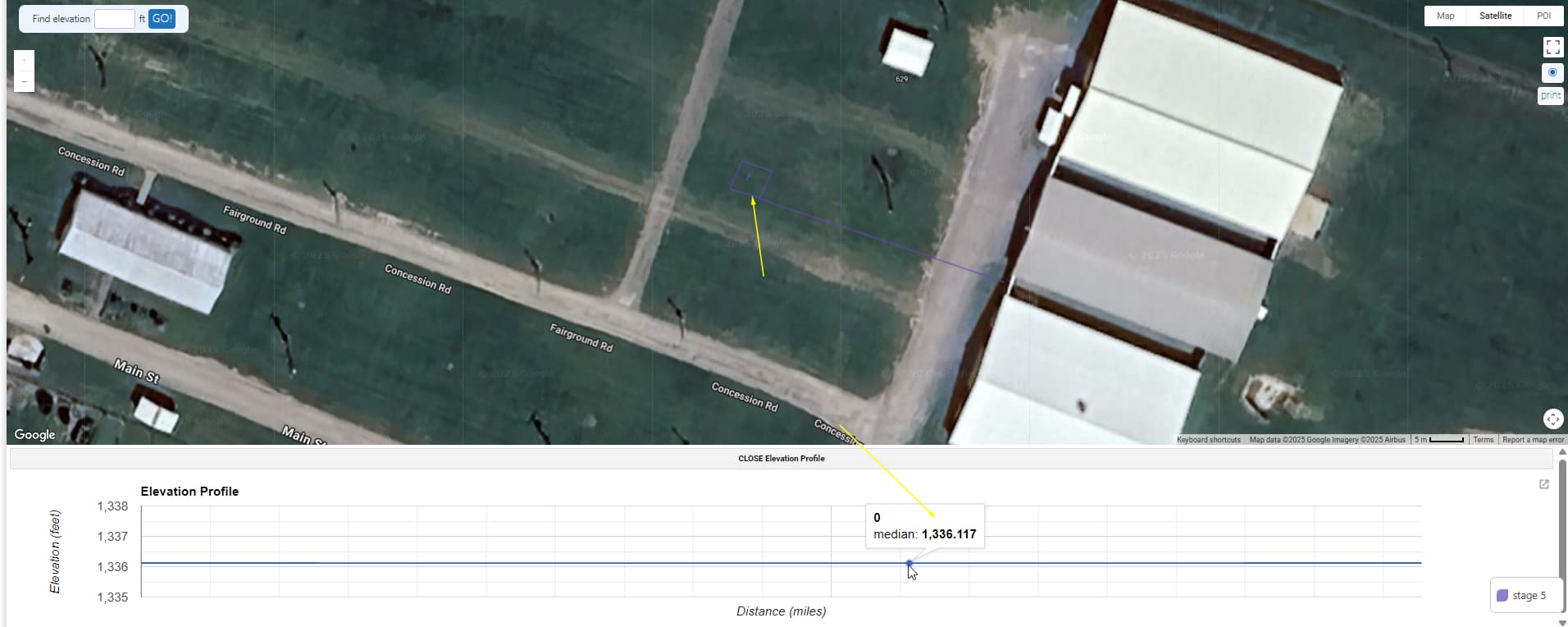
Using this method, we determine that the stage was set at an elevation of 1,336.117 feet above sea level. This means the height difference between AGR Building 6 and the stage is 0.847 feet.
This is by far the best procedure because RandyMajors’ platform, certified by Gary’s high-accuracy drone (with an accuracy of ±0.1 foot), allows us to establish the exact historical position of the stage. This is a significant advantage compared to relying on drone data alone, which cannot reconstruct the precise original setup.
Simple Calculation to Prove That Crooks Could Not Have Fired the First Shot
- Sea level elevation of AGR Building 6: 1,335.27 feet (confirmed by RandyMajors and Gary’s drone).
- Height difference to stage: 0.847 feet (acording to above method)
- Estimated stage height: 44–48 inches; we take 4 feet for conservative calculation.
- Estimated height to Trump’s ear: 5.83 feet.
Total elevation of Trump’s ear above AGR Building 6:
0.847 ft (difference in ground elevation) + 4 ft (stage) + 5.83 ft (Trump’s ear) = 10.677 feet.
Comparison with the Bleachers
According to the manufacturer’s drawings, the bleachers are 11.09 feet high and positioned at the same sea level elevation as AGR Building 6.
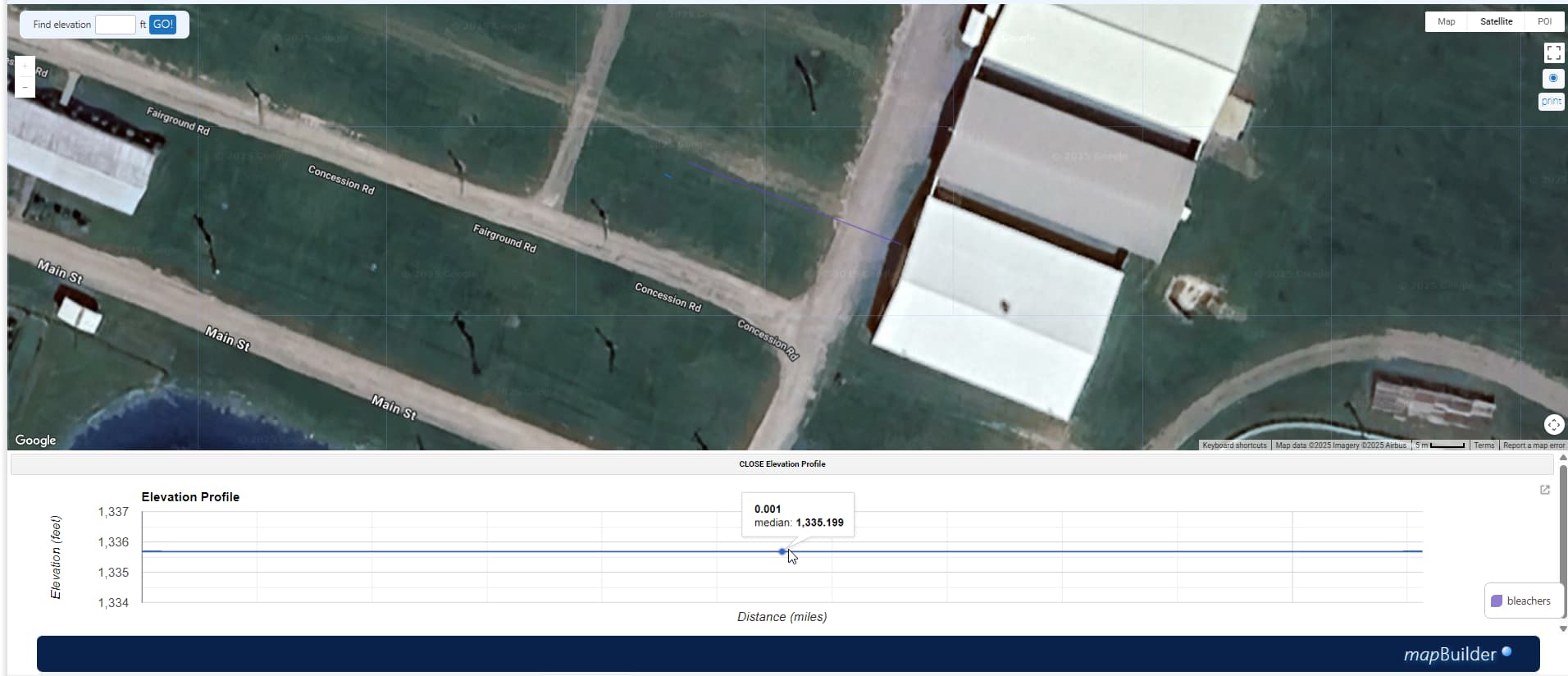
This places the bleachers slightly higher than Trump’s ear level. In practical terms, they are almost the same height, meaning a shot from the ARG building 6 would require a slightly ascending trajectory(going from low to high).
Analysis of Crooks’ Position
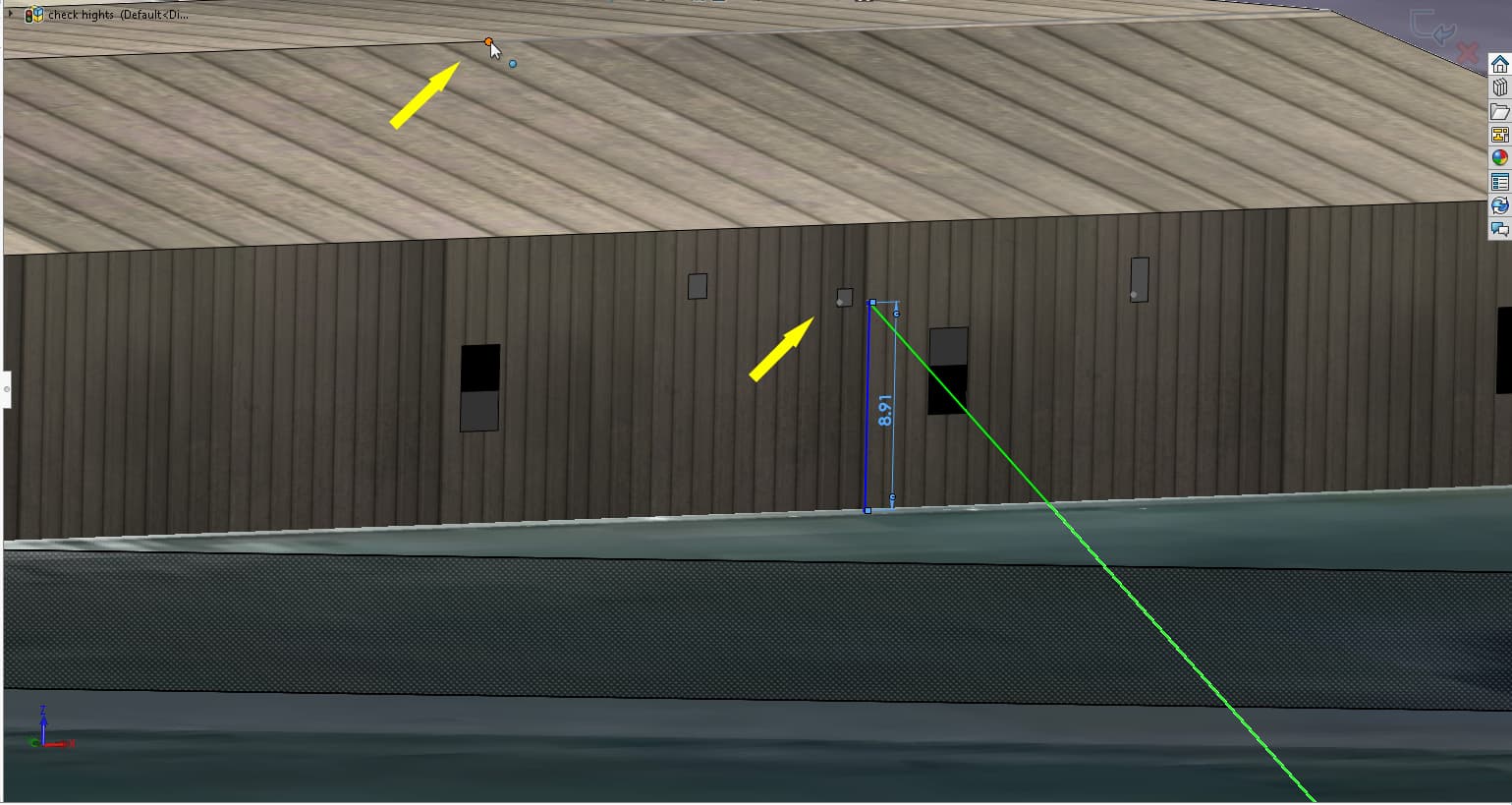
Crooks’ firing position is 15.4 feet high, making it impossible to hit both Trump’s ear and the bleacher corner simultaneously. The shot trajectory would have to be ascending to match the relative elevations of Trump and the bleachers.
If we backtrace the bullet to AGR Building 6’s wall, we find that it would originate at 8.91 feet, further confirming that Crooks could not have fired this shot.
Confirmation from Video Evidence
The mathematical and geometric analysis already indicated that the shots came from the vents. This was subsequently confirmed by original police body cam footage, which shows that at least one shot was fired from Vent 1.
Conclusion
Thus, there is no need for 3D CAD models or additional drone measurements. By simply following this straightforward geometric and elevation above-based method, we reach the clear conclusion: Crooks could not have fired the first shot. The police body cam video evidence showing a shot from Vent 1 corroborates this analysis.
@daniel59 @phasefive @schroederized
1 Like
You persist in reasoning by considering that the trajectory of the bullet is rectilinear whereas it presents a curve: it begins by being ascending, reaches a peak then descends towards the target.
1 Like
We have taken wind and gravity into consideration. Please see prior posts:


That’s a weird rate for video today. But it was a usual rate of television and cinema.
Anyway, the audio is 48 kHz.
1 Like
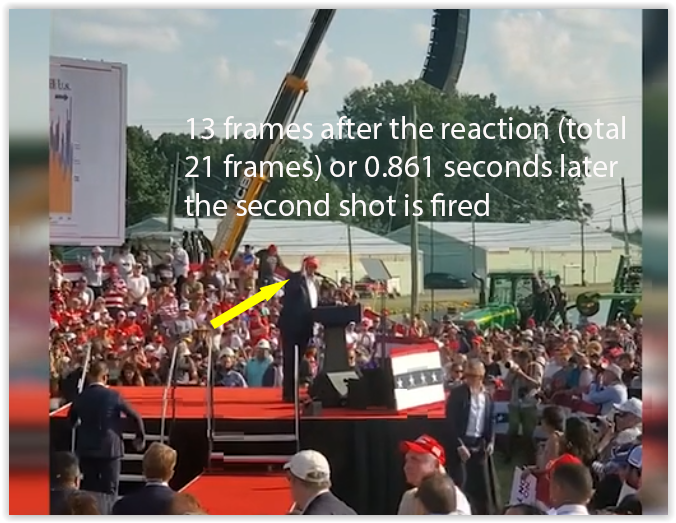
Having measured the time between shot 1 and shot 2 from Steward’s video, we find it to be 0.861 seconds.
Given that the Comperatore video has a framerate of 24 frames per second, this interval corresponds to approximately 21 frames (0.861 / 0.04167 ≈ 21).
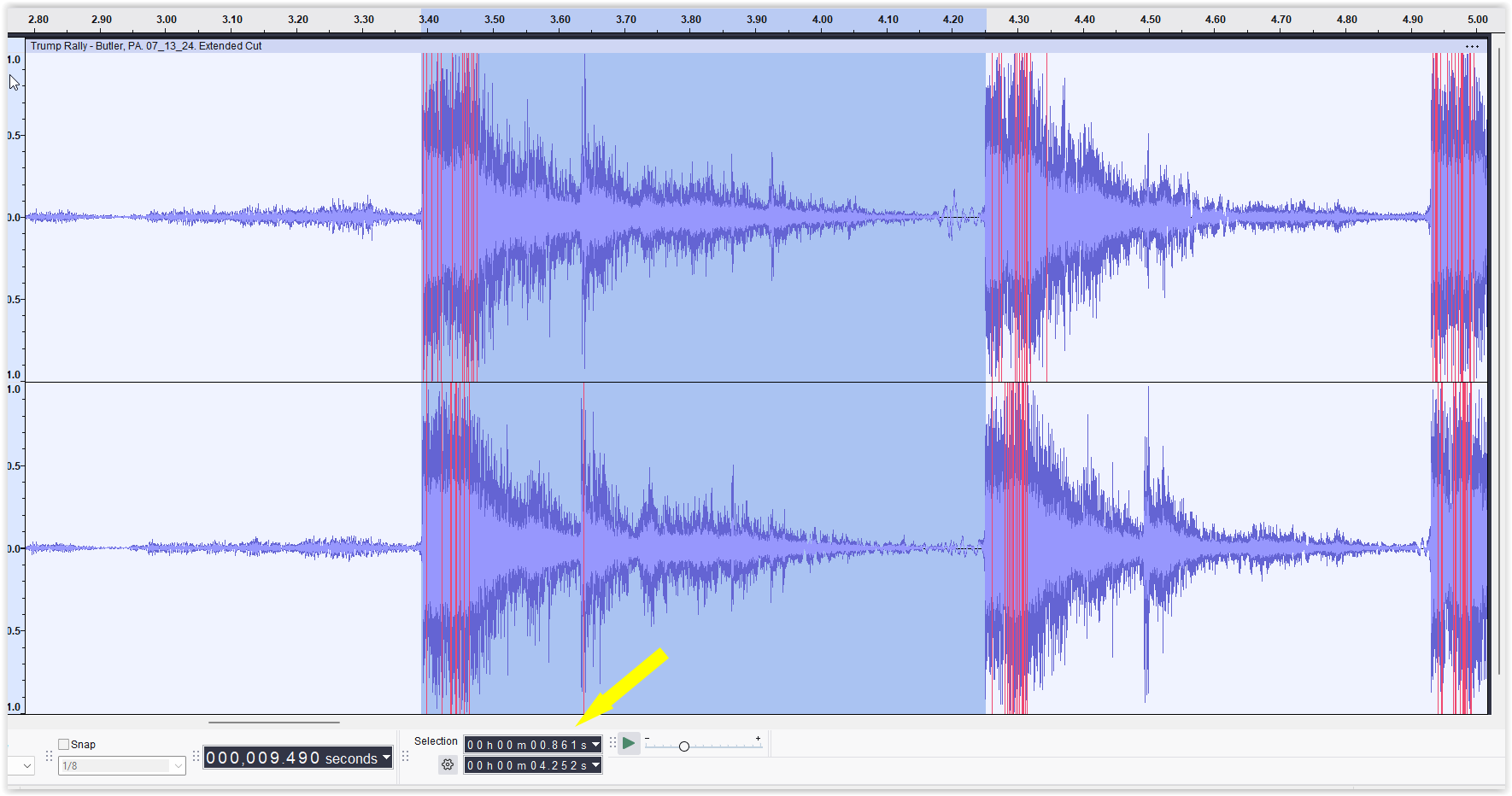
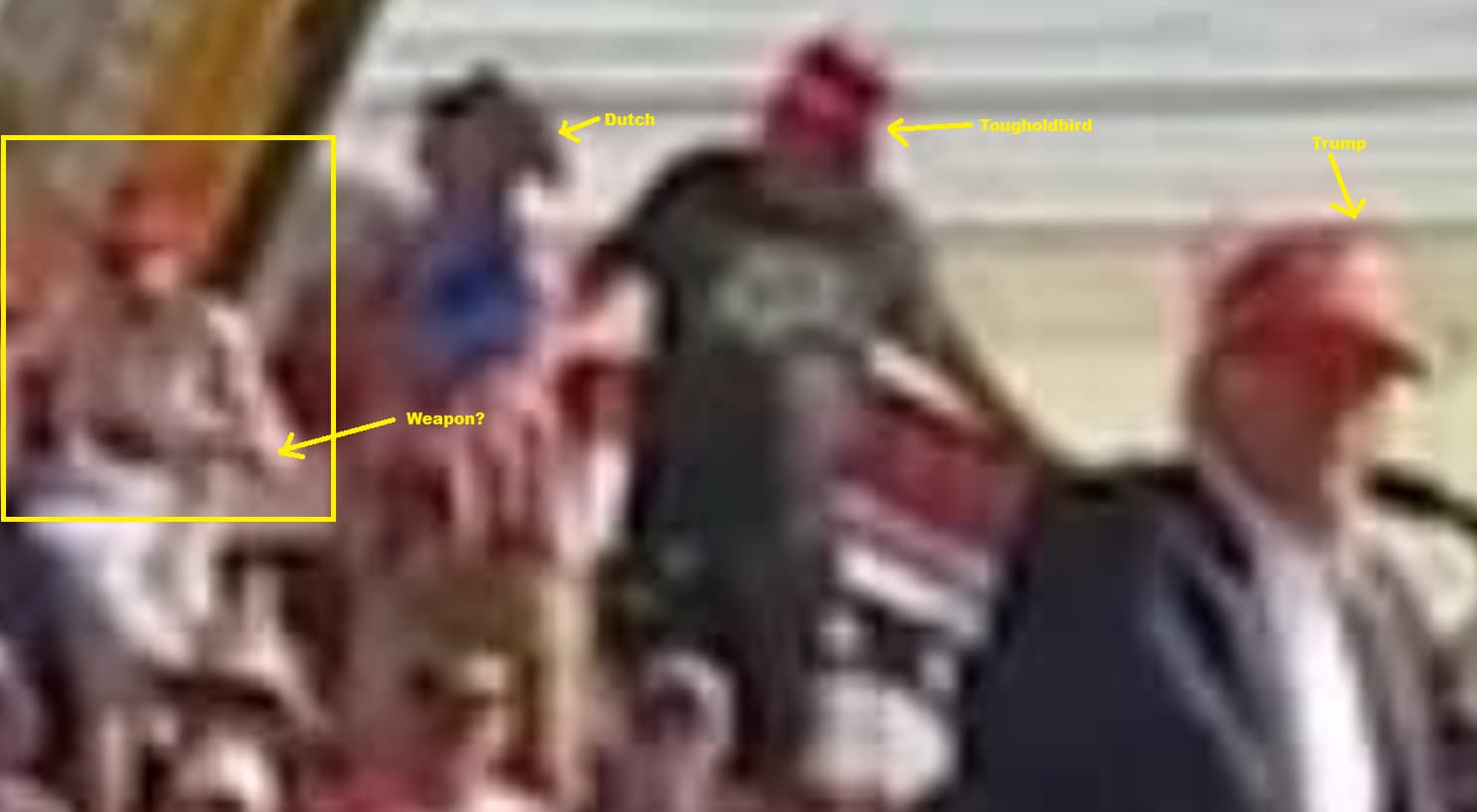
To determine exactly when shot 1 was fired, we can analyze the reaction of the man in the blue shirt with the red cap standing in the back corner. He raises his right arm in response to the impact behind him on the upper bleacher railing. Since an average human reaction time is around 0.33 seconds, this corresponds to roughly 8 frames at 24 fps (0.333 / 0.04167 ≈ 8).
By identifying the moment he lifts his arm, we can work backwards to approximate the firing of shot 1. Specifically, if we count 8 frames earlier than when his arm begins to rise, we locate the timing of shot 1.
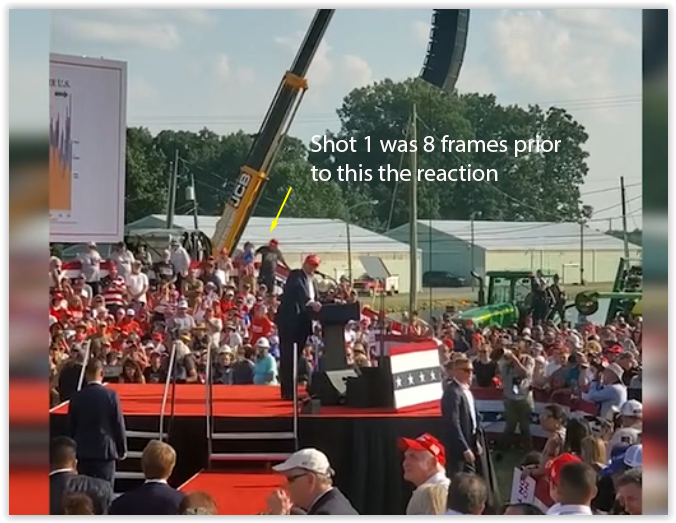
We have 21 frames total between shot 1 and shot 2. Subtracting the 8 frames (reaction delay), we get 13 frames remaining from when the man lifts his arm, until shot 2. When we count forward these 13 frames, we see that Trump is already holding his ear by the time shot 2 occurs, therefore making it impossible that shot 2 injures his ear, it was shot 1
1 Like
There is a big flaw in your reasoning: you are basing your argument on an average reaction time for an individual, but there is nothing to say that the individual in question is average!
1 Like
The bodycam video shows the time 18:11:47 at this point.
According to the vegas patriot research tool (rev 25) on page 9, 12 seconds must be deducted.
So the real time is 18:11:35.
According to the FBI timeline, shots 4 through 8 were fired at 18:11:37.
2 seconds might have been enough for Crooks to get up on his knees. That would have been a natural reaction after Trump went down and Crooks could no longer see him.
Perhaps it is possible to ask eyewitnesses who were standing to the west of Building 6.
Jon Malis, for example. Perhaps, like David Dutch, he can be reached via social media.
Zaliponi should also be able to answer this question. Has he ever commented on this?
My reasoning is different:
The bullet takes 146 ms to travel from Crooks to Corey, then another 31 ms to reach Trump.
For shot 1, Corey’s crack is at 1:18.657, so 1:18.688 for Trump.
For shot 2, Corey’s crack is at 1:19.513, so 1:19.544 for Trump.
Trump begins raising his hand at 1:19 + 20 frames, or between 1:19.833 and 1:19.875, or about 1.2 seconds after shot 1 and 0.3 seconds after shot 2.
1 Like
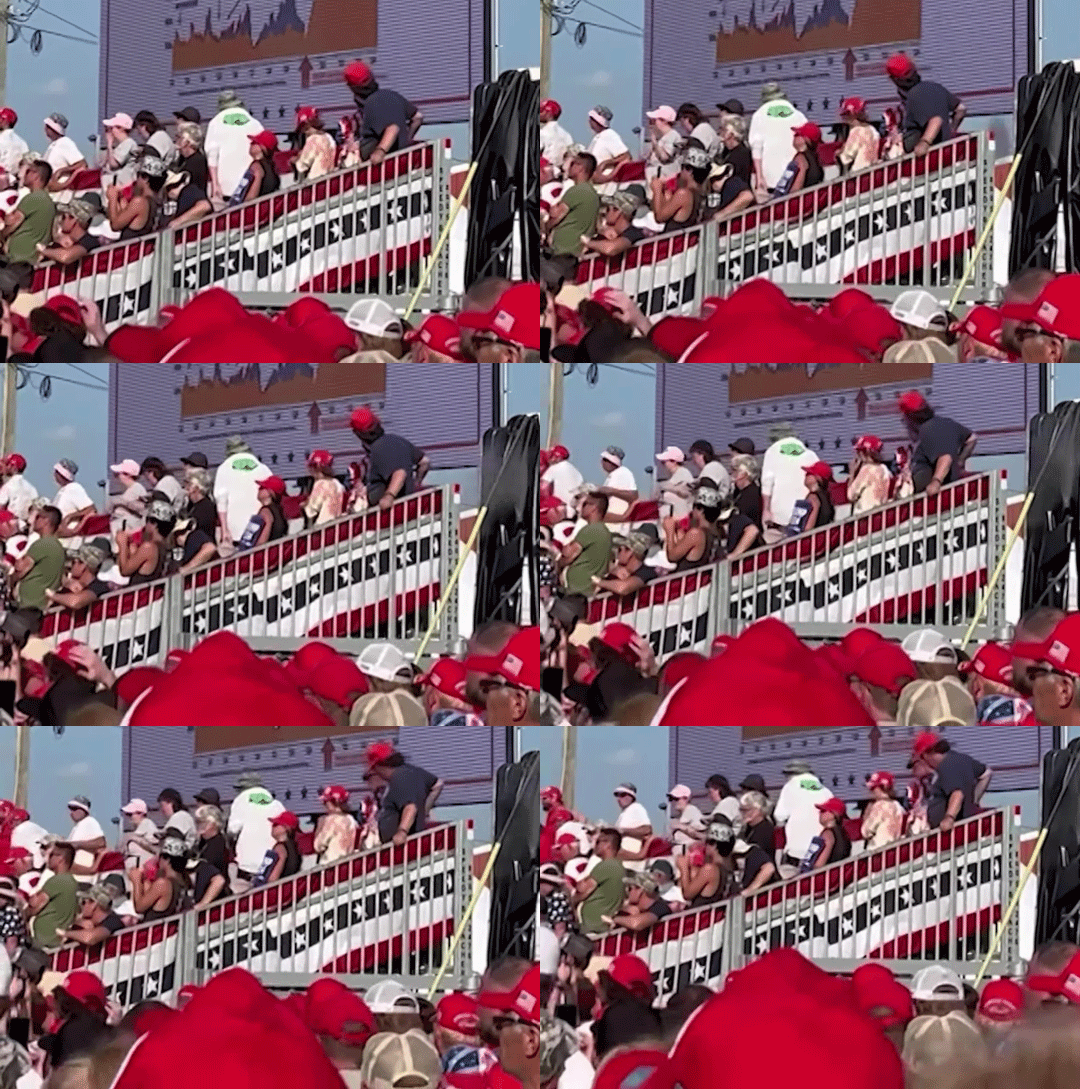
No, it is because we analyzed this situation earlier in another post. In this GIF, which comes from a video that has a framerate of 30 frames per second, counting 10 frames between shot 1 and his reaction gives us exactly 0.33 seconds.
2 Likes
You must be blind as well as an idiot.
How does this fit with Doug Mills bullet photo?
According to your analysis, the bullet trace on it cannot belong to shot 2, but should the bullet trace from shot 1 still be visible at this point?
Does it make any difference at all whether Trump’s ear was hit by bullet 1 or 2 in terms of whether Crooks could have been the shooter (elevations).
Dutch may have been hit slightly below the height of the railing.