No. My arguments are quite solid, I think, and the Vent Flash theory is straightforward to disprove.
What we see here is not a flash. It is a video artifact due to compression. Remember that you are zoomed in quite a bit, and the camera is moving and rotating, making things challenging for the video compression algorithm. Is the light gray rectangle in the center of this image what you are calling the flash?

If so, please step through the video one frame at a time. The dark area adjacent to the flash, just a little above and to the right, is only present for two frames. Then it goes away, but the “flash” is still there. It stays there for seven frames until it disappears. In total, the flash is visible for nine frames, which 267 ms. That is a very long time. Muzzle flashes are less than 5 ms, so you’re lucky to even see a muzzle flash with a normal 30 fps camera. What you are seeing here is not a muzzle flash, it is a very distorted representation of the vent, made inconsistent due to the limitations of the compression algorithm and the limited bitrate available to stream to the camera’s internal storage.
If that isn’t enough proof for you, take a look at this. Go frame by frame at the beginning of the video segment until you see the lady’s knees start to bend. She flinches downward when the first shot breaks. Next, measure the time from that spot to where you see the vent flash. You’ll see that it is 1.034 seconds. However, shot 2 was about 855 ms after shot 1, and shot 3 was about 1530 ms after shot 1. So, the vent flash at 1034 ms is not in sync with any of the gunshots.
Edit: To see what actual muzzle flashes look like, download this video:
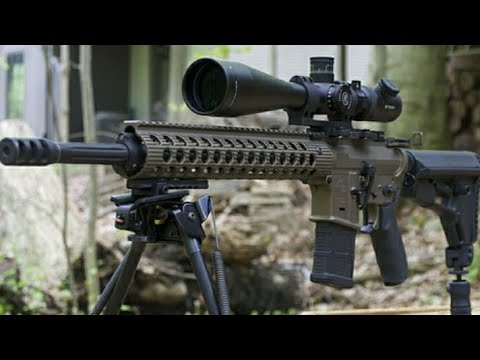
Pull it into a video editor so that you can step through it frame-by-frame. You will see that each muzzle flash occupies only one frame.