There’s no need for me repeat my TDOA analysis with different bullet velocities because, in the end, I did not need to use muzzle velocity data. When I first started doing the calculations, I was using the two recorders near the fenceline. For these sound sources, bullet velocity did come into play because they were so close to the shooter and along the line-of-fire. However, later on when I added three stationary sources (Cruiser, NTD and Don’t run) I was able to get “boom” data which is much better for TDOA analysis than “crack” data. When using muzzle blast booms, the only thing to consider is the straight-line speed of sound between the muzzle blast and the recorder.
Look at the color legend in my data table:
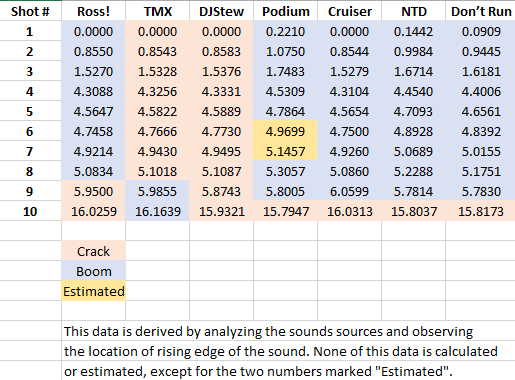
When using a dataset consisting of Ross!, Podium and NTD, I am using boom times for all of the first eight shots. This totally takes supersonic cracks and bullet velocities off the table. Here is the TDOA result:
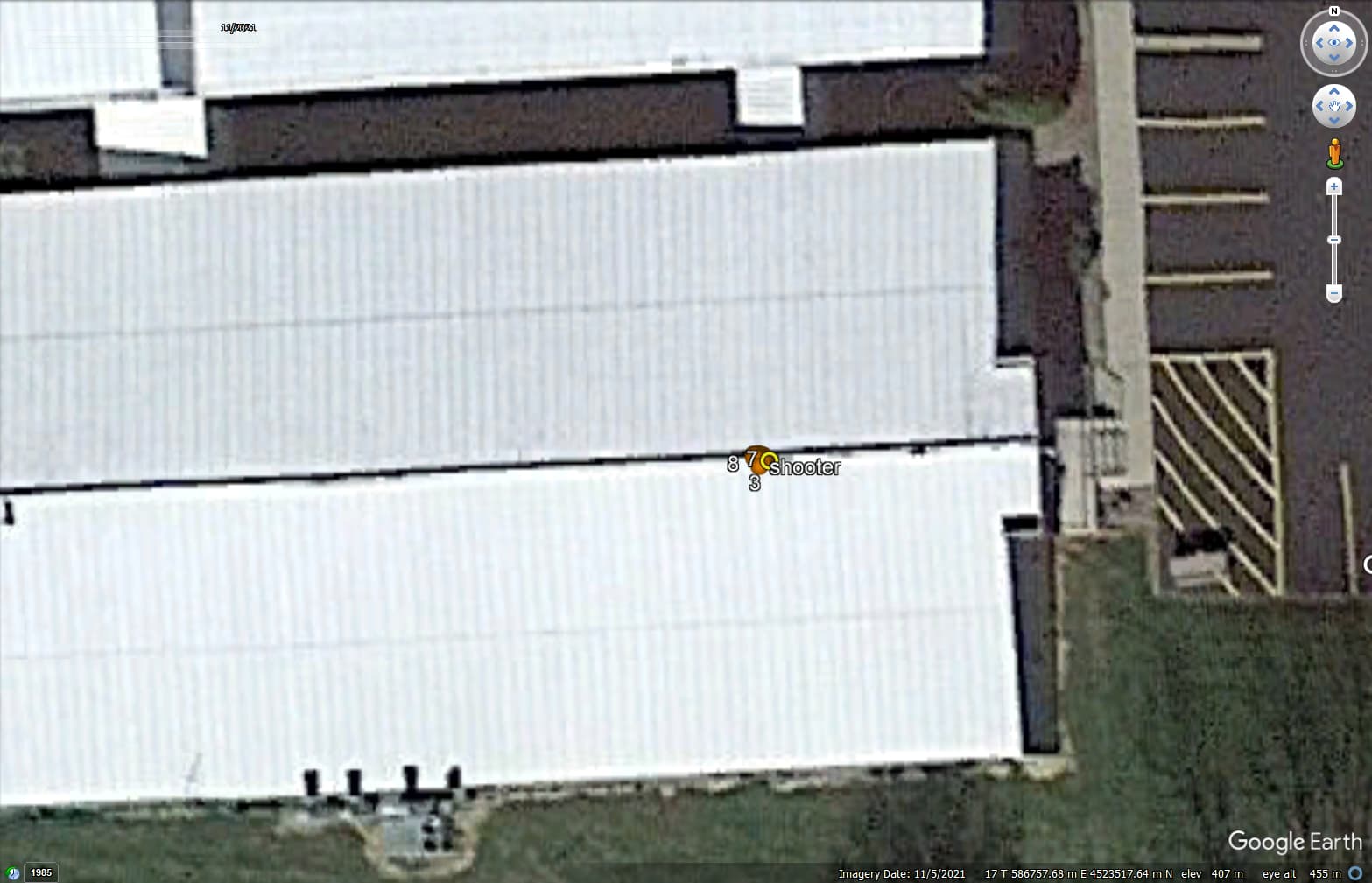
The first eight shots all came from that one very tight radius. I’m quite sure of it.