Originally published at: https://peakprosperity.com/the-mcjobs-report-and-is-oil-the-next-bull-market/
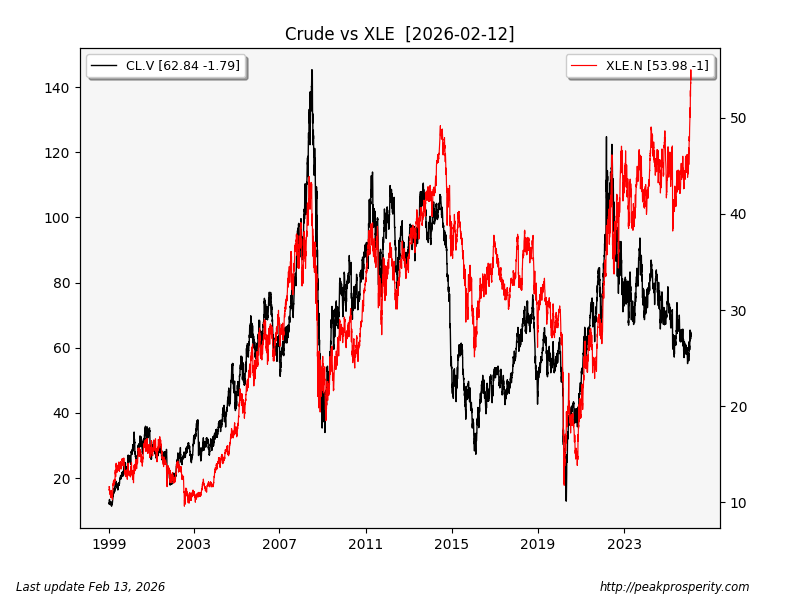
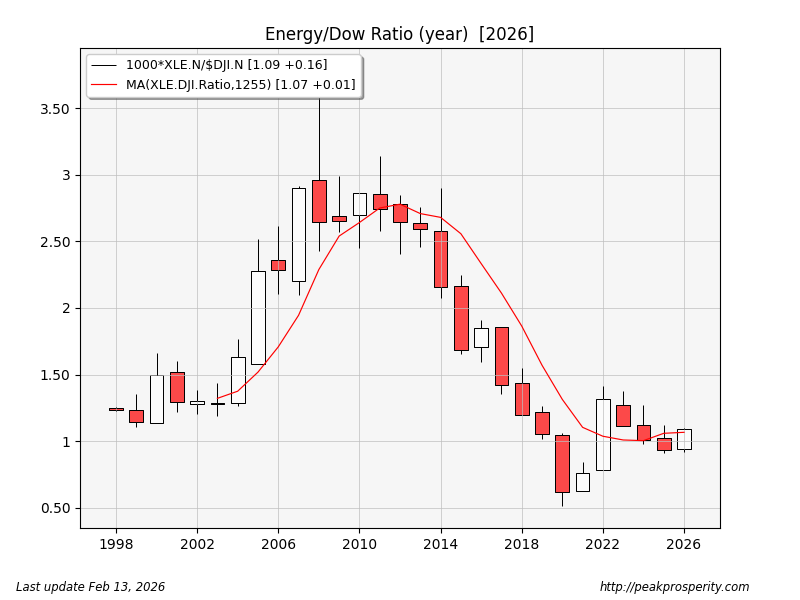
In this episode of Finance U, Paul Kiker and I discuss the McJobs report (as I lovingly call it), and the fundamentals and equity price action related to oil and energy. It sure looks like big money is quietly sneaking into energy and oil stocks, which is something they do before “allowing” the underlying commodity to rise in price.
Let’s start with the McJobs report. Continuing in the traditions set forth by every administration of my lifetime, the BLS is busy cranking out garbage jobs reports. How do we know they are garbage? Because they have been “revised lower” 25 out of 26 months.
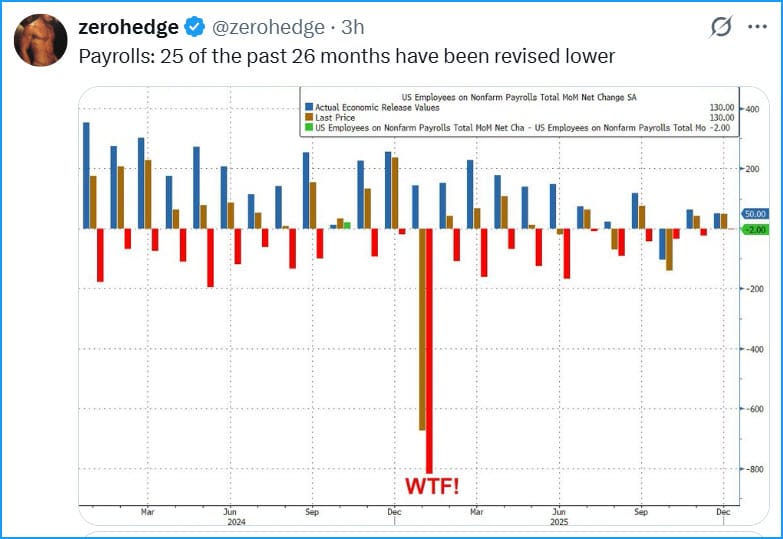
If the report were at all believable and consistent, the errors would cut both ways. But, instead, every month they are reliably overstated, and then later revised lower. This means the BLS’s job reports are political in nature, not the legitimate instrumentation of a well-run country.
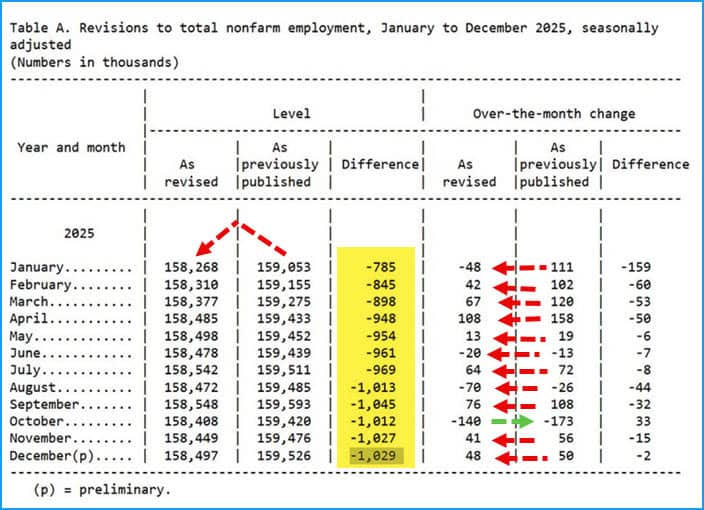
As if that weren’t bad enough, once a year in January, the BLS takes a swipe at cleaning up the books by declaring how much it may have over- or underestimated jobs the prior year.
Surprise! They started the year off by being off by a whopping -785,000 jobs and then added to that error for 11 out of 12 months, ending the year having only overestimated job growth by 1 million jobs.
Digging a little deeper, we find that of the jobs that did materialize, it was really only one sector that contributed to growth:
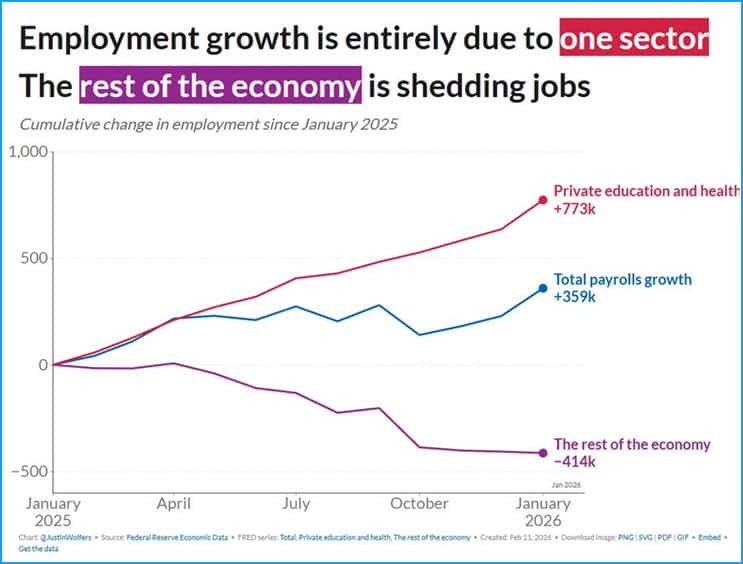
That’s not exactly a sign of economic strength…healthcare growth isn’t growth…it’s caring for more sick people, or doing it more expensively, neither of which are productive value adds to the economy.
We unpacked a lot more, especially the impact of all this on college graduate hiring (not good)g, so be sure to tune in to hear the rest.
Shifting gears to oil, we began with the observation that, for some reason, money has been sneaking into energy stocks, as represented by the ETF XLE being green for its 8th consecutive week:
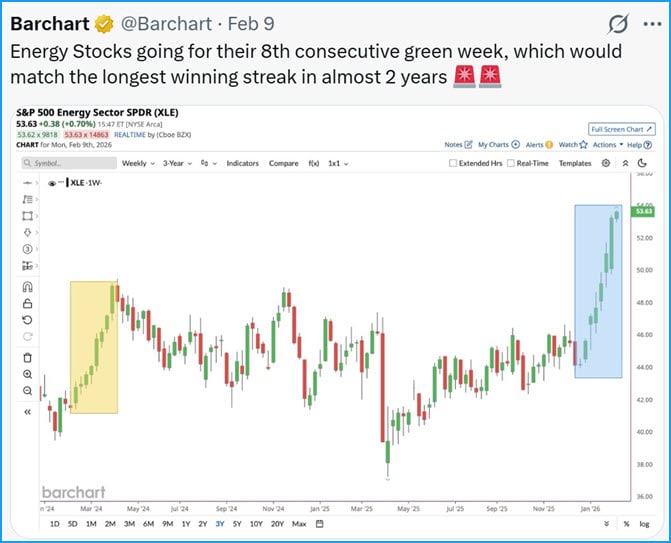
What’s happening? I believe that awareness is beginning to settle in that the US is now past the pak of its oil production. Shale has tipped negative, and as goes shale so goes the rest:
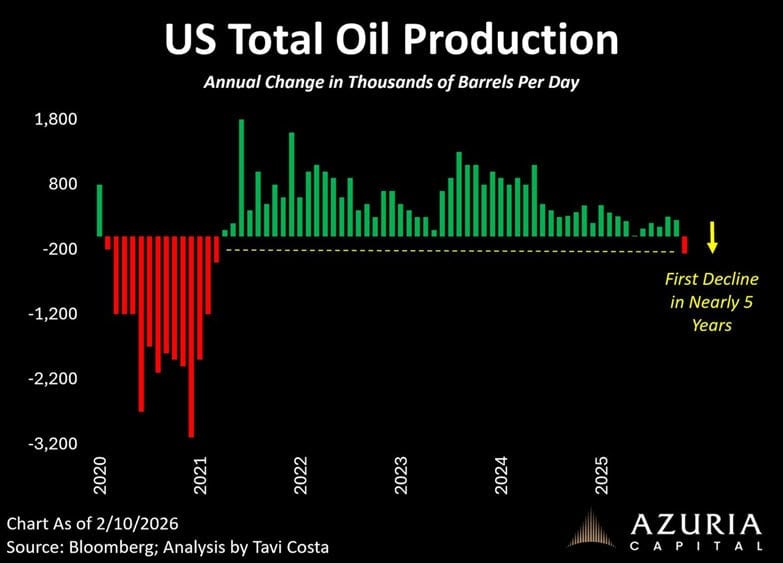
There’s always a bull market somewhere, and it seems possible that commodities generally, and energy specifically, are on the launch pad.

Timestamps
00:00 Introduction and Current Economic Climate
03:01 Analyzing the Jobs Report and Economic Indicators
06:00 Fraud in Healthcare and Its Economic Implications08:58 The Impact of Government Reporting on Public Perception
11:55 Wealth Disparity Among Politicians and the Average Citizen
14:56 The Debasement Trend and Its Effects on Commodities
17:50 Youth Employment and Starting Salaries
22:45 The Deteriorating Economic Landscape for Youth
25:36 The Impact of AI on Employment and Education
28:19 The Housing Market Crisis and Its Consequences
30:34 The Illusion of Home Ownership as an Asset
32:38 The Unsustainable Rental Market Dynamics
36:06 The Rising Delinquency Rates in Home Loans
39:25 The Speculative Economy and Margin Debt
43:01 The Energy Sector’s Potential Breakout
48:55 The Future of Commodities and Investment Strategies
50:25 The Correlation Between Oil Consumption and GDP
51:53 The Future of U.S. Oil Production
53:30 Economic Implications of Job Losses and Debt Overhang
55:31 The Role of Energy in Economic Growth
56:29 Inflation and the Future of Money
58:54 OPEC’s Production Quotas and Global Oil Supply
01:01:39 Investment Opportunities in Energy Stocks
01:03:02 The Impact of Government Policies on Oil Production
01:05:24 The State of U.S. Oil Inventories
01:06:55 Alberta’s Oil Potential and Political Dynamics
01:09:51 Market Volatility and Investment Strategies
01:12:50 Preparing for Economic Uncertainty
FINANCIAL DISCLAIMER:
The information contained in this video and the resources available for download through our affiliated website are not intended as and shall not be understood or construed as financial advice, nor should be interpreted as a solicitation to sell or offer to sell investment advisory services. No person who currently works for or contracts with Peak Prosperity or Peak Financial Investing is an attorney or accountant, nor are we holding ourselves out to be, and the information contained in the video and on the website is not a substitute for legal or tax advice from a professional who is aware of the facts and circumstances of your individual situation. While Peak Financial Investing is a registered investment advisor, please note that this podcast is not intended to be investment advice.
All information has been obtained from sources believed to be reliable, but its accuracy is not guaranteed. There is no representation or warranty as to the current accuracy, reliability or completeness of, nor liability for, decisions based on such information and it should not be relied on as such. We have done our best to ensure that the information provided is accurate and provides what we feel is valuable information. The views expressed are subject to change based on market and other conditions.
No guests or clients appearing on the podcast receive any form of compensation for their appearance and obtained no other benefit from either Peak Prosperity or Peak Financial Investing.
All investing involves risks including the possible loss of capital. Asset allocation and diversification does not ensure a profit or protect against loss. Please note that out- performance does not necessarily represent positive total returns for a period. There is no assurance that any investment strategy will be successful. All investments carry a certain degree of risk. Dividends are not guaranteed, and a company’s future ability to pay dividends may be limited.
Additional important disclosures for Peak Financial Investing may be found in our Form ADV Part 2A, which can be found at https://adviserinfo.sec.gov/firm/summary/319672.