I have had poor luck with fermented dairy production from organic milk that I have bought in grocery stores, because it is Ultra Pasteurized, and the proteins are too denatured for the bacteria to work with.
I resigned myself to making cheeses from milk that was not organic. Recently however a local grass fed organic dairy offers pasteurized but un-homogenized gallons of milk. Whoohoo I am happy with this middle of the road offering.
While I understand the appeal so some for raw whole milk, it’s not my preference and I am glad I am not alone and that the local dairy had dialed it in just right.
Several local dairies offer raw daily for pets, so I can innoculate occasionally as needed with Fido’s dairy.
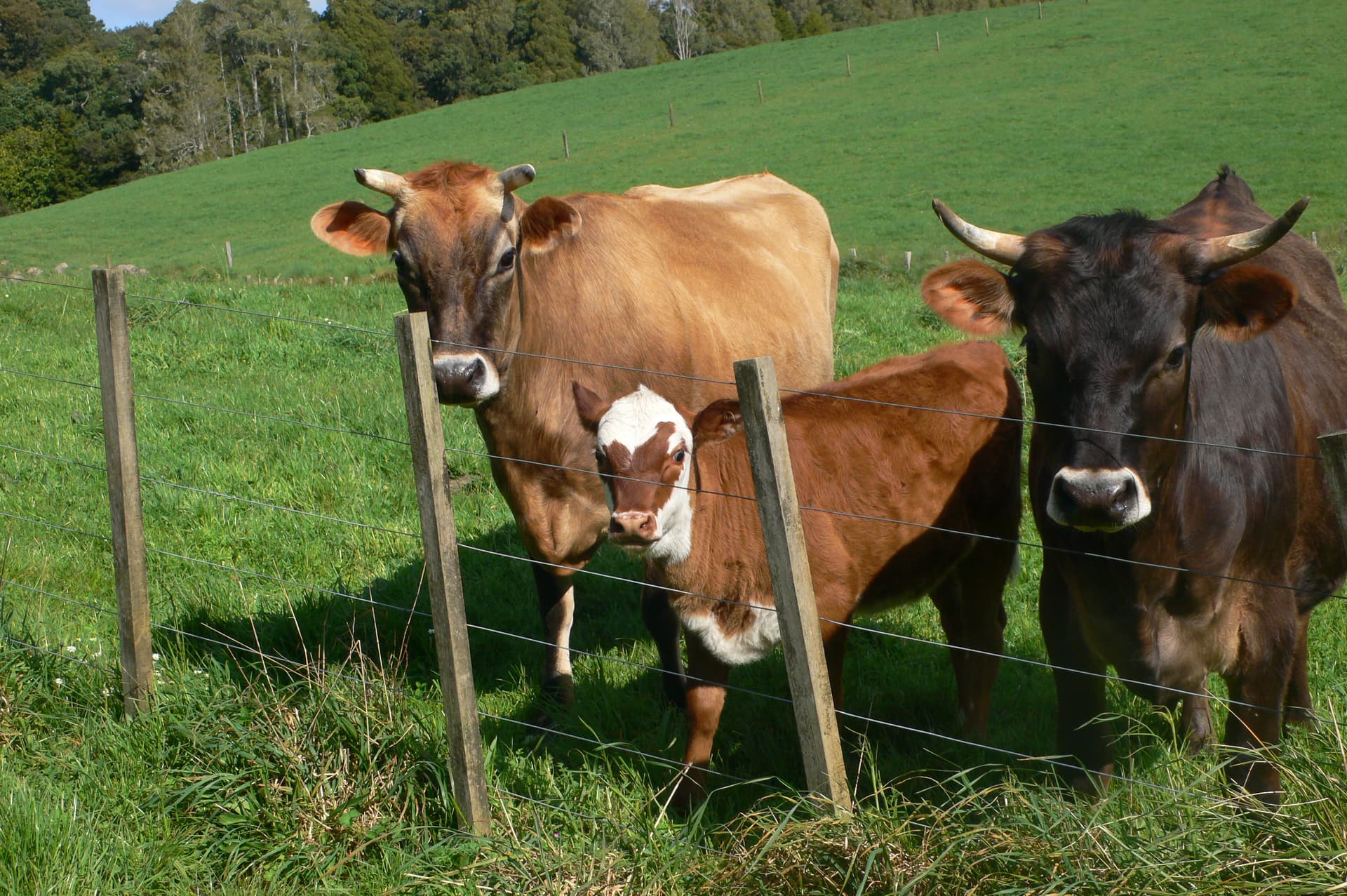
We always had a family milch coo while raising children. Grass based milk, butter, and cheese. Ours were a common Hereford beef mama that I tamed to allow milking. We successfully crossed, over the generations to Jersey and Devon.
Our grown children still swear the best cheese ever came off our farm.
If they return with grand’s I’ll tame another and start again.
Mark_BC I’ll disagree on Bananas ripening off the tree properly. We have the luxury of being able to drive to the Tropics in Australia and are able to get Bananas and Avocados ripened on the tree. Roadside traders. There is no contest and I look forward to going up North again to have a fresh Banana.
Oh I was watching a video yesterday and the guy said rather than wait for the whole bunch to ripen at once, he removed smaller amounts to spread them out.
You’ve just made me realise why the roadside traders sell them loose or in pairs, as they’d be the early ripening Bananas. All the same that is amazing that a passive solar greenhouse works in those temp’s.
If you are serious about resilience and you have the space then having a house cow is one of the best things to do. A fresh supply of dairy products for the humans of course but also nutrition for the chickens. Great for bartering with the neighbors. And don’t forget the byproduct of a calf every now and then. Managing the animals is a significant amount of work however.
I hope to keep some medium or large animals for dairy someday. I will need to have an engaged renter or part time employee or such however because I am not wanting to be tied to my property in the way that owning large animals would require.
My current idea is to have a couple of cabins or tiny homes where young folks could live almost for free in terms of cash by doing farm chores for rent. Unlike most such setups I have learned about, I would not be enslaving folks. They would get a fair (for our area) return of 20-25 per hour of work toward the rent. 8-10 hours per week adds up in a month. If it was a couple that would be an hour a day each.
I estimate that between my and their work we could put out a lot of chicken, veggies, eggs, small fruits etc and save tons on groceries.
I wish you great luck, as there are few with the knowledge base to do what you’re asking.
Thankfully my children have the knowledge base to bring a cow to parturition /milking.
Please understand the metaphor: we best settle our mare/milch cow.
A quick web search shows this is not accurate. People drink milk in many countries. Scandinavian countries tend to have the highest consumption of milk.
Tracy Thurman is very persuasive! I’m really looking forward to the food webinar.
There’s one thing about the Carnivore Diet that is a huge sticking point for me, and that’s how do you maintain the diversity of your gut microbiome (GM) if all you eat is meat? Tracy is the first person that I’ve heard talk about “carnivore diet” and “gut microbiome” in the same conversation. I’d love to be pointed to more info on this, because so far I haven’t been able to find any myself.
I watched a couple of Dr. Ken Berry’s intro videos about the Carnivore Diet after being introduced to him in another of Chris’ videos, but he never said a word about the GM.
About a year ago I took an online class by Dr. Jason Hawrelak, who is considered one of the world’s top experts on the GM. He recommends trying to eat at least 40 different plant foods each week, because different friendly bacteria like different things. I’ve been trying to follow that recommendation ever since. So I really struggle with the idea of eating nothing but meat. Clearly it does work for some people… I just don’t get how?? Any recommendations of websites, videos, books etc that discuss this topic would be appreciated!
I have started the carnivore diet after months/years of being on the fence. My main motivator is to lose weight so I can have better control of my insulin sensitivity.
Thanks to Evie’s amazing pep talk to get me started on carnivore, I’m now on week 3 and loving it.
During this time, I’ve discovered that I’m still highly sensitive to gluten
While on carnivore, is it ok to eat a lot of different spices or should those be eliminated to salt?
For some, a pure carnivore diet is one that sticks to the flesh of the hooved, ungulate species.
Cows
Goat
Sheep
Deer
Bison.
However, practicality behooves (ha) purity. Eating pork and chicken also enters the fray, along with eggs, fish and seafood. Some people go red meat only.
I believe the challenge is to keep an all meat diet interesting and varied. Using different spices, oils and recipes is necessary to keep from getting bored. Yes, a rib steak everyday can get boring….
As for those still advocating veggies, well, some people get bloating and cramping from veggies, that go away on all meat diet. Many veggies, nightshades for example contain anti-nutrients(lectins) that appear to be guilty of said gut problems, known to many as “leaky gut”. There are other anti-nutrients, but that’s a common one.
Many long term vegetarians suffering from gut issues, abandon the vegan diet for carnivore and find the gut issues go away, as do arthritic symptoms and also skin disorders are resolved upon sticking to a carnivore diet.
Go figure.
I honestly believe that there is no one perfect diet for everyone.
I think that genetics inherited from various people groups will impact what is a perfect diet for any given person. If you your peeps are from the artic regions, then you might be more apt to thrive on a carnivore or other meat intensive diet. If your folks were from a fertile area with a moderate climate you might be more apt to thrive on a omnivourous diet that includes grains and veggies People form areas with low precipitation and seasonal monsoons might thrive on meat, dairy and fruit.
Additionally there are many cultural diets that don’t translate into the modern lifestyle even though they offered advantages in the past.
I know many people who have changed their diets for the sake of health with great success. Various diet strategies ranging from vegan to carnivore are included amoung them. What they all have in common is removing processed foods. This is where I am starting.
what was still edible after months in the root cellar, was a determinant in past years. My dad had an affection for parsnips (I do NOT share) because it was the last semi edible vegetable from the root cellar in early spring. Ripe fermented fish (!!) was a delectable(?) to my cultural ancestors. yet few (including me) can stomach it. With our transportation systems and complexity of supply systems, we have incredible choices, but are a nuke away from not having it.
I’ve done enough reading/research now that I’m wary of “fad” diets (or fashionable ones) like keto, paleo, carnivore, lion, etc.
It’s clear to me that we need a wide variety of foods in our weekly/monthly diet, though the ratios are not what we’ve been raised to think they are; and there’s some individual variation based on ancestry, activity levels, location, and bodily needs.
Western diets are largely stone-age diets that only involve about 30-40 different foods (at most), which isn’t really enough.
I’m inclined to suggest people try moving to a “hunter-gatherer” diet, based largely on whole foods (which does not include bread) where possible.
Obviously I’m not perfect in keeping my own advice, but my quality of life has improved significantly from eating foods that I’ve grown myself - that is, meat and the few fruits and veggies we can grow where we live. Home-grown animal fat is awesome, and one of my favourite foods now.
(Contrary to what I’ve just said) the variety of foods we eat, now that we are largely eating home-grown, has dropped significantly, but the quality of our food has increased significantly.
When it’s only seconds (or minutes) from the time your fruit or veggies are harvested to when they’re eaten, nutrition is certainly maximised. Our produce and meat never leaves our property between the time it’s harvested and eaten by us, so our food supply chain is very short, and we are responsible for the whole of it.
Ice Age Farmer used to talk about “farm to fork” distance, back before he went radio-silent (for some reason). He’s actually done some excellent videos about food and the food supply chain, and the UN’s zero carbon agenda.
“When you take care of the quality of your food, the quantity will take care of itself,” as the author of Changing Habits, Changing Lives said.
A nuke, or a hurricane away, or a war, or an economic collapse, etc etc.
When times are tough, meat is even more prescious than it is now. You have to feed those cows, sheep, chickens, etc etc. the stuff people feed livestock will become more scarce under austere conditions.
During such times, that which is locally grown and managed will be what you eat for the most part. It was only a couple generations back when Oranges were a seasonal treat in much of the USA.
I am learning to cook and eat somethings that are local to me now that I did not grow up eating. I grew up in Florida l, my parents were from the MidWest, and now I am in Appalachia. So my recipe box gets more crowded yet.
I have had and have many friends who grew up under authoritarian regimes, of various types during different decades. They were all short of meat and dairy during those times.