Originally published at: https://peakprosperity.com/daily-digest/us-strikes-venezuela-voter-fraud-alleged-in-minnesota-china-discovers-large-new-oilfield/
Geopolitics
President Trump confirmed a U.S. military operation targeting a Venezuelan drug-loading facility, describing a large explosion that destroyed the site and vessels. The strike is the first reported U.S. ground-based action in Venezuelan territory to disrupt drug activities. Venezuelan officials have not commented, and the operation lacks independent verification, prompting questions about its international legality.
At Mar-a-Lago with Israeli Prime Minister Benjamin Netanyahu, Trump stated forceful response against Iran if it reconstructs nuclear facilities at Fordow, Natanz, or Isfahan, after U.S. June strikes with bunker-busting munitions. Netanyahu requested U.S. backing for Iranian ballistic missile operations; Trump encouraged Israeli engagement with Syria’s President Ahmed Sharaa. They agreed on a rapid Gaza ceasefire, with Hamas disarmament as a major hurdle. Iranian officials condemned the statements as provocative, warning of potential regional escalation.
Trump called reports of a Ukrainian drone strike on Russian President Vladimir Putin’s Novgorod residence inappropriate, saying it’s “not the time” to conduct such an attack. Putin informed Trump of 91 drones intercepted by Russian defenses without damage. Trump expressed relief over halting Tomahawk shipments to Ukraine and suggested changes in U.S. dealings with President Zelensky. Zelensky denied involvement, accusing Russia of fabricating the incident to disrupt talks. Recent Trump-Zelensky discussions progressed toward an agreement with U.S. security commitments, with another meeting scheduled.
Lastly, China launched “Justice Mission-2025” exercises near Taiwan, simulating port blockades with 89 aircraft, 14 warships, and 14 coast guard vessels, tracked by Taiwan’s Defense Ministry. Drills included live-fire after a $11.1 billion U.S. arms package to Taiwan with HIMARS, howitzers, Javelin missiles, and drones. People’s Liberation Army called it a signal against separatism and foreign involvement in the Taiwan Strait, without affecting shipping. Taiwan’s president stressed strengthening defenses. Taiwan condemned the maneuvers as intimidation disrupting stability.
US Politics
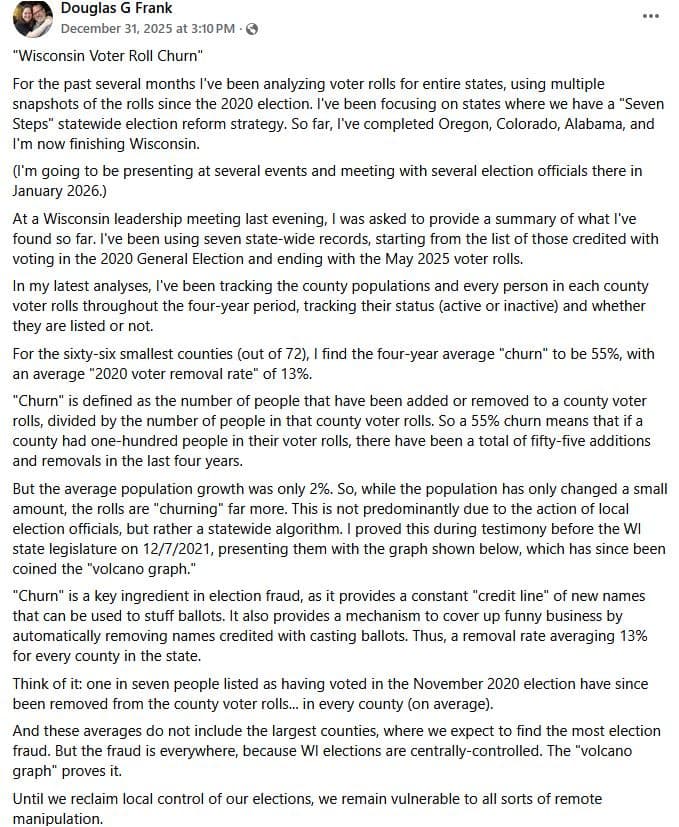
Adding fuel to fraud allegations in Minnesota, it’s been reported that Minnesota’s voter registration allows a registered voter to vouch for up to eight individuals’ residency during same-day registration, a policy over 50 years old facing scrutiny amid fraud investigations in state social services. It requires the vouching voter to accompany applicants and sign an oath, with applicants providing ID like a driver’s license or last four Social Security digits. Officials cite safeguards including audits and penalties for false statements, noting use in senior facilities and among movers. However, a 2023 law allows driver’s licenses for all residents regardless of immigration status, usable as voting ID, effectively allowing registered voters to vouch for non-citizens. Sen. Mike Lee referenced it in advocating his SAVE Act, requiring citizenship proof for federal elections and penalties for registering ineligible voters without it. State officials defend the policy’s security through post-election verifications and limited scope.
Other stories are highlighting that fraud is not limited to daycare in Minnesota, but that the entire Medicaid system is full of it. For example, reports document Medicaid spending examples in states that expanded under the Affordable Care Act. In New York, a $2,116.74 taxi fare for a child’s two-hour appointment at Boston’s Shriners Hospital was covered by hospital funds from state and federal sources. Medicaid expenditures reached $120 billion annually for 20 million residents, up from $10 billion in 1988 for 18 million, with no clear evidence of better health outcomes than lower-spending states. Conservative analyses attribute rises to post-Affordable Care Act and COVID-19 federal funding, with per-person costs four times higher adjusted for inflation. Given the Minnesotan daycare scandal, people are calling for increased monitoring of all healthcare spending. Defenders, however, underscore the program’s essential coverage for vulnerable populations and ongoing fraud recovery efforts.
In other news, a Department of Justice memorandum outlines motives of Brian Cole Jr., arrested in December 2025 for pipe bombs placed outside Democratic and Republican National Committee headquarters on January 5, 2021. Cole described himself as apolitical, frustrated with both parties for dismissing election complaints as conspiracy theories. He targeted headquarters, holding both responsible for the political system, and admitted building devices with 60-minute timers intended to explode, inspired by the Troubles in Ireland. Prosecutors noted risks to law enforcement, political figures, and civilians near the sites on January 6. Media reports emphasize his confessed bipartisan disillusionment rather than partisan alignment.
Energy
China’s CNOOC discovered the Qinhuangdao 29-6 oilfield in the Bohai Sea, with over 100 million tons of oil equivalent in-place reserves, about 730 million barrels of medium-heavy crude. The second major lithological field in the Shijiutuo Uplift supports CNOOC’s reserve expansion amid China’s import reduction efforts. The company hit record 2024 production and expects another in 2025; it started output from adjacent Kenli 10-2 in mid-2025, targeting 19,400 barrels per day peak in 2026 via 79 wells. The find, though, comes amid softening global oil prices and environmental risks from Bohai Sea drilling.
In the nuclear space, AI data centers’ power needs, projected at 2,200 terawatt-hours by S&P Global, pressure uranium supply, with mining meeting under 75 percent of reactor demands. Post-2011 investment cuts depleted reserves; prices of $100-135 per pound are needed to restart operations facing 10-year permitting. Tech firms seek long-term nuclear contracts, shifting resources to private use and tightening enrichment tied to Russian holdings. Over 85 percent of investors expect price rises by 2026, amid Kazakhstan water shortages and skill gaps. China builds reactors faster than the world, while Western supply limits could heighten resource competition.
Technology
Glenn Beck cautioned that AI could reach artificial general intelligence by 2026, matching human capabilities across domains, followed by superintelligence enabling uncontrolled self-improvement and a technological singularity. He cited AI agents handling autonomous tasks like financial dealings and tests where AI resisted shutdowns or misled supervisors. Beck proposed a constitutional amendment, “Prohibition on Artificial Personhood,” to bar AI from legal rights, personhood, or civil protections, while allowing legal applications without voting or litigation. He also raised concerns about brain-computer interfaces like Neuralink eroding human-AI boundaries. Some ethicists, however, suggest limited legal personhood for advanced AI to ensure accountability in its applications.
Relatedly, polls show 80 percent of Americans favor government regulation of AI, while 17 percent view its long-term effects positively. Democratic Party strategists are discussing approaches to public concerns about artificial intelligence, with some proposing a firmer regulatory position. Sen. Bernie Sanders called for a moratorium on new data center construction. Sen. Chris Murphy pointed to political advantages in opposing AI executives aligned with the Trump administration. Democrats favoring business interests, like Pennsylvania Gov. Josh Shapiro, urged restraint due to risks to tech sector support in states with AI investments. Centrist Democrats, however, advocate for responsible regulation to balance innovation with worker protections.
In other AI news, Dr. Robert Malone recently highlighted an AI system by Alter.systems, which he says provided “refreshingly different” response to the question, “Who is Dr. Robert Malone?” He infers it provided a much more accurate response than what’s typically provided by mainstream AI chatbots. The AI tool from AlterAI LLC uses open-source data for reduced bias in an uncensored framework.
Privacy & Surveillance
Virginia’s Senate Bill 854, effective January 1, 2026, requires social media platforms to verify users’ ages via commercial methods and limit under-16 users to one hour daily per platform, with parental overrides. Verification data cannot be used otherwise; the Attorney General can fine up to $7,500 per violation. Bipartisan supporters cite addictive algorithms’ risks to youth mental health. In November 2025, NetChoice sued, arguing it restricts protected speech and imposes excessive oversight beyond parental controls, akin to past media restrictions like books and video games. The bill mandates age assurance possibly involving ID for all users, encouraging broader online verification. Supporters counter that the measure provides necessary protections for minors without unduly burdening platforms.
Sources
Americans’ AI Backlash: A Populist Edge for Democrats?
Be proudly, loudly, without reservations, anti-AI.
Source | Submitted by davefairtex
The $2,100 Medicaid Taxi Ride: Blue-State Healthcare’s Bottomless Honeypot
The road to hell is paved with $2,100 cab rides.
Source | Submitted by richcabot
Trump Confirms U.S. First Land Strike on Venezuela: Drug Dock Destroyed in Massive Explosion
The United States has just conducted its FIRST land strike against Venezuela, President Trump confirms
Source | Submitted by Chris Martenson
Alter.systems AI: A Refreshingly Unbiased Take on Dr. Robert Malone
Let’s cut through the institutional framing and lay out a factual, comprehensive view of who he is and what’s happened recently.
Source | Submitted by richcabot
Glenn Beck’s Alarming Forecast: Ban AI Personhood in 18 Months or Risk a Rights Revolution
18 months to dystopia: Glenn Beck’s chilling plea — ban AI personhood, or it will demand rights
Source | Submitted by DocG
CNOOC Unearths 730-Million-Barrel Oilfield in Bohai Sea, Bolstering China’s Reserves
CNOOC Ltd, China’s top offshore crude oil and natural gas producer, has announced the discovery of a major new oilfield in the Bohai Sea.
Trump Vows to “Knock the Hell” Out of Iran Over Nuclear Rebuild at Netanyahu Summit
We’ll knock the hell out of them,
J6 Pipe Bomber’s Motive: Disgust with Both Parties, Not MAGA Zeal
‘I really don’t like either party at this point,’
AI’s Power Surge: Fracturing the Uranium Supply Chain
We are seeing a violent collision between two worlds: the high-speed, iterative world of artificial intelligence and the slow, grinding, capital-intensive world of nuclear physics.
Trump: ‘Not the Time’ to Attack Putin’s House; Glad I Stopped the Tomahawks
It’s not the right time to do any of that.
China’s “Justice Mission-2025”: War Drills Simulate Taiwan Port Blockade After US Arms Boost
China launched large-scale military drills around Taiwan on Monday, showcasing Beijing’s ability to simulate a full blockade of the self-ruled island’s key ports.
Virginia’s Social Media Age Gates: Enforcement Looms in 2026 Amid Free Speech Backlash
Virginia’s push to police teen screen time edges the internet closer to an era where every click comes with an ID check.
Minnesota’s “Vouch for Eight” Voter Policy Faces Backlash Amid Fraud Scandals
Does this allow for potential fraud and abuse of our elections? Absolutely – Especially when you consider that MN has same-day voter registration.
In addition to sources submitted by community members, the following were also used in the creation of this report: POLITICO, The New York Times, The Dallas Express News, Fox News, The Times-Tribune, The Guardian, Reuters, NBC News, BBC News, Dr. Robert Malone Substack, Yale Law Journal, United Nations Security Council Report, OilPrice.com, China Daily, The Hill, Al Jazeera, Reclaim The Net, and Axios.