No Accountability for 9/11 Paved the Way for the Draconian COVID Responses

Originally published at: No Accountability for 9/11 Paved the Way for the Draconian COVID Responses – Peak Prosperity

Welcome to Episode #5 of the “Is It Too Late?” series. The prior guests were Joe Kent (political), Jim Erdman (IC), Richard Werner (economics), and Dylan Ratigan (media).

Today we’re exploring accountability. Or rather, the lack thereof, and how that led us from 9/11 to COVID. Without accountability, there’s no chance of ever recovering from a decline brought about by malice or incompetence. Humans need incentives – both positive and negative – to course correct.

Today’s guest is someone you may not have heard of, but who you definitely want to have on your radar screen going forward.

Dr. Madhava Setty and I examine whether the United States can recover from what we both see as a long deterioration of accountability, scientific integrity, individual rights, and public trust, or not.

COVID represented an enormous breach of public trust and an abandonment of scientific principles, hard-won over hundreds of years, that were carelessly tossed aside for …what, exactly? Neither of us knows, but it wasn’t public safety or care for individual outcomes. It was for neither of those things.

But those ‘failures’ did not begin with COVID. They began long before 2020. Perhaps even farther back than 9/11/2001, but that was a date marking a severe departure from the American experiment, so we began there and worked our way forward.

9/11 accelerated the expansion of government and institutional authority while weakening privacy, individual autonomy, and skepticism toward official narratives. It was used as a club to pacify domestic questioning and as a Casus Beli that led to the deaths of a million Iraqis.

And it was a near-complete fiction.

As was COVID. One links to the other.

A failure to hold culpable people responsible for 9/11 emboldened some of them and a host of others to foist COVID upon us all.

In this podcast, Dr. Setty takes us through his own journey from a conventional, authority-trusting physician to someone who began questioning the official 9/11 account after examining the evidence surrounding Building 7.

He says the experience convinced him that even highly educated people can place faith in institutional authority above evidence. Probably especially so.

If COVID taught me anything, it was that so-called ‘experts’ could be converted into the least trustworthy people for the most meager of inducements.

Setty argued that one of the most important questions for us to ask is how to decide which experts to trust when experts disagree. His proposed clues include which side welcomes debate, who has the most to lose by challenging the prevailing view, and whether the evidence is moving in one direction or another.

You will enjoy and possibly even bask in this podcast’s direction and conclusions. Dr. Setty is a rare bird. He blends concrete scientific determinism with a holistic spiritual view of the human condition; a true rarity.

And, to be honest, we’re going to need some rare birds to make sense of these times.

Tune in to find out more…


Timestamps

00:00 How Do We Return To Sanity?
04:43 Truth, Science And Accountability
05:25 Knowing Versus Believing
07:45 The Scientific Method And 9/11
10:29 When The Model Doesn’t Match Reality
16:20 Why People Reject Contradictory Evidence
19:27 From 9/11 Surveillance To COVID Censorship
28:50 The Reality Behind The COVID Narrative
33:27 How 9/11 Changed His Worldview
38:59 Why Education Doesn’t Guarantee Discernment
50:22 The Expert Class And Its Ego
55:20 When Medical Consent Disappears
01:01:29 The Power Of A Grassroots Awakening
01:06:17 How To Judge Competing Experts
01:09:42 The Evidence Hiding In Plain Sight
01:13:12 When Experts Discover They Were Wrong
01:17:31 Why Change Must Come From Below
01:19:56 Educate Yourself And Take Action

7 Likes

What are you talking about? I’ll say it again, we all learned that restaurant tables killed the Covid virus. What? You don’t think that’s The Science?

3 Likes

Been binge watching Clarkson’s Farm. It was back in the Covid times. Interesting to see/recall how people handled the vid. I noted that at a council meeting everyone was masked. Except the person speaking and spewing sputum. The idiocy of the whole thing was quite the refresher.

4 Likes

Let me review the “No Accountability”:

  • Sinking of the USS Maine “an explosion of unknown origin” [1898]
  • Sinking of the Lusitania [Germany sank it because there were arms on board] [1917]
  • War is a Racket [United Fruit?] 1930s
  • December 7th - purple code broken, but “we were surprised” [1941]
  • Operation Northwoods - fake attack rejected twice by JFK [1961]
  • JFK Assassination - Lone Gunman [1963]
  • RFK Assassination - Sirhan Sirhan [1968]
  • Watergate fake break-in - organized by … [1972]
  • 9/11; 2 planes hit, 3 buildings fell - Patriot Act + 5 countries [2001]
  • Bat Kissed a Pangolin and Out Popped COVID + mRNA [2019]
  • mkUltra, child sex trafficking, Epstein [1960s-present]

Nobody has been punished for any of it.

23 Likes

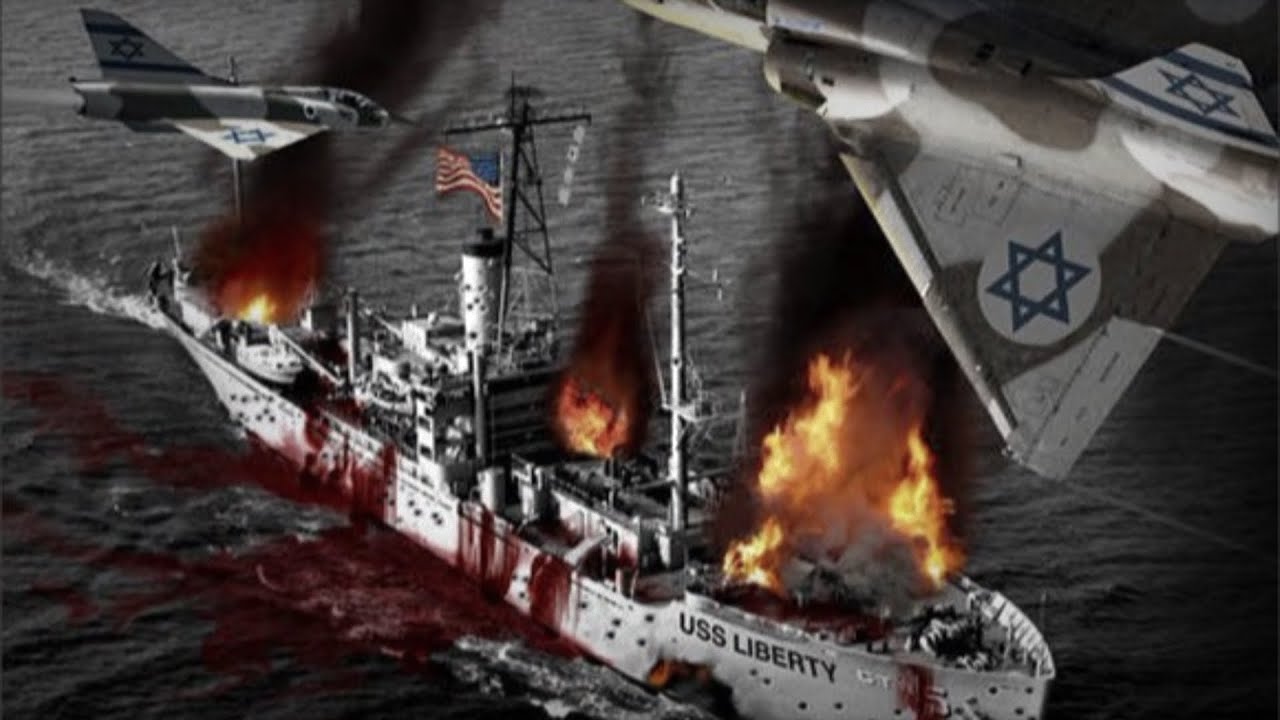
You missed one important to me: the USS Liberty, June 8, 1967.

13 Likes

Personally, I think it dates back at least as far as the execution of Wat Tyler.

1 Like

And the Charlie Kirk assassination. That patsy wasn’t the shooter.

6 Likes

There’s no evidence that Charlie Kirk is dead.

1 Like

I’m convinced that the answer to “Is it too late?” may well be, “Yes.” Given that, might our efforts best be spent not on “saving” our American / Western civilization, but on “salvaging” what we can while we can so that we can begin anew.

Most first versions of things have design flaws that often don’t become apparent until an extensive body of real-world data is available. (Unless the flaws are features and not bugs) Constitutional Democracy 1.0 was amazing, a true disruptor and game-changer in the governance space. It wasn’t perfect and needed 10 patches right away (the Bill of Rights) followed by 17 updates (amendments) over the following years. The core technology is sound and proven, but its inherent design flaws (a debt-based economy built upon fiat currency to name one) have rendered it impotent and harmful over time. The creators of Version 1.0 are long gone. The folks running it now are generations removed from the founders and lack their knowledge, wisdom, and character. They’ve long since given up on updates and have no interest in addressing the ineffectiveness and outright harm caused by the thing. Thus, maybe it’s time to contemplate Constitutional Democracy 2.0, and what changes we might make given what we know now.

Civilizations rise and fall, come and go. They have their time, then they pass. They have traits of living things: they are born, they grow, and eventually die. This has been the noted by many thinkers over the centuries a few of whom are noted below. Note that within each observation, from over 2000 years of history, there are parallels to our current time.

ANCIENT AND LATE ANTIQUITY SOURCES

Polybius, The Histories, Book 36 (written c. 150–140 BC). Polybius was a Greek historian who watched Rome conquer the Greek world. In one well-known passage he describes Greece suffering from “a low birth-rate and a general decrease of the population.” Cities emptied and land went untilled, even though there had been no long wars or plagues. He blamed it on “pretentiousness, avarice, and indolence.” People didn’t want to marry, or they raised only one or two children so they could leave those children rich. When war or sickness then took those few heirs, households died out, and “by small degrees cities became resourceless and feeble”. He insisted the cause was human behavior, not the gods, and that praying wouldn’t fix it. That makes him one of the earliest writers to treat population decline as a self-inflicted cause of a civilization’s decline.

Salvian of Marseilles, De Gubernatione Dei (On the Government of God) (written in the 440s AD). Salvian was a Christian priest in Gaul. He wrote in the years after the Vandals took Carthage in 439, trying to square God’s providence with the collapse happening around him. His most famous claim is that ordinary Romans, including educated people from good families, were running away to the Goths, the Bagaudae and other barbarians to escape crushing, unfairly shared taxes and corrupt officials. In his words, “They seek among the barbarians the Roman mercy, since they cannot endure the barbarous mercilessness they find among the Romans,” and they “would rather live as free men, though in seeming captivity, than as captives in seeming liberty”. He also argued that “it is our vicious lives alone that have conquered us,” meaning moral decay, not barbarian strength, defeated Rome. Historians value him as an eyewitness to how heavy taxes and patronage pushed the poor into serfdom, flight or armed revolt.

MEDIEVAL AND EARLY MODERN THINKERS

Ibn Khaldun, The Muqaddimah (1377). This North African historian is often called the founder of the philosophy of history. He argued that dynasties rise on asabiyyah, the solidarity of tough frontier or desert peoples. Over about three to four generations, comfort, luxury and heavier taxes wear that bond away until a new, more united group takes over. It is probably the first cyclical model of rise and fall.

Giambattista Vico, The New Science (Scienza Nuova) (1725, revised 1744). Vico said nations pass through three ages: the age of gods, the age of heroes and the age of men. Each age ends in what he called a “barbarism of reflection,” where too much rationalism and self-interest dissolve shared customs. Then the cycle starts again.

Edward Gibbon, The History of the Decline and Fall of the Roman Empire (1776–1789). Gibbon’s six-volume classic traces Rome’s long decline. He blamed lost civic virtue, dependence on mercenary soldiers, the empire’s sheer size, and the rise of Christianity, which he believed turned people’s loyalty away from the state. He famously called Rome’s fall “the natural and inevitable effect of immoderate greatness.”

NINETEENTH AND TWENTIETH CENTURY

Brooks Adams, The Law of Civilization and Decay (1895). Adams was an American historian and the grandson of John Quincy Adams. He argued that civilizations move from a “martial” phase driven by fear and imagination to an “economic” phase dominated by money-lenders and the drive for profit. He believed that centralized finance eventually wears down a society’s vitality.

Oswald Spengler, The Decline of the West (Vol. 1, 1918; Vol. 2, 1922). Spengler rejected the idea of history as one line of progress. He described separate “high cultures,” such as the Classical, Arabian and Western (“Faustian”) cultures, each growing and dying like a living thing over about a thousand years. A creative “Culture” eventually hardens into a “Civilization” of huge cities, money, mass politics and finally “Caesarism.” He placed the West in that late stage.

Oswald Spengler, Man and Technics (1931). This short follow-up describes humans as predators and technology as a weapon in their struggle with nature. Spengler predicted that the West would hand its technical knowledge to other peoples, who would then turn it against the West. He also expected the “machine culture” to wear itself out. He ended with a call for stoic courage in the face of decline.

Arnold J. Toynbee, A Study of History (12 volumes, 1934–1961). Toynbee compared about two dozen civilizations. In his “challenge and response” theory, civilizations grow when a “creative minority” answers environmental or human challenges. They break down when that minority turns into a “dominant minority” that rules by force instead of inspiring people. Society then splits into an alienated “internal proletariat” and an “external proletariat” of frontier peoples. Toynbee concluded that “civilizations die from suicide, not by murder.”

Pitirim Sorokin, Social and Cultural Dynamics (1937–1941). Sorokin was a Harvard sociologist. He described civilizations swinging between “ideational” cultures, where spiritual and religious truth comes first, and “sensate” cultures, which are materialist and focused on the senses, with a balanced “idealistic” phase in between. He saw the modern West as a sensate culture in crisis.

Carroll Quigley, The Evolution of Civilizations (1961). This Georgetown historian set out seven stages: mixture, gestation, expansion, conflict, universal empire, decay and invasion. Decline sets in when an “instrument of expansion” becomes an “institution,” meaning it starts protecting the interests of those who run it instead of creating new wealth.

John Glubb, The Fate of Empires and Search for Survival (1978). Glubb was a British general. He argued that empires last about 250 years, or roughly ten generations. They pass through ages of pioneers, conquest, commerce, affluence, intellect and decadence. In the decadent age he saw defensiveness, pessimism, materialism, obsession with celebrities, and more and more welfare and immigration that the society couldn’t absorb. He noted that people in a declining empire rarely realize what is happening.

Joseph A. Tainter, The Collapse of Complex Societies (1988). Tainter, an anthropologist, set aside moral explanations and offered an economic one. Societies solve problems by adding complexity, such as bureaucracy, armies and infrastructure. Over time each new layer pays off less and less (“declining marginal returns”). Eventually complexity costs more than it gives back, and collapsing to a simpler state becomes the sensible, even beneficial, choice. Rome and the Classic Maya are his main examples.

TWENTY-FIRST CENTURY

Jared Diamond, Collapse: How Societies Choose to Fail or Succeed (2005). Diamond studied Easter Island, the Norse in Greenland, the Maya and others. He identified five factors behind collapse: environmental damage, climate change, hostile neighbors, loss of trading partners, and how a society responds to its problems. He stressed that the last one, the society’s response, is always decisive. Elites who shield themselves from the effects of their own decisions are especially dangerous.

Peter Turchin, “Political instability may be a contributor in the coming decade,” Nature (February 2010). In this short letter, Turchin warned that the next decade would probably bring growing instability in the United States and Western Europe. He pointed to stagnating real wages, a widening gap between rich and poor, an oversupply of young people with advanced degrees, and exploding public debt. He argued these trends are connected, that they all hit turning points in the 1970s, and that in the past they have signaled coming unrest. His model put the peak of instability and political violence in the 2020s.

Peter Turchin, Ages of Discord (2016). This book applies Turchin’s “cliodynamics,” a mathematical approach to history, to the United States. It lays out the “structural-demographic” model behind his 2010 letter. Of the three main drivers of instability, he calls elite overproduction “by far the most important.” The other two are popular imiseration, meaning falling living standards, and the declining fiscal health of the state. The book builds on the 200-to-300-year “secular cycles” that Turchin developed with Sergey Nefedov in their 2009 book.
8 Likes

Nor epstein

2 Likes

I guess there are perhaps 3 basic traits that ‘intelligent sheepl’ possess:

(1) quite a dominant ego , including the feeling that one is significantly more intelligent than the average person;

(2) fear of humiliation or of being viewed as being lower in the intelligence hierarchy than one likes to think one is [or even fear of finding out that one is not as intelligent as one likes to think];

(3) a weak or somehow inhibited or restricted imagination.

To be immune to this — i.e. to be someone who can ‘look at the data’ and be prepared to challenge the prevailing belief system — I would think having the following traits might help:

(1) you have a thick skin (i.e. in order to find something out — in order to ‘understand the world’ — you’re prepared to ask questions or put forward a theory that might [because of things you hadn’t thought of, or even because of potential flawed thinking] turn out to be faulty and even might therefore seem ridiculous to others); therefore, the bottom line is that you’re prepared to accept the discomfort that others might question your intelligence as a result of your quest to try to get to the truth;

(2) you’re prepared to accept uncomfortable truths: if you can’t accept uncomfortable truths, then there’s probably too much fear of going down a path that might make you look silly or even show to yourself that you’re not as intelligent as you like to think you are;

(3) you’re prepared to question and revisit your own beliefs and thinking;

(4) you’ve got a well-functioning imagination: so you can imagine hypothetical situations that other people, based on their world-view biases, might regard as ‘unthinkable’;

(5) you’re already a bit of a misfit : as then you’re kind of used to being viewed suspiciously or with disdain, and so you’ll have more experience with dealing with that (and probably your whole social structure isn’t based around the reputation of your intellectual prowess, and also isn’t based around being accepted by society in general).

Self checking: So the whole ‘conspiracy theory’ thing is basically a psy-op, and probably one of the most powerful ones out there. The feeling that something is regarded as a ‘conspiracy theory’ makes people self-check, with a subconscious thought that ‘I’m too intelligent to even consider or look at that idea’. The other thing with conspiracy theories is that simply by labelling something as ‘conspiracy theory’, something that might actually be quite plausible is then lumped in with the more outlandish ideas (think e.g. flat earthers), and so is very effectively tagged as an ‘idiot idea’ in many people’s minds.

8 Likes

Bro… he was anti establishment. He didn’t fake his own death.

4 Likes

I would add ‘October 7’ … albeit its nice to see it being discussed widely in Israel, a nice continuation of trend for shortening of the interval between the false flag and the public waking up to it

4 Likes

As Titanic designer Thomas Andrews famously (and possibly apocryphally) told the Captain … ‘she must surely sink’… so too is destined the good ship western civilisation. We are past the point of saving it, all we can do is build our own lifeboats and steel ourselves to defending them from the hoardes in the water. :frowning:

7 Likes

You certainly must know more about Charlie Kirk than I do, because Charlie Kirk was completely unknown to me before 11/09/2025.

1 Like

There’s a lot more we can do, and we are doing it here on PP and IRL. We are creating a public record that illustrates we know how and why our civilization is failing. We are creating a record that we tried to warn everyone. We are creating a record that we know what must be done to preserve or create from the ashes a healthy society.

All of this MIGHT be heeded so we can “save” our society by reforming and rebuilding it on the fly. MIGHT, but probably won’t. However, those who survive The Collapse and The Bottleneck will need everything that we’re saying now to properly understand what has happened to them and why, and how to start over among the ashes. Right now, they are blind and ignorant of the truths we see so clearly.

This was the job God gave the prophets Isaiah and Jeremiah. They probably believed their main assignment was to trigger a spiritual and moral awakening among the Israelites so their society wasn’t destroyed. After the destruction of the nation, capitol city and national Temple, slaughter of most of the people, and the survivors being dragged into exile in Babylon in 586 BC, the great value of their messages was that they enabled the people to rightly understand what happened to them and why. Those messages enabled them to set a healthy new direction for recovery and renewal. They as a nation had rejected their own prophets but the devastating beating they took finally opened their eyes.

We are The Remnant.

https://albertjaynock.org/isaiahs-job-2/

6 Likes

Great connection between 911 and COVID - and loved the observation that using actual footage of the building collapse to demonstrate how false the narrative is between the airplane crash and the sequential explosions that brought the building down in its own footprint - doesn’t take a genius just trust in what you are seeing as horrific as it may be. Same playbook in action

5 Likes

There are just still too many stupid people. It’s a war.

1 Like

Charlie Kirk developed a huge following with Turning Point USA and influenced the current election and presidential administration. He was incisive in his thinking and believed in engaging people in debate. He was shot for his ideas. That you don’t know who he is tells me a lot about you.

1 Like

I have tried to come up with workable “solutions” to the problems of control, greed, and corruption we have in our society that’s run primarily by evil sociopaths and psychopaths, and unfortunately Ive come to the conclusion that there are no solutions to these problems. To fix them would require fixing human behavior at the operating system level and that’s just not likely to happen. There is something very evil embedded in the wiring of this human species and I don’t think it’s curable. Take Mussolini and others like him for example. Even if, by some miracle, you are able to permanently remove a despot dictator, the cancer eventually grows back somewhere else. Chris once gave an example of four countries. Three of them were peaceful and one of them was a warring country obsessed with conquest and the expansion of power. The peaceful countries all had limiting principles that protected the rights of their citizens while the warring country had no such limiting principles. To them, every option was always on the table in the pursuit of money and power. Eventually, the one warring country outcompeted and enslaved the other three peaceful countries who held tight to their principles to the very end. How do you defeat an enemy that is hard wired for evil with all options available to them? The answer is “you can’t!” You can win a battle here and there, but eventually the cancer comes back in full force.

4 Likes