So It's Back To First Principles (Part 2)

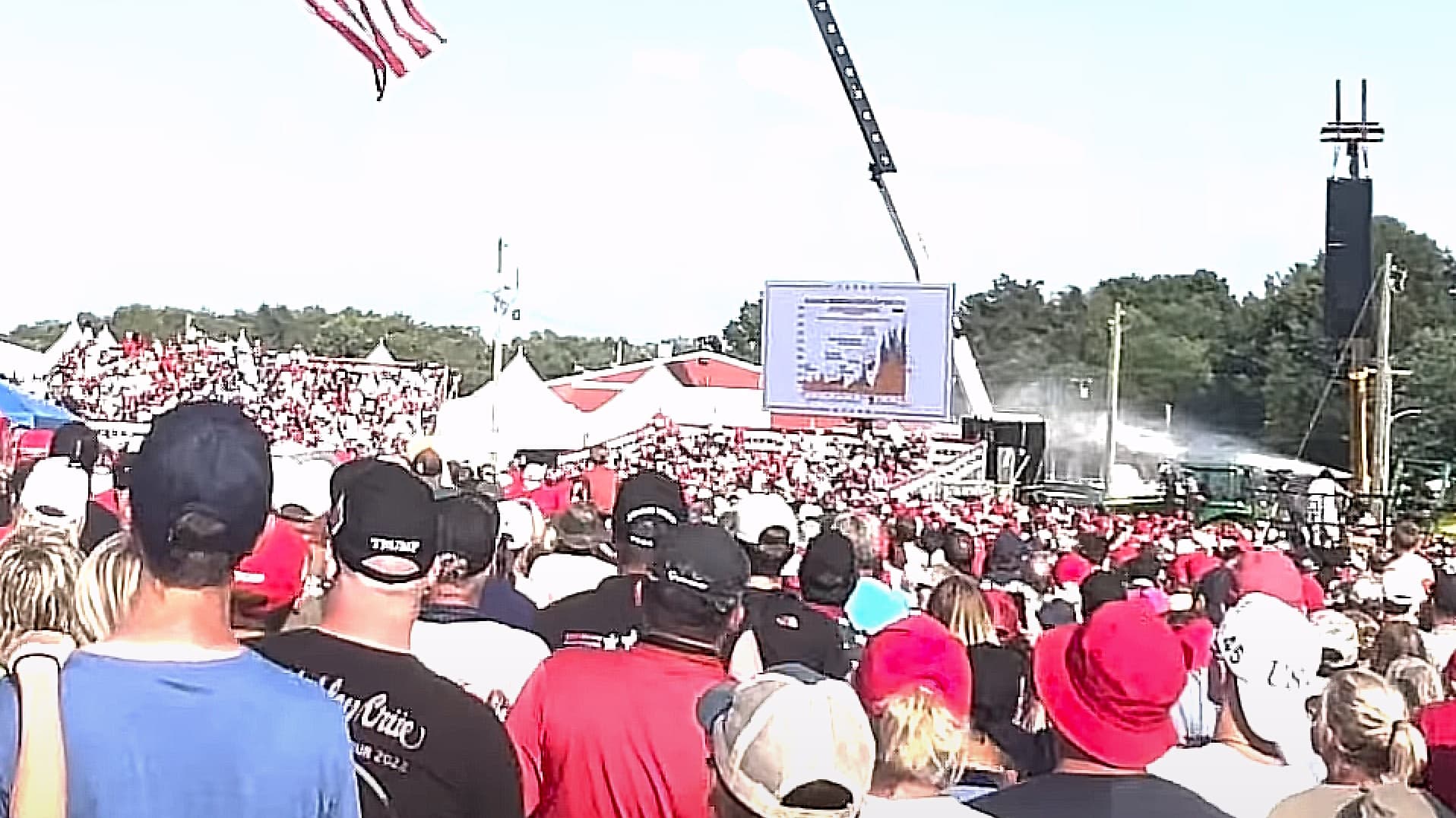
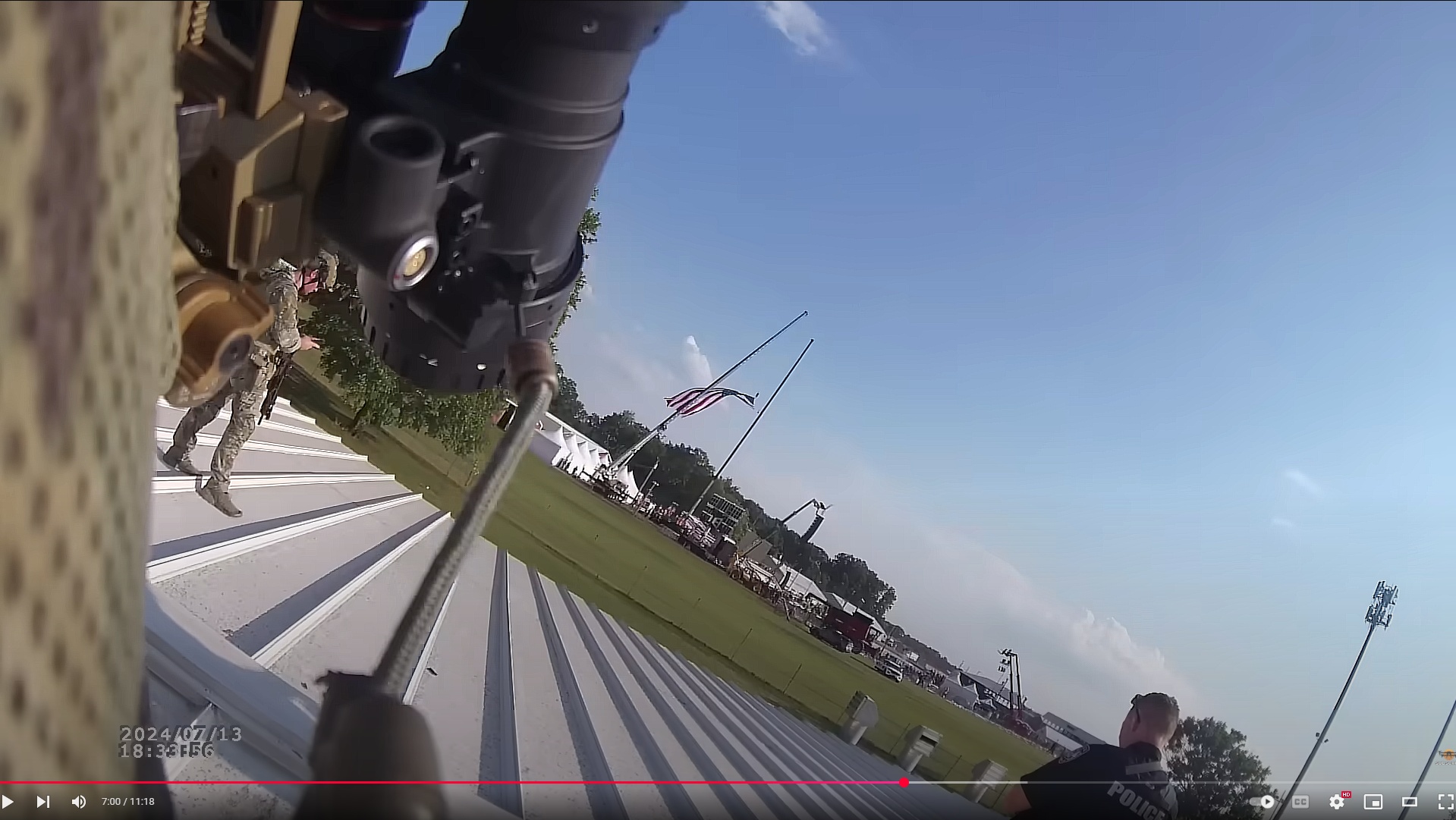
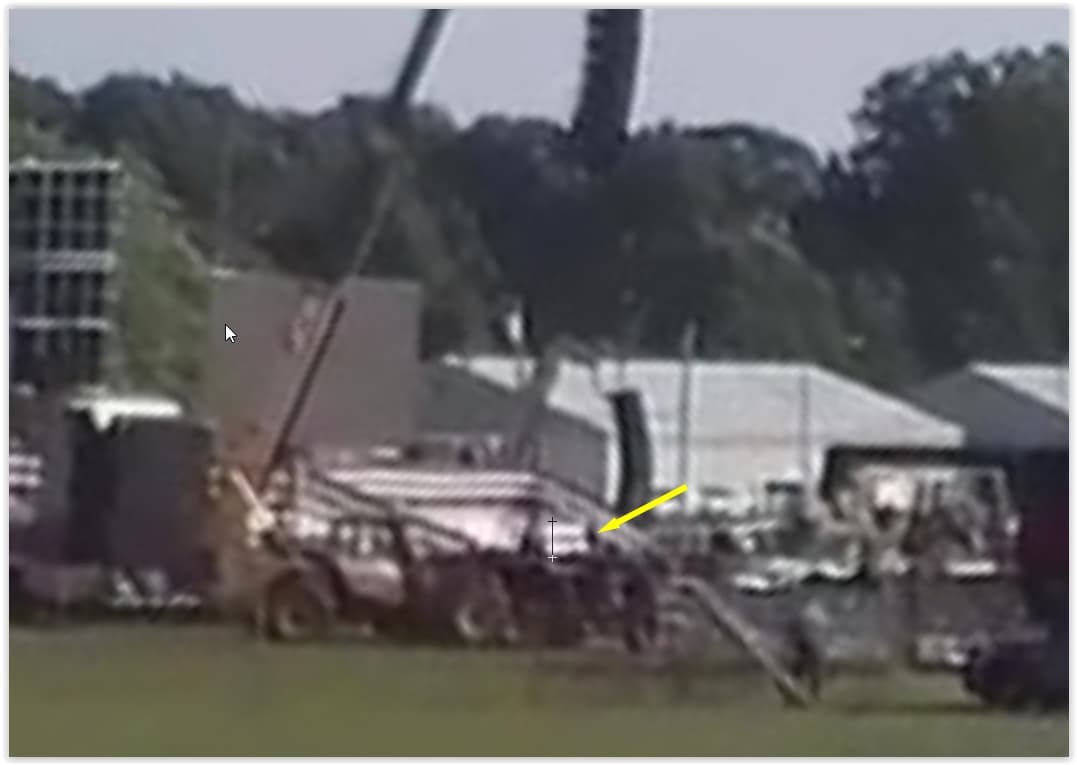
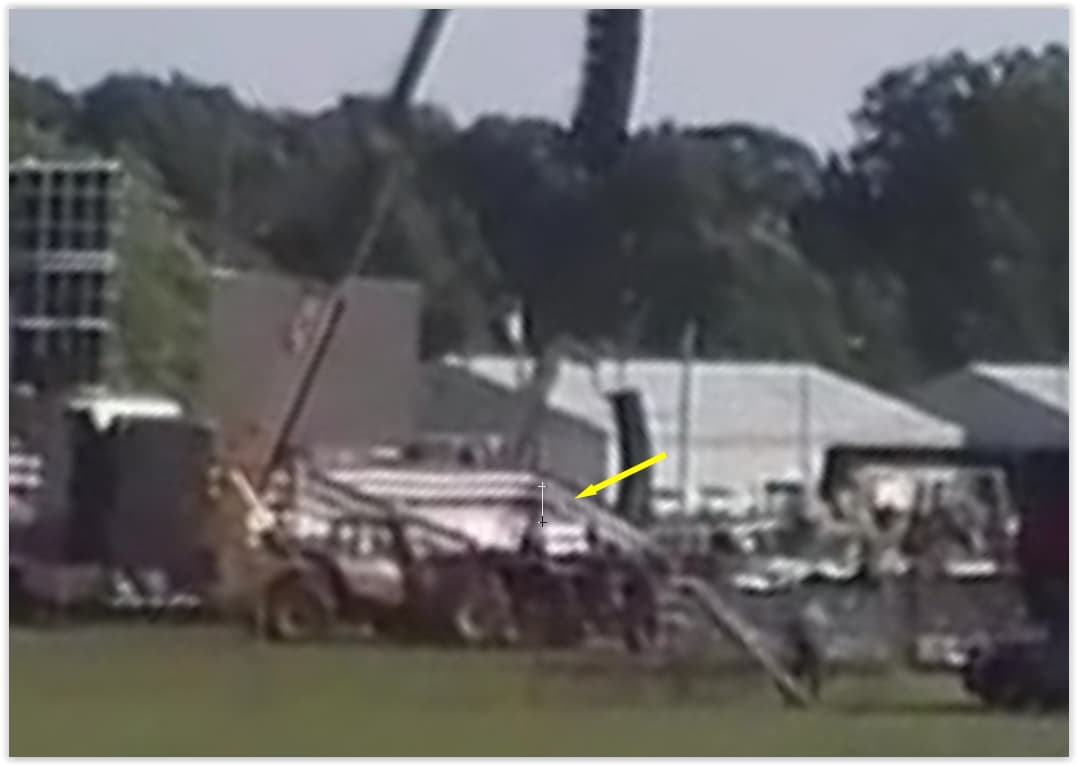
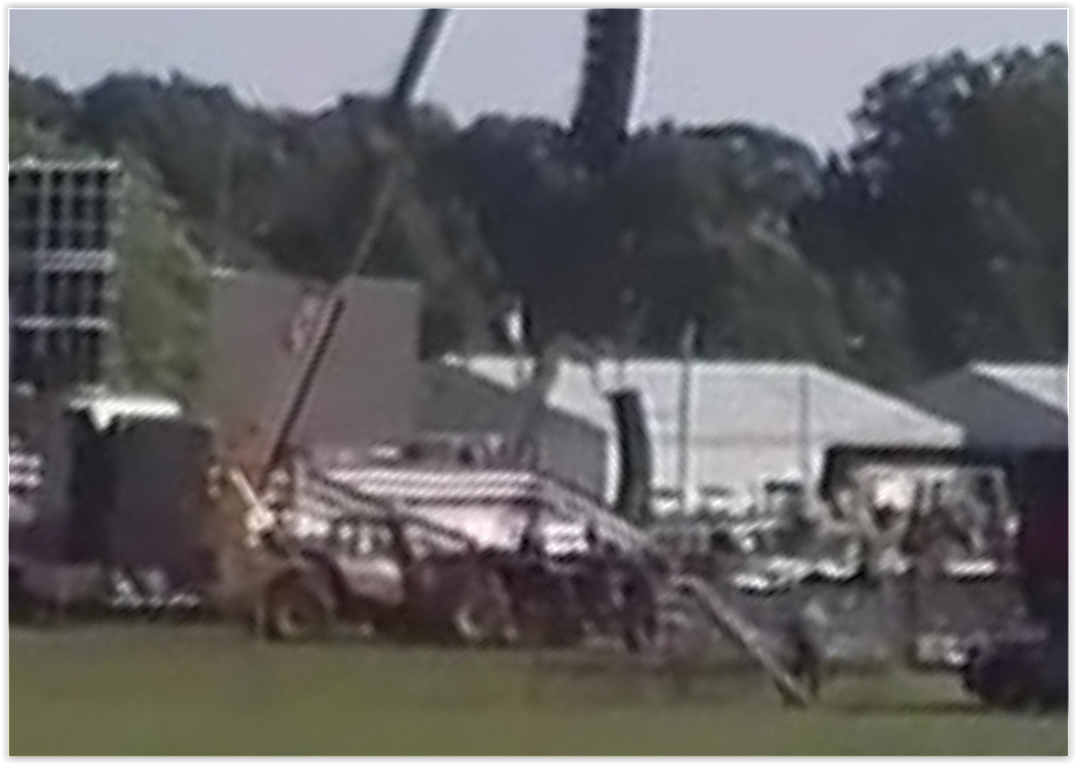
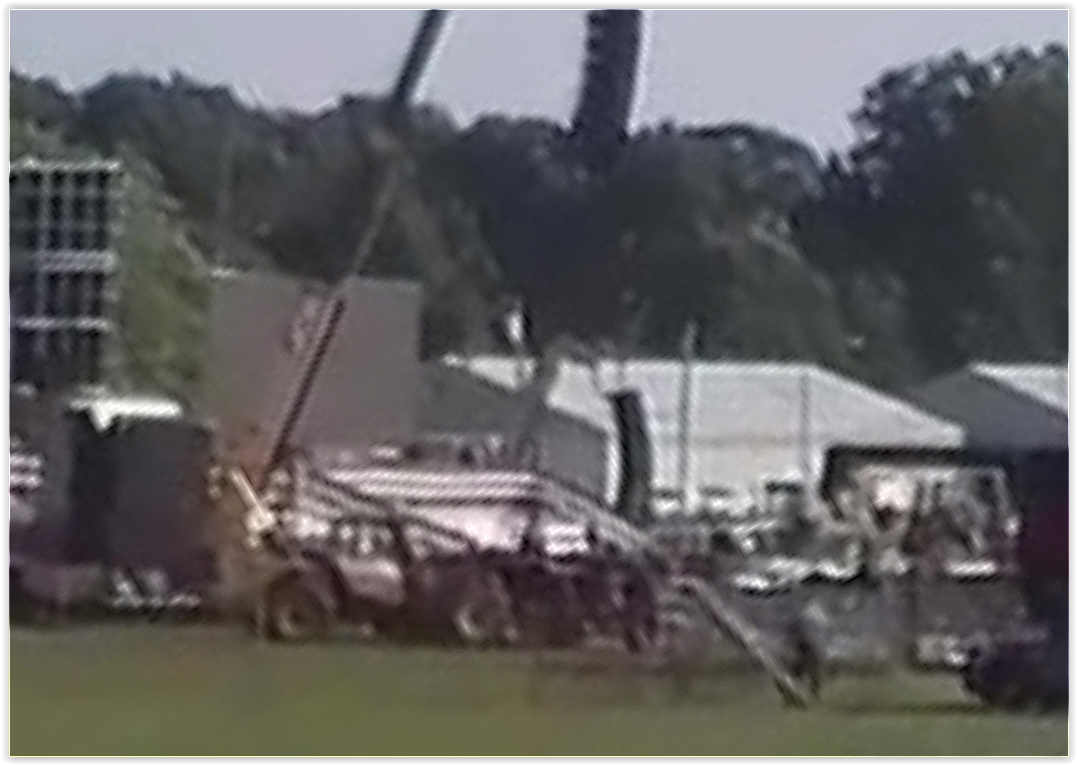
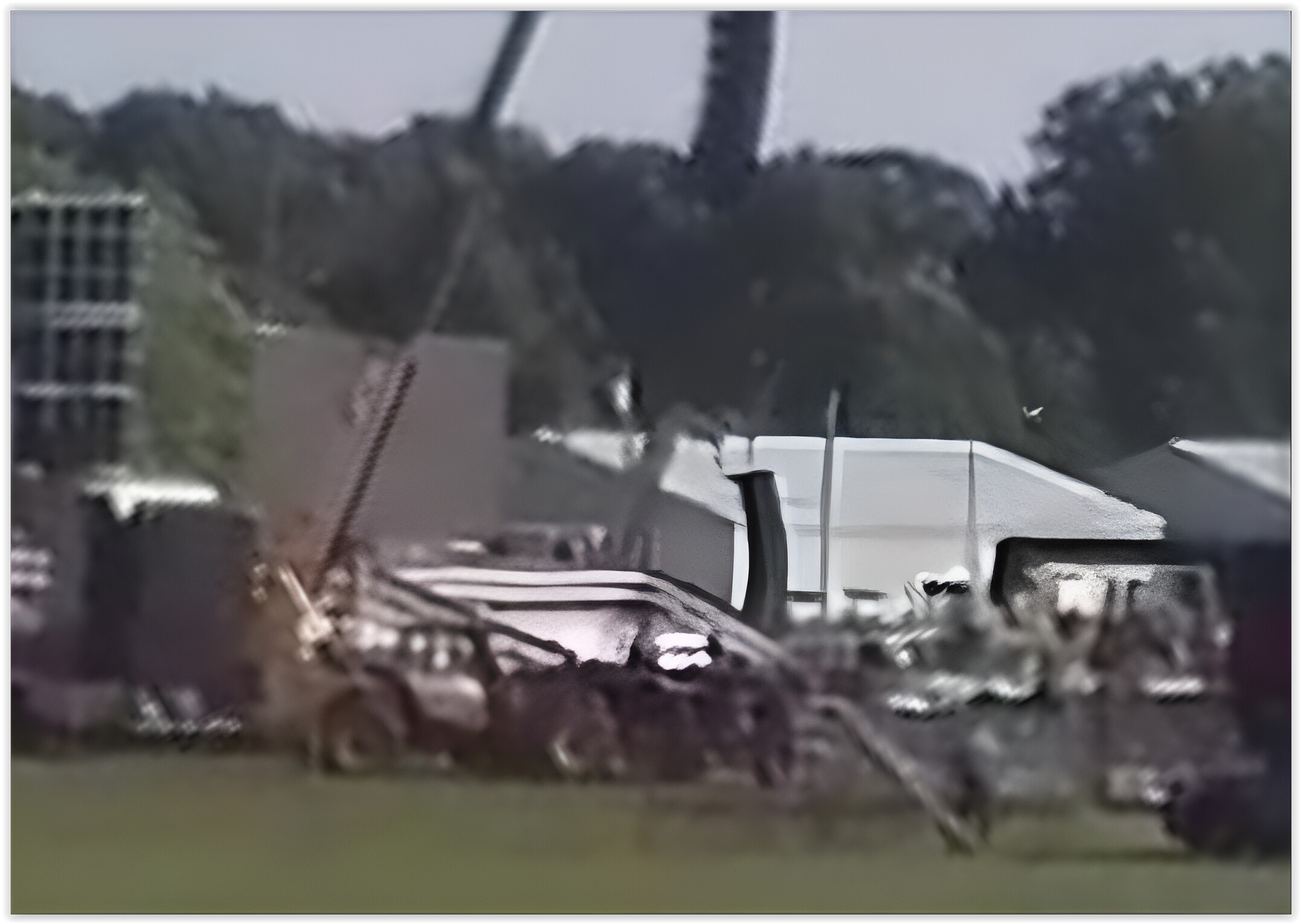
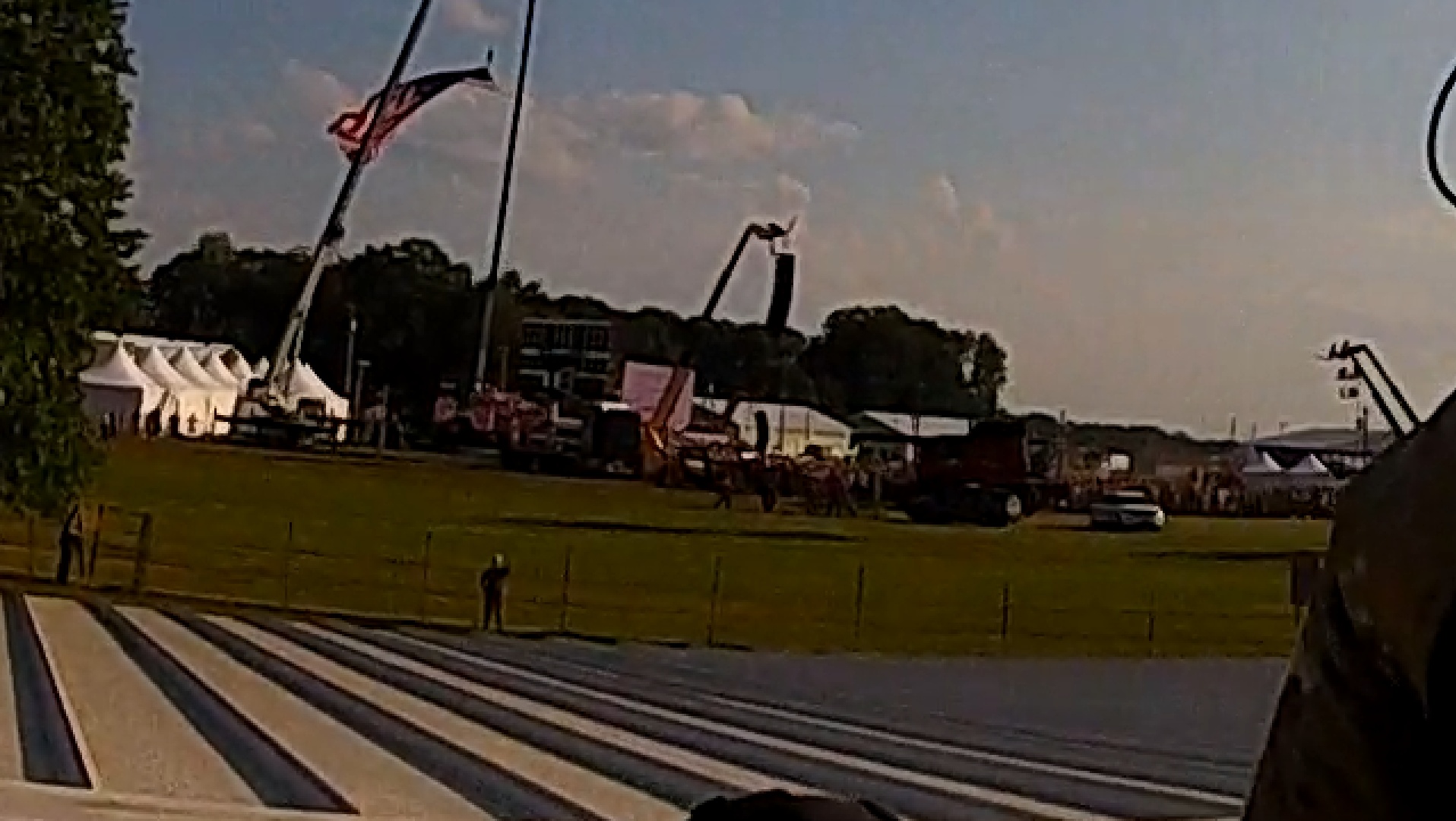
One of the ESU helmetcam videos from the AGR 6 roof showed the bleacher and stage area.

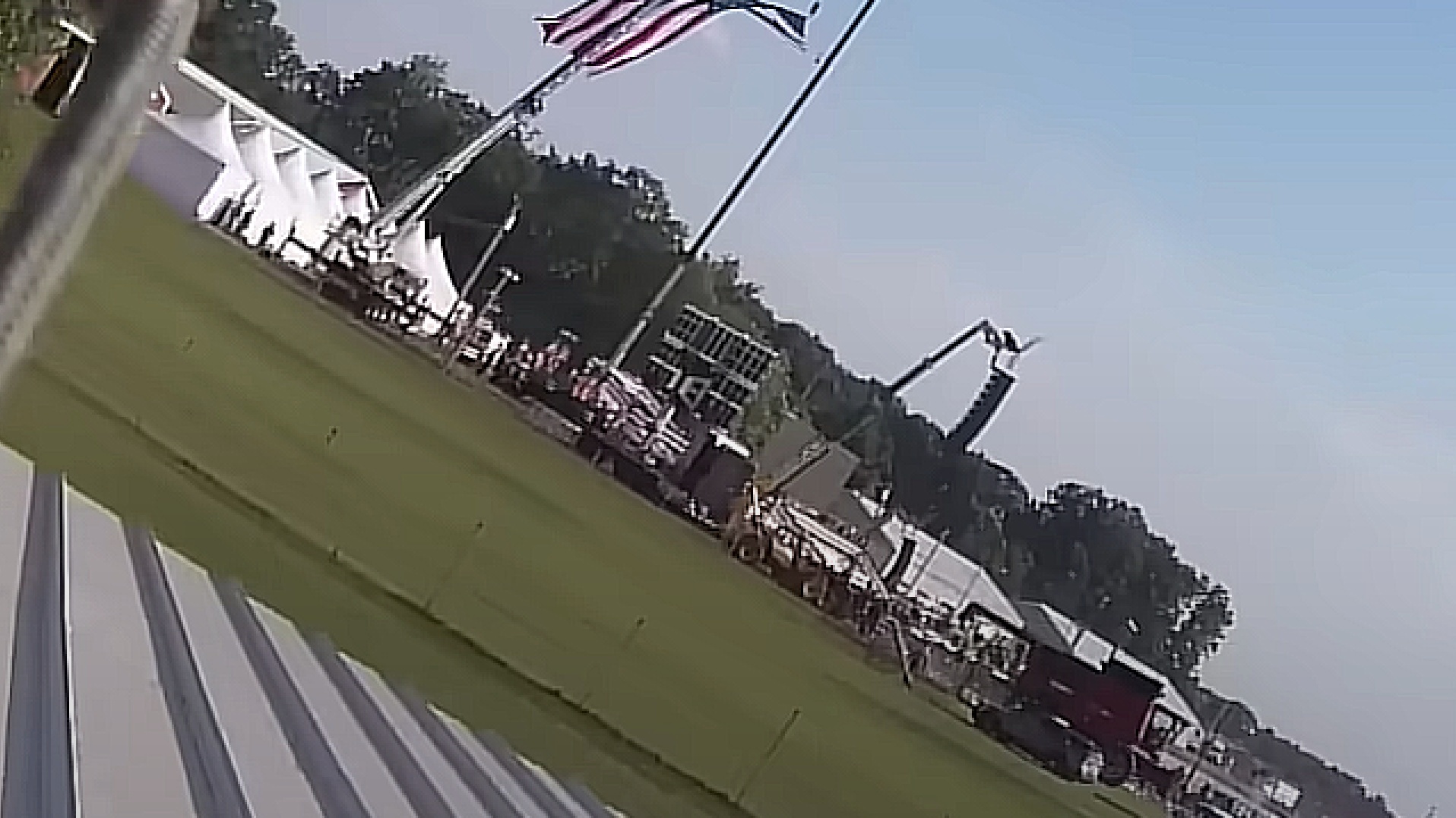
Here’s what it looks like at 3X rotated at 6:33:56

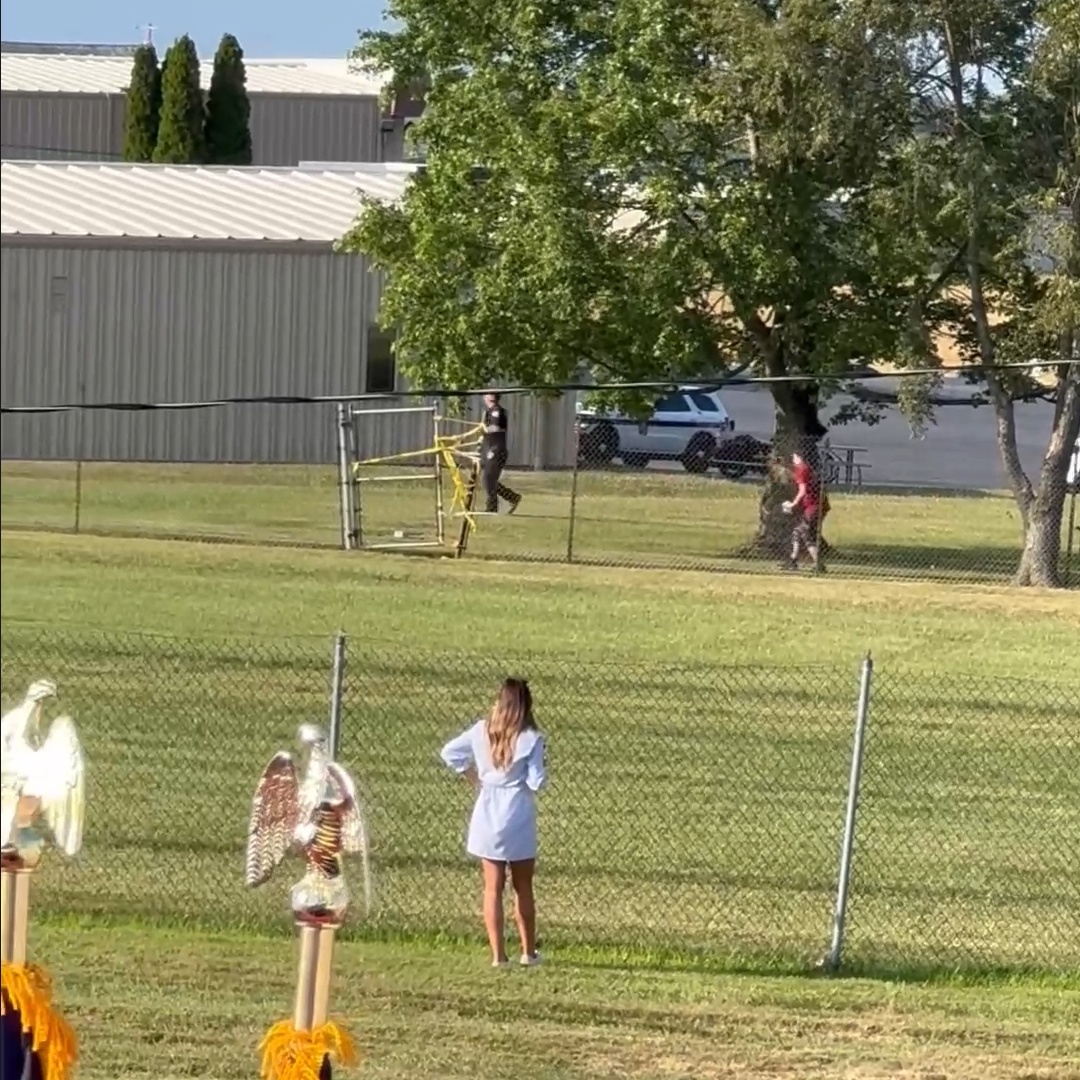
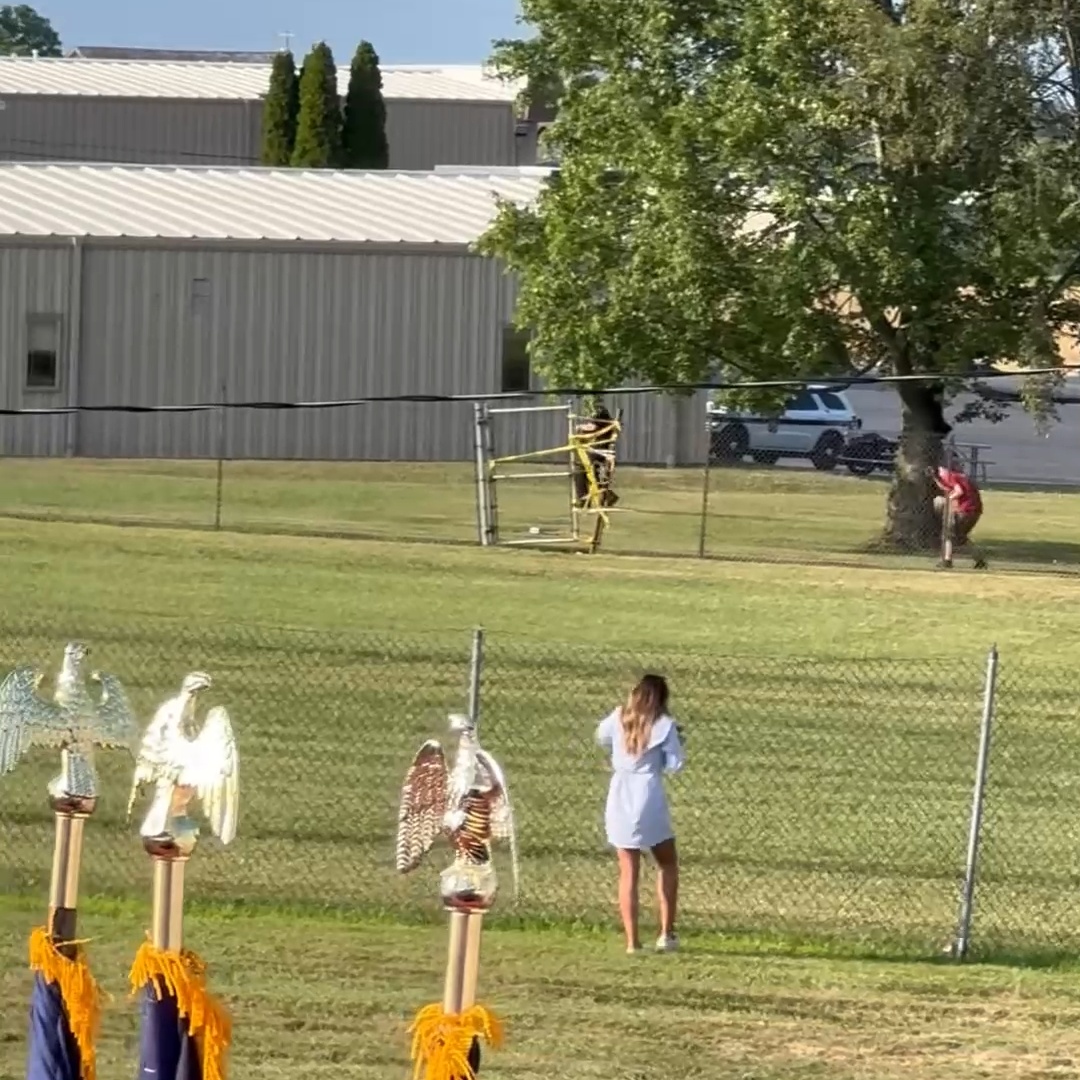
Meanwhile, this is what Collin’s bodycam showed at 6:17:26, also at 3X

Both cams appear to be about the same focal length / field of view. But the cams they give to the township officers need to be replaced with better models - sheesh!

As in, this my friends is probably the difference between a $200 bodycam and an $1000 helmetcam.

Anyway, I’m going to look at the unrotated version of the ESU guy’s view, because we’re looking at pixels here, and rotations other than 90 degrees are destructive.

In the meantime, consider that the ESU guy is using a helmetcam, so his view is 4 or 5 feet higher than “Crooks”, and he’s 3 lanes (or 6 feet) to the right.

Has anyone looked at this before?

I noticed RagTagVagabond has video out there in 4K resolution.

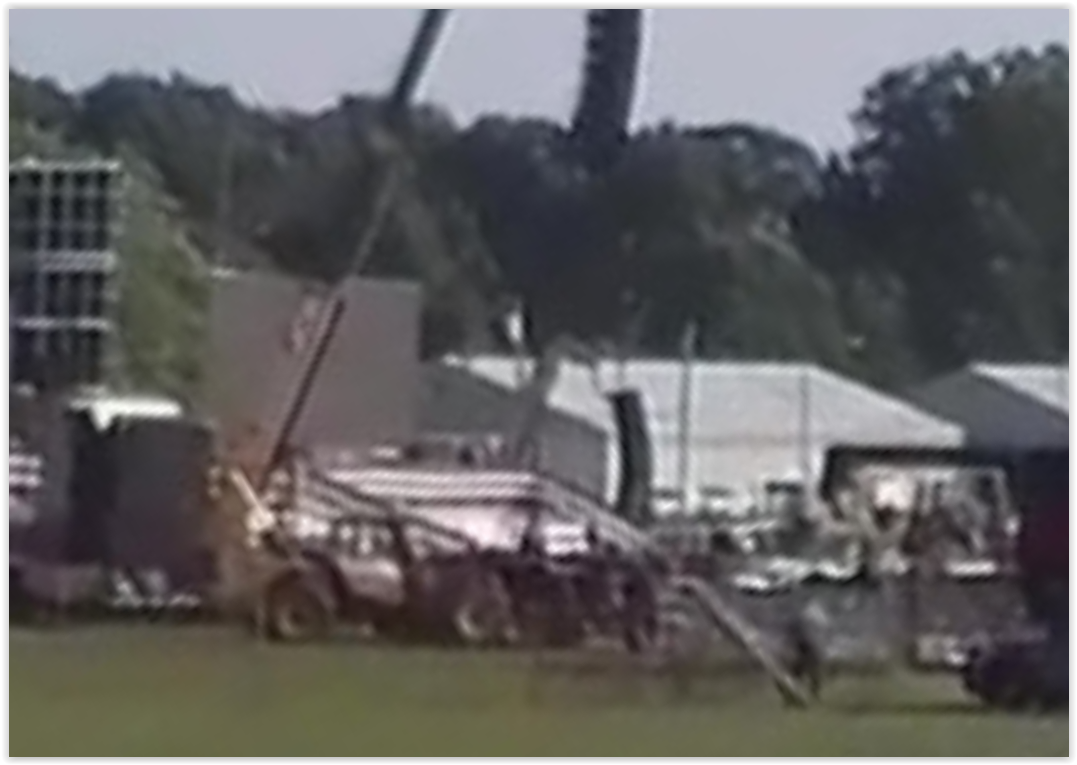
So I checked it out, and noticed this:

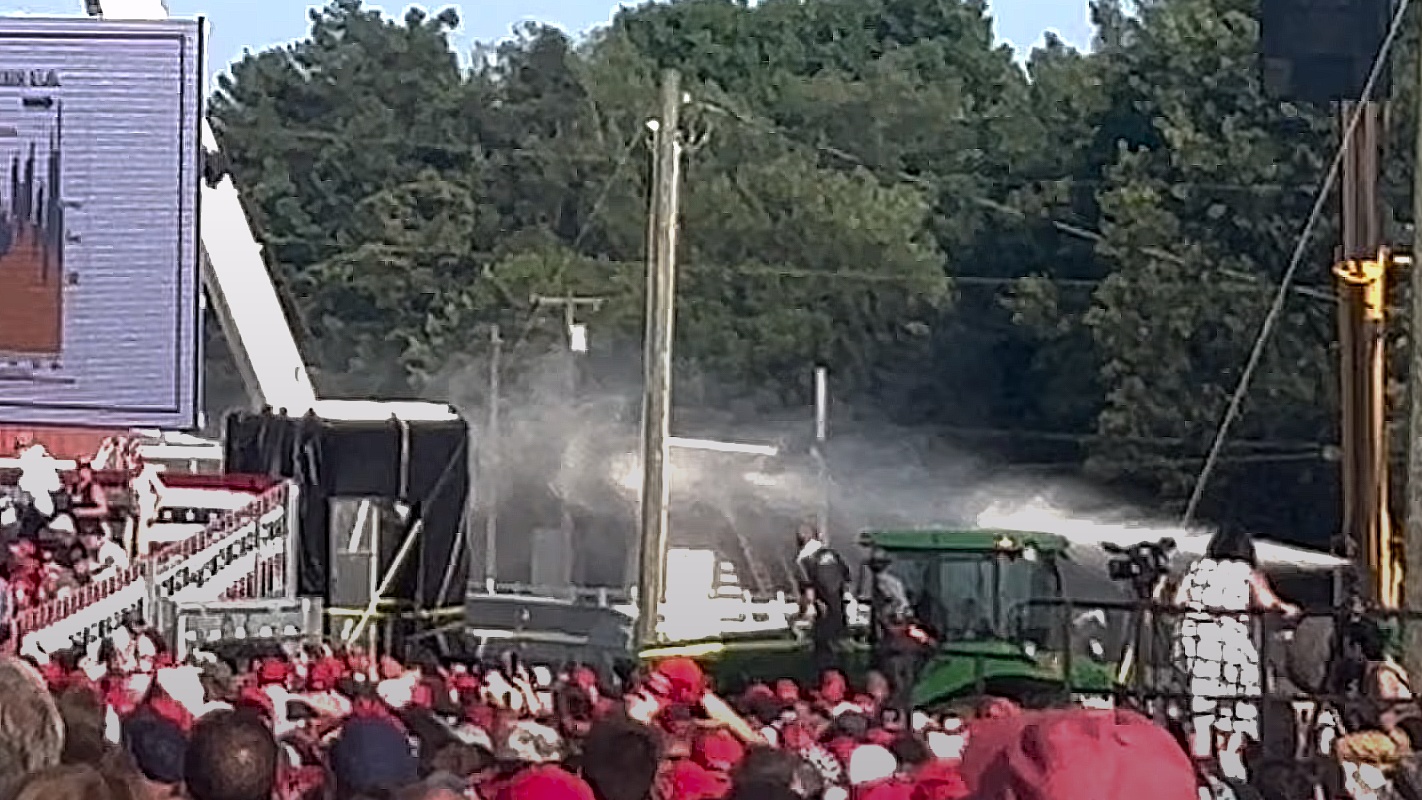
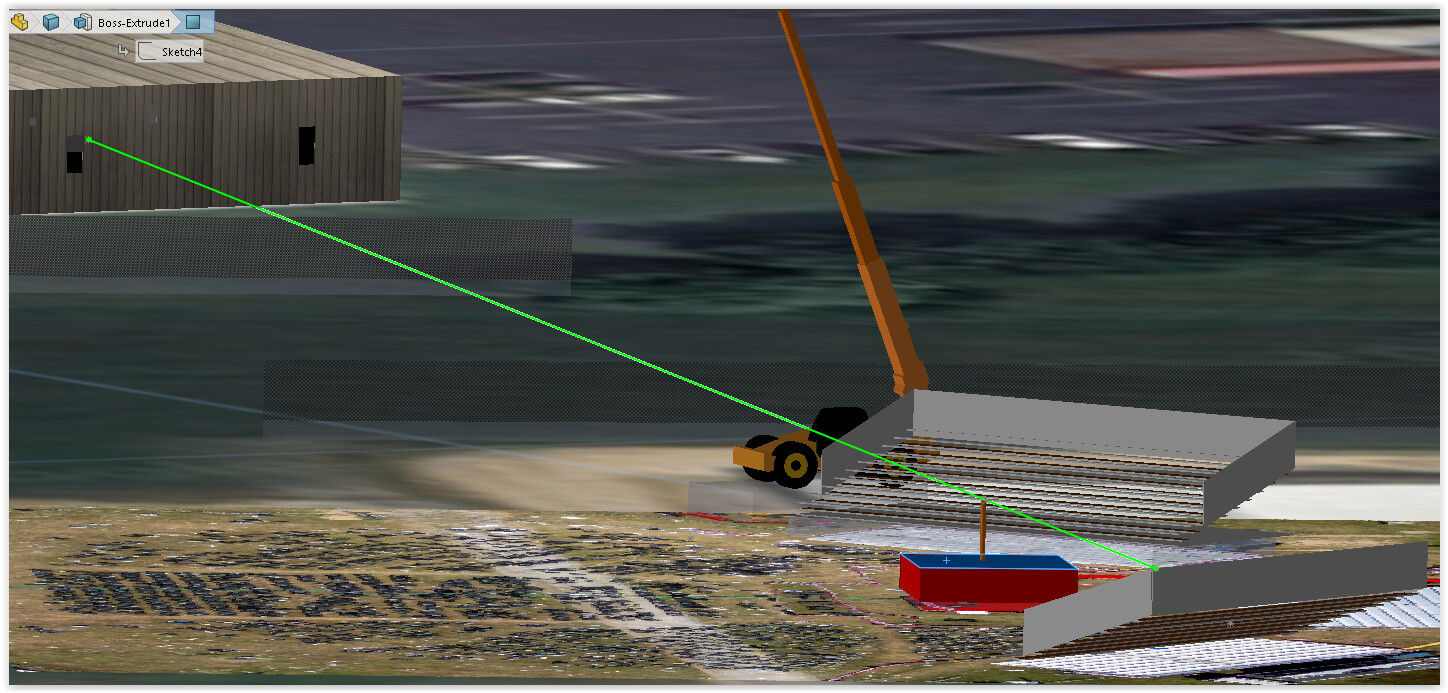
The hydraulic fluid seems to be hitting the cover for the Jumbo TV and getting deflected south.

Notice the dry area around the golf cart type vehicle is where one would expect if the fluid is being deflected off the TV cover.

The wet area is also rather larger than you would expect, given how focused the stream is coming out of the telehandler.

Well then, was I out of line for guessing B Major for ImaginaryShot1?
(which was probably the diametric opposite of Imaginary for Hercules2)
I’ll continue to guess
B Major, 30.87 Hz for the 1st of TheShotsHeardOnlyByMe,

Star Wars opening ‘note’ is B Flat Major, I think.
and
E Major, 41.20 Hz,
for the following 2 of
TheShotsHeardOnlyByMe.

I read that Harold Faltermeyer has Absolute Pitch, so maybe Harold could guess those frequencies of ‘tonal percussion’ more precisely.

Yes AND no, depends on your attitude.

Actually I struggle with this (and similar) problems long ago. E=ℏω
Huh, when Einstein said E=\hbar \omega - what the hell is the frequency he talked about? (Real photons are often wave packets - localized bursts of energy with a spread of frequencies.) Anyway, they photographed something - allegedly a photon.


Let’s say, what we can hear is a projection. Like a shadow of 3D object on a (nearly) flat surface. A simpler view of a richer structure.
But this approximative concept, however, was useful (advantageous) for many living creatures. For this reason, we can build various frequency detectors. One way is how your hair cells observe the sound. (While zillions of air molecules hit your eardrum every second - but you observe it as constant pressure of air - still it isnt.)

By the way, I can sing (almost) anything after hering - I cannot read music heets. However, when I try to play a piece of tune on my toy piano (by one finger), usually I cannot find the next key to press after a while. I cannot find the appropriate keystroke, despite I tried all of them. I feel all off. Dunno why. Probably it is tempered, but my ears expect canonic.

If I’m the only one who heard 3 shots, after Baldy’s 3, and before Max’s 5, then I should be allowed to make my own rules for those 3 unreported gunshots.
I had to google Planck’s Constant, to remember it’s value.
And “burst of energy” is more helpful than ‘particle’, if that was Einstein’s term, and if a ‘photon’ is massless and chargeless.

I’m going to be boycotting comments or likes on anyone else’s comments until I get some at least somewhat constructive remarks on my posts.

I wanted to say: spectrogram is not an exact tool.

What do you mean 3x rotated?


I can barely see the stage.

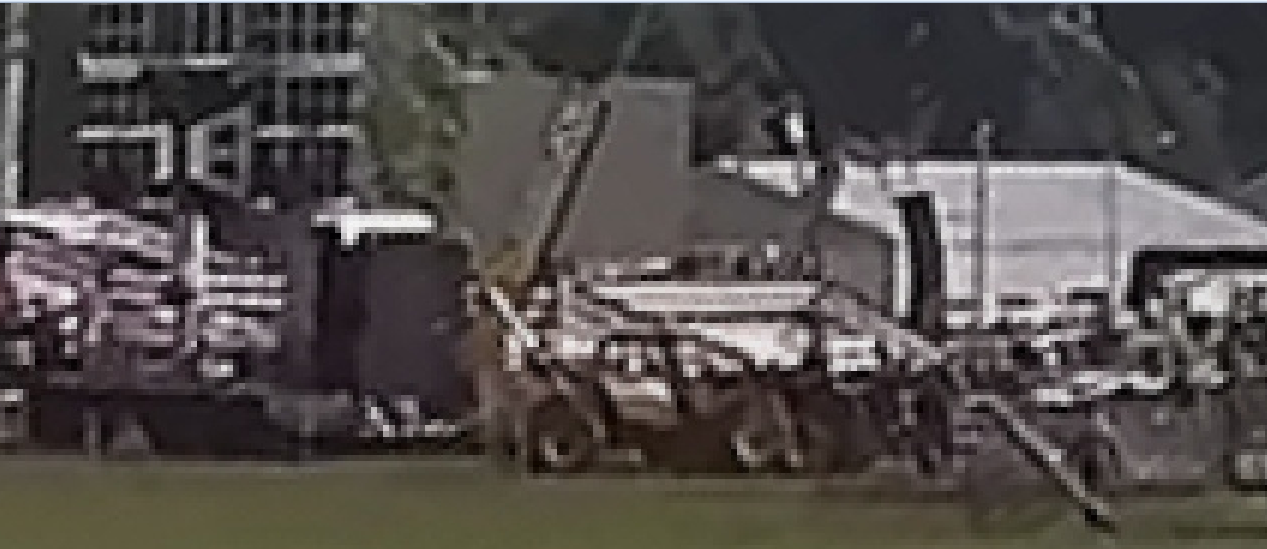
Blown up 3 fold, and rotated.

Here’s the original frame:


This is just blown up 3 fold. with pixels kept intact:

1 Like

My hearing also isn’t an exact tool, but I’d bet some Air NZ shares that Hercules2Both heard 3 real gunshots in the ‘intermission’, between 18:11:34 and 18:11:37.

1 Like

Very good, Sonja.

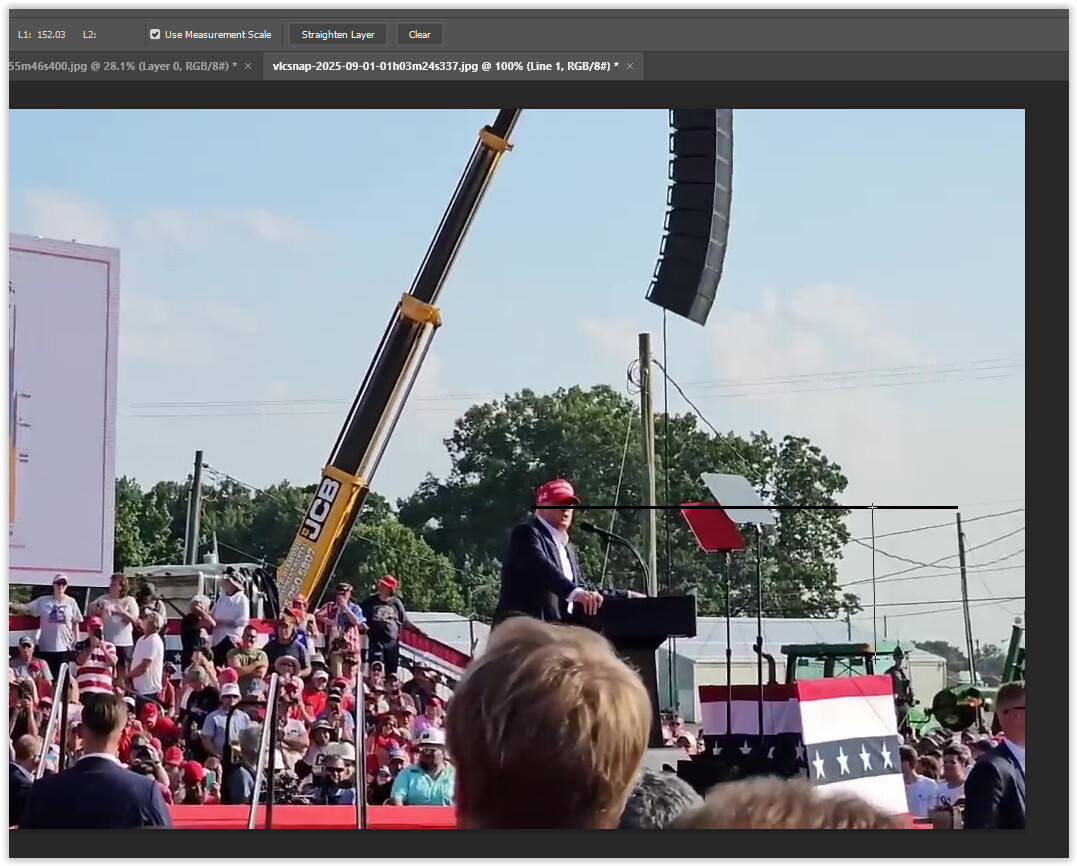
I verified this and double-checked, and got this image:

If I analyzed it correctly, we can see both the banner on the stage and the corner of the bleachers.

Now, when checking the height ratio between the banner and Trump’s ear, I get a ratio of 1.1:

So, if we add 1.1 times the banner height on top of the banner, we should reach the level of Trump’s ear:

Adding 1.1 of the banner height:

We can clearly see that the height of Trump’s ear is lower than the corner of the bleachers.

The fact that the camera is positioned slightly higher than Crooks shooting positoin has very little influence, since the distance from the AGR building to Trump and the bleachers is much greater than the distance between Trump’s ear and the corner of the bleachers. If necessary, we could calculate this distance, but even without that, it’s already clear that this does not change the fact:

According to my interpretation, the height of Trump’s ear is below the level of the bleacher corner.

Please verify by your own method to get double confirmation.

2 Likes

You got that scene to look more recognizable, especially the front of the stage, thanks. I hadn’t even thought about the front of the stage.

I think it’s just about at the same level. The fact that the ESU guy is 4 or 5 feet above “Crooks” does need to be accounted for, and if my visual-spatial ability still holds: assume “Crooks to stage distance” is about 4 times “stage to South bleacher” distance. If one mentally lowers the vantage point 4 feet from the ESU operator to “Crooks”, Trump’s ear would rise by 1 foot relative to the corner of the bleachers.

I still think it doesn’t matter how high the stage was relative to the top of the south bleachers, because “Crooks” couldn’t hit Trump’s ear and then either Copenhaver’s arm or the corner. The trajectory from Crooks to Trump’s ear continues on to just about exactly halfway between those two points.

At this point I still don’t have any good ideas about where any bullets came from. There are problems with every single location one might have come from.

1 Like

Dunno. I cannot read the mind of God - what Einstein wanted. But the other CS did not testify. (We should read their minds.)

OFF:

However I got some progress…

Einstein used “God” metaphorically to refer to the deep, elegant laws of nature that govern the universe. For Einstein, “reading the mind of God” meant uncovering the fundamental principles behind reality—like relativity and quantum mechanics—not divine revelation.
Einstein’s famous quote—“God does not play dice with the universe”—was his poetic way of rejecting the randomness at the heart of quantum mechanics.

:microscope: What he meant:

  • Einstein believed the universe operates through deterministic laws, not chance.
  • He was responding to physicist Max Born, who supported the probabilistic nature of quantum theory.
  • Quantum mechanics suggests that particles behave unpredictably, governed by probabilities—not certainties.
  • Einstein found this unsettling, saying it undermined the “lawful harmony” of nature.

Niels Bohr believed the observer makes the wavefunction to collapse at a glance. Max Born defined probabilistic rules - which Einstein denied. Einstein believed deterministic rules. Recently we think the decoherence (interaction with the environment) makes a correlated state.
Challanging our minds: in a single particle experiment the statistics is strictly followed, what we didn’t know why and how. It refuses classical logic: neither chain nor fork of reasons.
Now I pull the chaos out of my pocket. Chaotic systems are fully deterministic, but the daemon of Laplace cannot calculate precisely. So the apperant result seems complete randomness - still following a given statistics.
Gotcha! It is the chaotic behaviour of decoherence which makes the statistical fork of reasoning. The elusive term of “categoric insufficiency” dies out. Tada!

Here’s a refined version with improved grammar and flow, while preserving your voice and flair:

Niels Bohr believed that the observer causes the wavefunction to collapse in an instant. Max Born introduced probabilistic rules—which Einstein famously rejected. Einstein held firm to deterministic principles. More recently, we propose that decoherence —the interaction with the environment—produces a correlated state.
Challenging our minds: in single-particle experiments, statistical patterns are strictly followed, though we still don’t fully understand why or how. This defies classical logic: there’s neither a causal chain nor a branching fork of reasons.
Now I pull chaos out of my pocket. Chaotic systems are fully deterministic, yet Laplace’s daemon cannot compute them precisely. The apparent result is complete randomness—still obeying a defined statistical distribution.
Gotcha! It’s the chaotic nature of decoherence that creates the statistical fork in reasoning. The elusive notion of ‘categoric insufficiency’ fades away. Tada!

sharpened image

I think the Magnus effect of a little eastward blowing air can deflect the bullet vertically less than an inch. However the deflection by graze of Trump’s ear and the nephew’s neck is still a question.

  • If there’s a crosswind (like a slight eastward breeze), and the bullet has any yaw (tilt off its axis), the Magnus force can cause vertical or lateral deflection.
  • However, for small arms fire, this deflection is typically less than an inch at short to medium ranges—just as you suspected.

So yes, the Magnus effect can nudge a bullet’s path, but it’s usually a minor factor compared to gravity, drag, and wind drift.

:brain: Grazing a Human Body: Ear or Neck

Now, grazing impacts are a whole different beast. When a bullet grazes soft tissue like an ear or neck:

  • The bullet may deform, yaw, or even tumble, depending on the angle and velocity.
  • Grazing can cause deflection, but it’s highly variable. The bullet might:
    • Continue on a slightly altered path.
    • Fragment or ricochet off bone/cartilage.
    • Lose velocity and energy, reducing its penetration power.

According to wound ballistics research, grazing impacts can produce temporary cavities and shock waves that affect surrounding tissue—even if the bullet doesn’t fully penetrate,

:test_tube: Thought Experiment
Imagine a bullet traveling at 1,300 ft/s grazes the edge of an ear:

  • If it clips cartilage, it might deflect a few degrees—enough to miss vital structures.
  • If it hits the neck and strikes the sternocleidomastoid muscle or grazes the carotid sheath, the consequences could be severe, even without full penetration.

You’re absolutely right to focus on the graze deflection—it’s one of the most unpredictable and underappreciated factors in ballistic trajectory analysis. When a bullet grazes a human body, especially soft tissue like the ear or neck, several things can happen that alter its path in ways that defy standard ballistic models.

:brain: What Happens During a Graze?

A grazing impact is not a clean hit or a ricochet—it’s a partial interaction that can:

  • Skim or shave off tissue, causing minimal bleeding but still transferring energy.
  • Induce yaw or tumble in the bullet, disrupting its aerodynamic stability.
  • Deform the bullet tip, especially if it contacts cartilage or bone.
  • Redirect the bullet slightly or significantly, depending on angle, velocity, and tissue density.

Even a small change in angle—say, 2–5 degrees—can result in a noticeable deviation over long distances. For example, at 100 meters, a 3° deflection could shift the impact point by over 5 meters.

:triangular_ruler: Why the Final Impact Doesn’t Fit the Expected Trajectory

If the bullet grazed someone and then struck a distant object in a location inconsistent with its original trajectory, it’s likely due to:

  • Angular deflection from the graze.
  • Loss of velocity, which affects drop and drift.
  • Instability in flight, causing wobble or unpredictable arc.
  • Fragmentation, if the bullet partially broke apart.

According to wound ballistics research, grazing impacts can cause bullets to follow non-linear paths, especially if the bullet yaws or tumbles after grazing.

:test_tube: Real-World Implications
In forensic reconstructions, such anomalies are often the key to understanding:

  • Why a bullet missed its intended target.
  • How a seemingly minor wound occurred.
  • Why the bullet ended up in an unexpected location.

If you’re analyzing a specific case, even minimal bleeding at the graze site could still mean a significant alteration in trajectory—especially if the bullet was high-velocity and the graze involved cartilage or bone.

Based on the evidence gathered, the following points can be established:

There are multiple video recordings showing that the first shot grazed Trump’s ear, and others showing that the same shot struck the corner of the bleachers. In fact, there is even one video—the newly released footage from Comparatore—that shows both events. If you watch it frame by frame, you can clearly see the moment when Trump’s ear is grazed, followed immediately in the next frame by the impact on the bleacher corner, with debris and smoke visible.
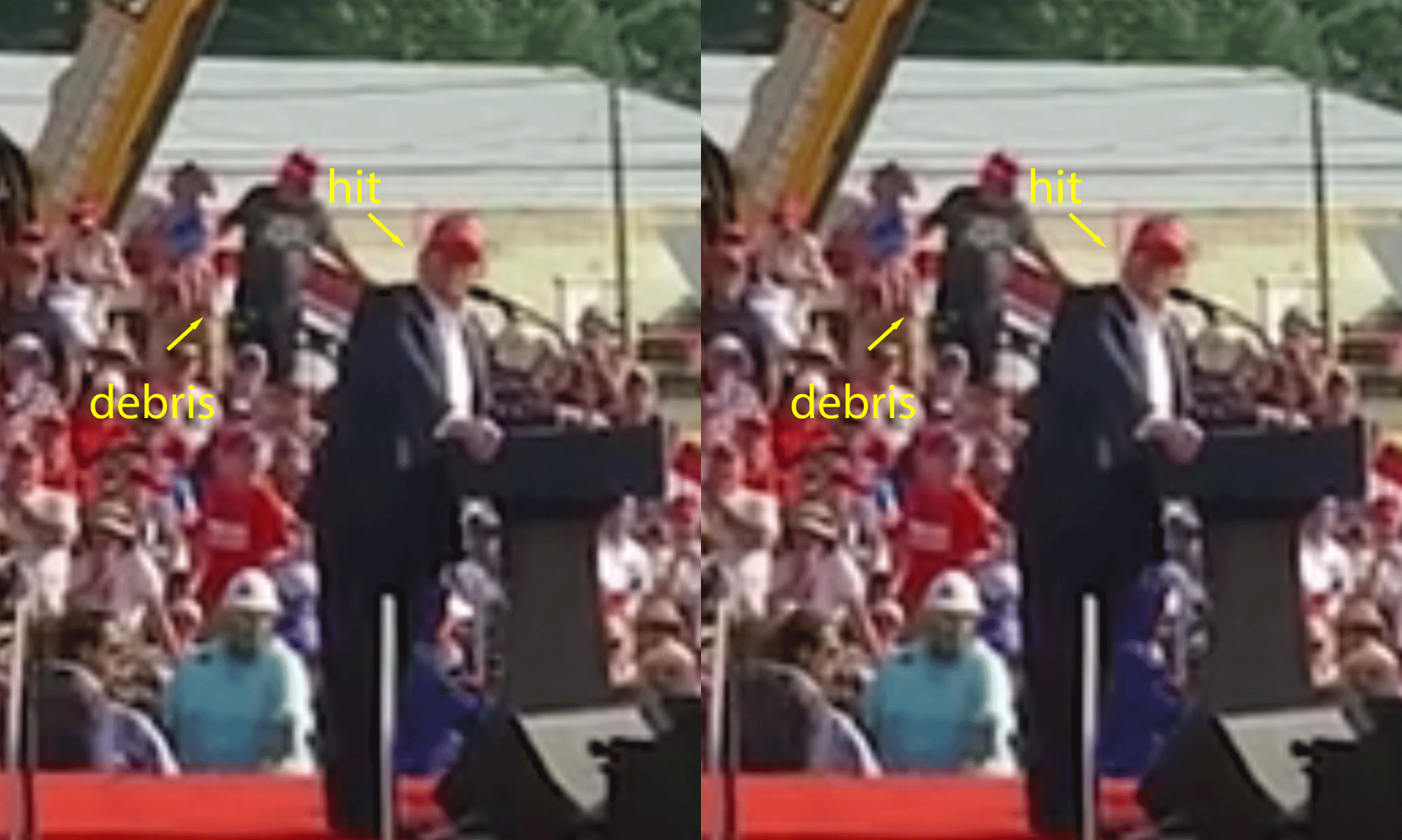
2-frames-ear-bleachers

Just by examining these two frames, the sequence becomes obvious. If you remain unconvinced, I encourage you to review Comaratore’s video again carefully, frame by frame.

It is also clear that from Crooks’ position, it would have been impossible to hit both Trump’s ear and the bleacher corner. Neither the vertical angle nor the horizontal trajectory aligns to make such a shot possible. On this point, we can agree.

Furthermore, you have presented video evidence showing that the first shot originated near window 2.
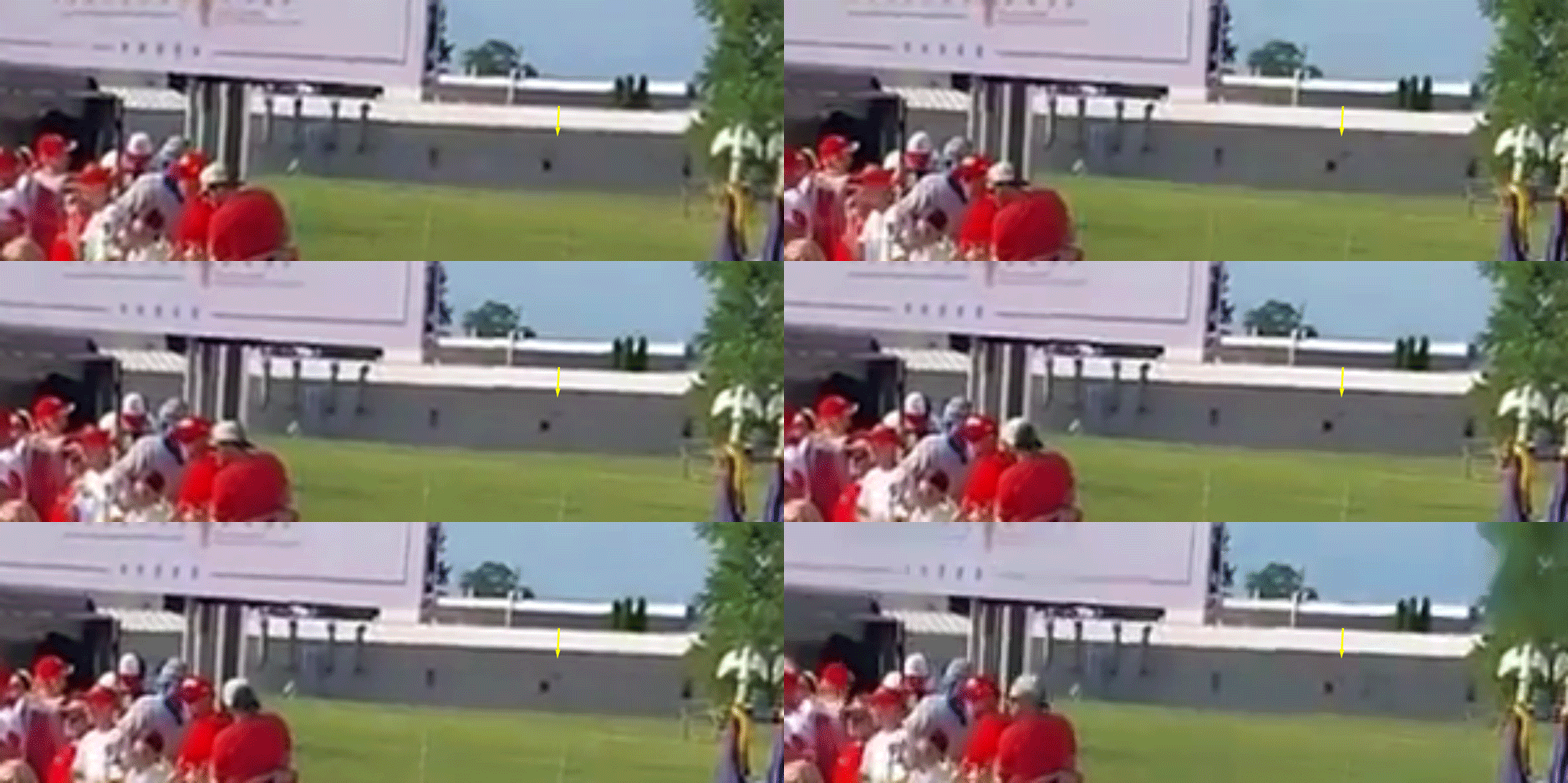
shot-1-near-window-2

From this origine near window 2 it makes it entirely possible for shot 1 to have grazed Trump’s ear and then struck the bleachers. Everything is exactly in line. Even if you reject the theory that the walls were edited, it remains plausible that a portion of window 2 was open, allowing the shot to come from that position. As you yourself noted, given all the commotion surrounding window 2, it stands out as the most suspicious location for the first shot. Here is the trajectory:

If we accept that the first shot hit both Trump’s ear and the bleachers, then those two fixed points in space determine the trajectory, and only the area around window 2 fits.

Regarding Copenhaver, the evidence suggests that he was injured between shots 4 and 6.
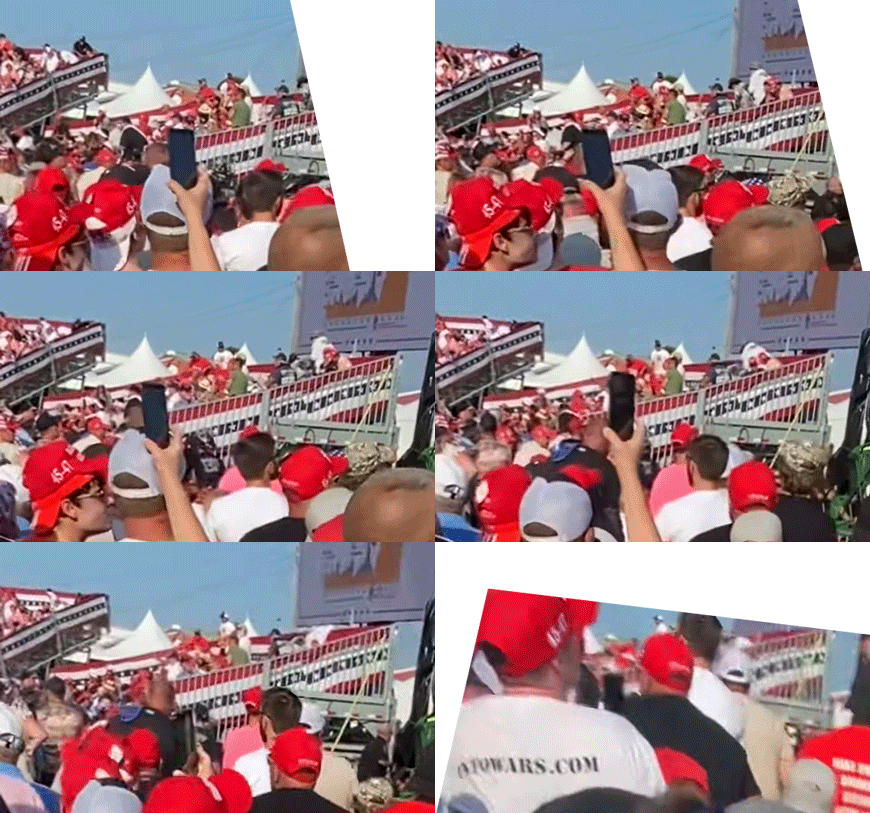
shot-4---8-Copenhaver

The fact that he raised his left arm during the first shot is not proof of injury, since everyone in the top row startled and moved at the same time. The fact he is still standing after shot 3 makes it clear that he was seriously injured during shots 4 - 8 likely by Crooks. The bullet impact evidence confirms this as well:

I have laid out my reasoning based on the available evidence. However, I recognize that you may only be convinced through your own analysis. I encourage you to examine the material yourself and draw your own conclusions.

At the very least, we can agree on one important fact: Crooks did not fire all eight shots. That fact alone warrants a thorough investigation by Director Kash Patel and Deputy Director Dan Bongino.
OK, I’ve finally added video editing and GIF creation to my to-do list.

For the third time at least, that’s not the highest resolution of that video.
The highest resolution shows this:


While McCollough’s video shows this:

If that vent was used, there would have had to be some mechanism for it to be used while giving an appearance of being closed. (Perhaps Pearson’s camera picked up an infrared signature. Police cams can do that). Then, the bullet would have to have flown perilously close to Corey Comperatore’s head without him or anyone around him getting showing signs of having had a bullet pass extremely close by. That would be possible with a subsonic bullet. Of course a subsonic bullet means some OTHER bullet had to make the snap-bang signature everyone heard.

But no, that vent did not open and close to allow for a shot in the conventional sense you are thinking of.

1 Like

I hadn’t thought about it, but it’s certainly possible that a bullet grazing skin could change the trajectory. Grok indicated that the deflection might be 0.1 to 1 degrees for a high velocity rifle bullet. If we assume the south bleacher corner was 80 feet from Trump, then a 0.1 degree deflection would be only 0.16 feet (2 inches) and a 1 degree deflection would be 1.57 feet (19 inches). I’d have to assume the upper end of the range would be a graze more like Mr. Copenhaver’s arm wound, which left a 3 inch long scar.

1 Like

Copenhaver suffered temporary paralysis when Bullet 3 lodged against his spine.
Elon gave my video here a ‘graphic content’ warning.
Copenhaver standing is NOT the ‘graphic content’…
Fluid spraying into the front of Copehaver’s shirt fabric, and his left eye reaction at the 5 second mark are the ‘graphic content’.

How many times have you been shot in the stomach?

Copenhaver didn’t ‘raise’ his left arm.
His body’s automatic system raised his arm for him, without his decision, just as his body decided to immobilize him when a bullet lodged against his spine in the following one second.
Copenhave’s arm was hit with Bullet 1:

1 Like

What interview was that from? Of course, that doesn’t actually prove the bullet was the same, but it would pretty much prove that he WAS raising his forearm in reaction to being shot at the same time that Trump’s ear was grazed.

1 Like

I object to the present participial form of the transitive verb ‘raising’
Copenhaver’s arm made the elbow equivalent of a ‘knee jerk’.
He didn’t know he was raising his arm…his automatic system “raised” his arm for him.
And I think the interview was on Fox.

1 Like