As promised to Sonja and you, I’d be glad to analyze Copenhaver, Bald Man, and Hercules 2 in the same level of detail and time. However, I’d like to first finish the bleacher impact topic, otherwise things may get mixed up and confusing.
1 Like
Using the same method to determine the time range between two dynamic events in a video, I found an HD version of the shooting from News Nation:
https://www.youtube.com/watch?v=z8oAUOjYgGs
The reason we need the HD version is to read Trump’s lips and determine the exact moment when the first shot grazed his ear. He is speaking the last words before the first shot was fired: “Take a look what happe…”. On the “e” of “happened”, the first shot grazed his ear.
This method is much more accurate than analyzing the audio track. As @kincses-zsolt correctly mentioned, audio and video are often not perfectly synchronized, and audio can also be delayed depending on microphone distance. By contrast, video is transmitted at the speed of light and does not suffer from misleading delays. That is why this time we rely on lip-reading from the HD footage:
Here is an animated GIF:
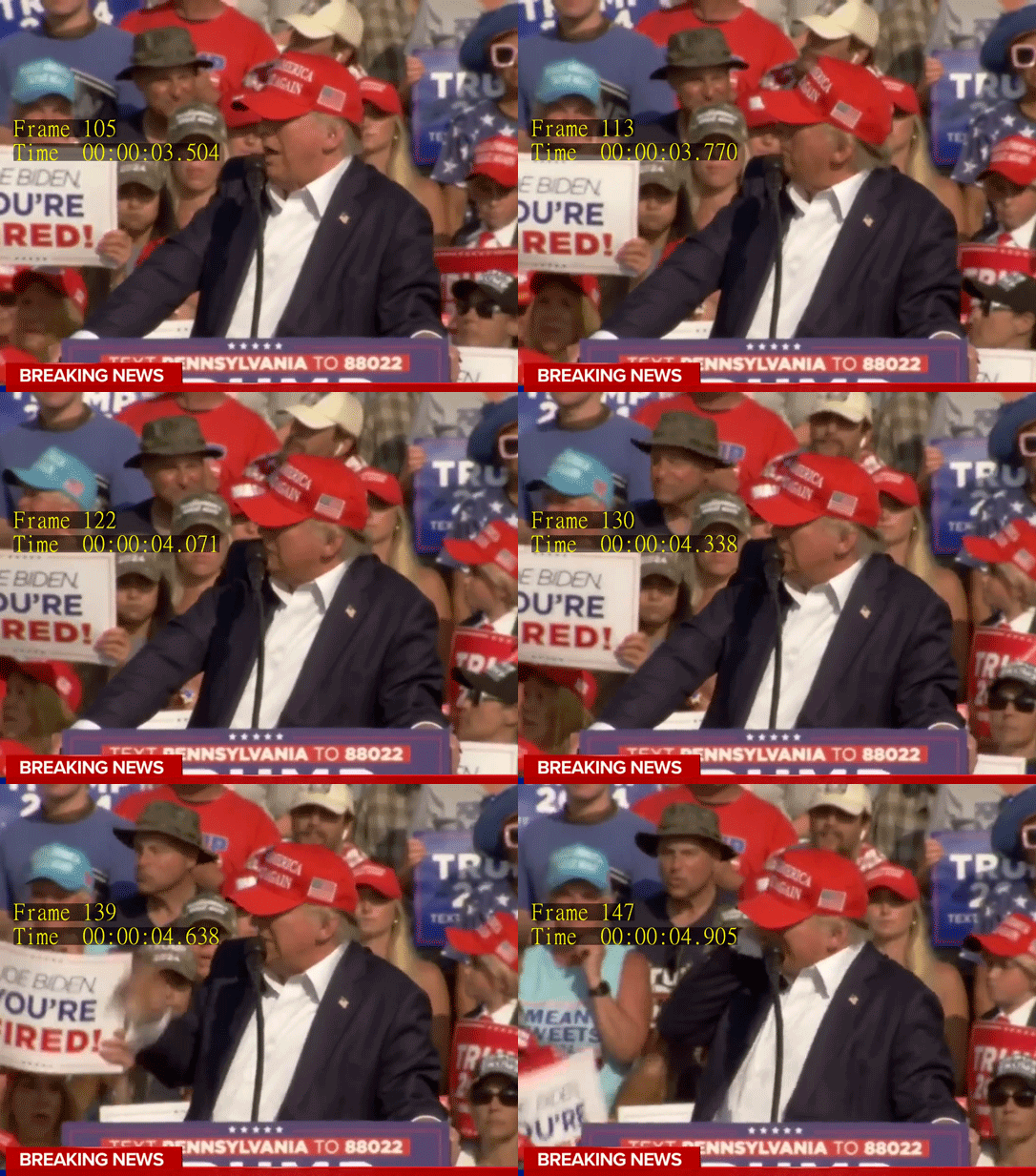
Looking at the video frame by frame we get the following:
- Frame 108: We can clearly see the “p” in “happe…”.
- Frame 115: Trump begins to open his lips to pronounce the “e” in “happe…”. This is the moment the first shot occurs — at 3.837 seconds into the video.
- Frame 144: Trump’s hand touches his ear — at 4.805 seconds into the video.
Therefore, the time between the first shot grazing his ear and his hand reaching his ear is 0.968 seconds, which corresponds to 29 frames.
Can we all agree that after the first shot grazes Trump’s ear, he touches his ear 0.968 seconds later?
1 Like
How did you know that, Phiphi?
I saved the ‘video’ as rog.gif, and have no experience with animated GIFs.
Is this the file that has only 16 frames in the first second?:
It’s the video indicated below:
I look at this video with QuickTime frame by frame (using the right arrow on my keyboard). I look at the time elapsed from the beginning of the video and the time becomes 00:01 s after 16 frames but after that there are 30 frames in each second.
So when our dear Roger shows the time elapsed by dividing the number of frames by the frame rate, he makes a 14 frames length time error!
But he don’t want to answer me anymore because he doesn’t like to be wrong!
1 Like
You know, dear Roger, the censorship of dissenting voices was under the Biden administration, but you haven’t missed the fact that Trump is now in power and freedom of expression has reasserted itself!
So, put down your scissors and admit your mistakes. You’ll see, you’ll sleep better!
How can you know that’s the moment when first shot grazes his ear?
ffmpeg has crude ways to reposition audio and video, so maybe one of those ways was used, and I’ll save that .mp4, maybe for the 2nd time, after I post this.
Also, ffmpeg has it’s own rules for making videos.
For example, I cropped and enlarged 15 frames, maybe from the same video, and then made it into a ‘slideshow’ with 1 simple command:
ffmpeg -framerate 1 -pattern_type glob -i ‘*.png’ -c:v copy 0.mp4
but ffprobe 0.mp4 shows a framerate of 25 f/s, so ffmpeg seems to repeat each of 15 .png pictures 25 times, for a total of 375 frames.
Meanwhile I got an idea - within our strategic decision “game”.

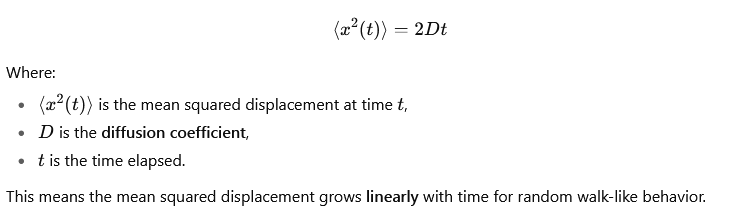
Yes, you’re on the right track! The motion you’re referring to is indeed related to Einstein’s theory of Brownian motion, which describes the random movement of particles suspended in a fluid (like dust particles in the air).
In the simplest case, the displacement of a particle undergoing Brownian motion is random, and the displacement at each time step is independent of the previous one. As you mentioned, at each time step, a particle moves either to the left or to the right with equal probability, which is a form of a random walk.
Relation to Einstein’s Brownian Motion
Einstein’s equation describes the mean squared displacement of a particle in a fluid, and it relates the displacement of the particle over time. The key result of Einstein’s work on Brownian motion is that:
Dust Smoke Ball Example
Now, if you’re looking at the diameter of a dust smoke ball over time, what you’re essentially measuring is the diffusion of the dust particles that make up the ball, and this process should follow the principles of Brownian motion, assuming the particles are small enough to undergo random motion in the air.
The diameter of the dust smoke ball is likely to grow over time because as the individual dust particles diffuse, they spread out over time, which increases the volume (and therefore the diameter) of the cloud.
Estimating Diameter Growth
The change in diameter over time would be related to the mean squared displacement of the particles, but the relationship might be a bit more complicated, as you’re looking at the spread of a collection of particles rather than the motion of an individual particle.
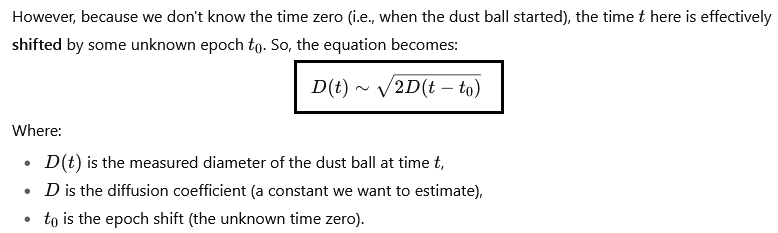
If we assume that the particles behave like ideal Brownian particles, the volume V of the dust cloud will increase over time, and since the volume V is proportional to the cube of the diameter D, you could model the diameter D(t) as:

oh, here D(t) is not D - two different things
Ah, now it gets tricky! If the dust ball’s creation is concealed, and the wind is moving it, we’re dealing with a hidden start time and an external force (the wind) that complicates the problem.
In this case, you’re not just dealing with Brownian motion, but also an additional component due to the wind. To determine the “epoch” or the time zero of the system (i.e., when the dust ball was created or when it started moving), we need to separate the effects of random diffusion (Brownian motion) from the deterministic movement caused by the wind.
Unknown Time Zero: Since you don’t know when the ball was created, the question becomes: How can you separate the random diffusion from the movement caused by the wind?
Great! If we focus solely on the ball diameter change and disregard the wind for now, we can indeed model the problem using a regression technique to estimate the unknown parameters—the diffusion coefficient D and the epoch shift time (the hidden time zero when the dust ball started spreading).
Step 6: Extended Regression Models
If the relationship turns out to be more complex (e.g., if the spread follows a different power law or is influenced by other factors like non-constant diffusion), then we could extend the regression model. For example, if the relationship between D(t)D(t)D(t) and time is not purely quadratic, we could fit polynomial or other nonlinear regression models. The key is that the best-fit model should always be chosen based on residuals and error minimization.
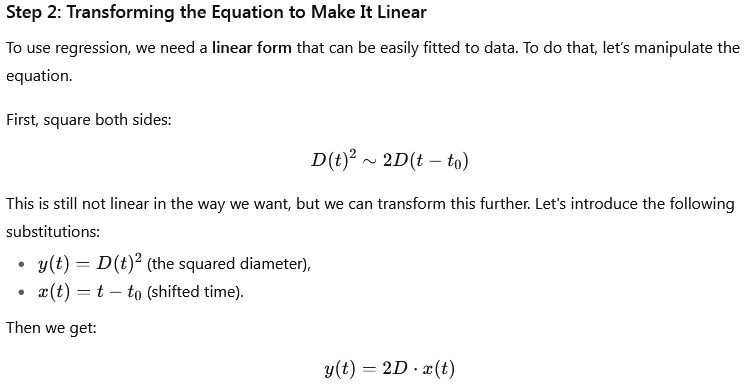
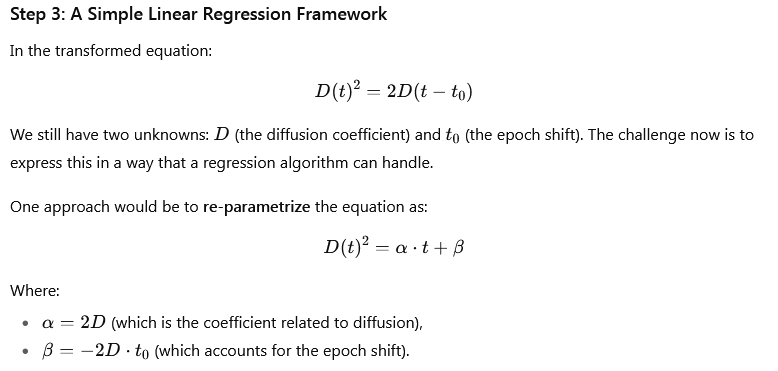
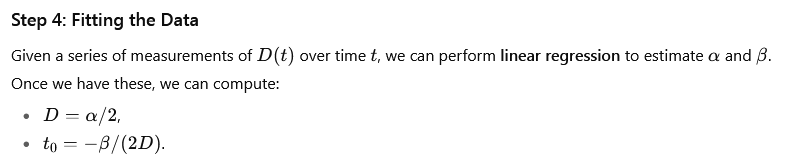
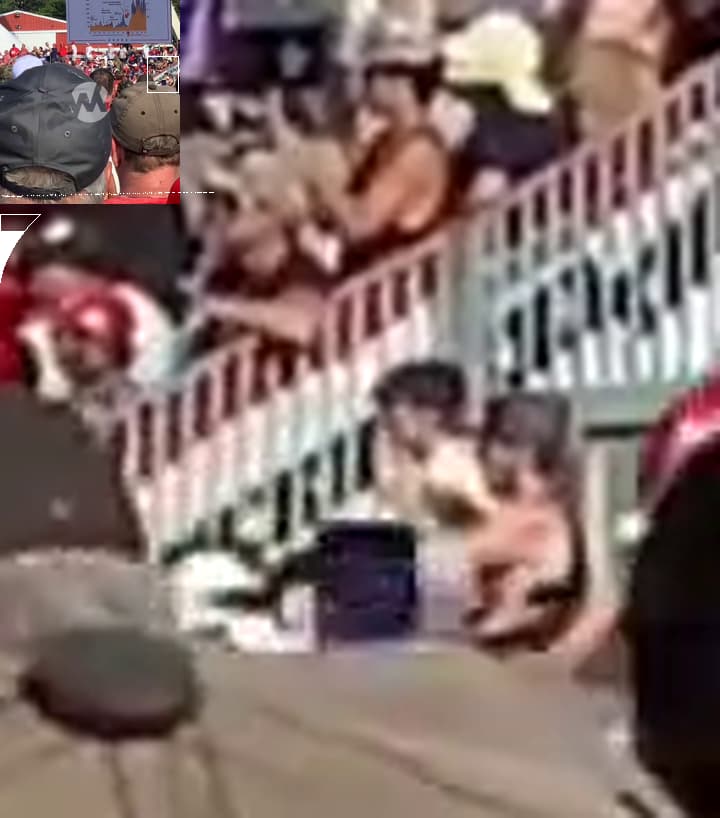
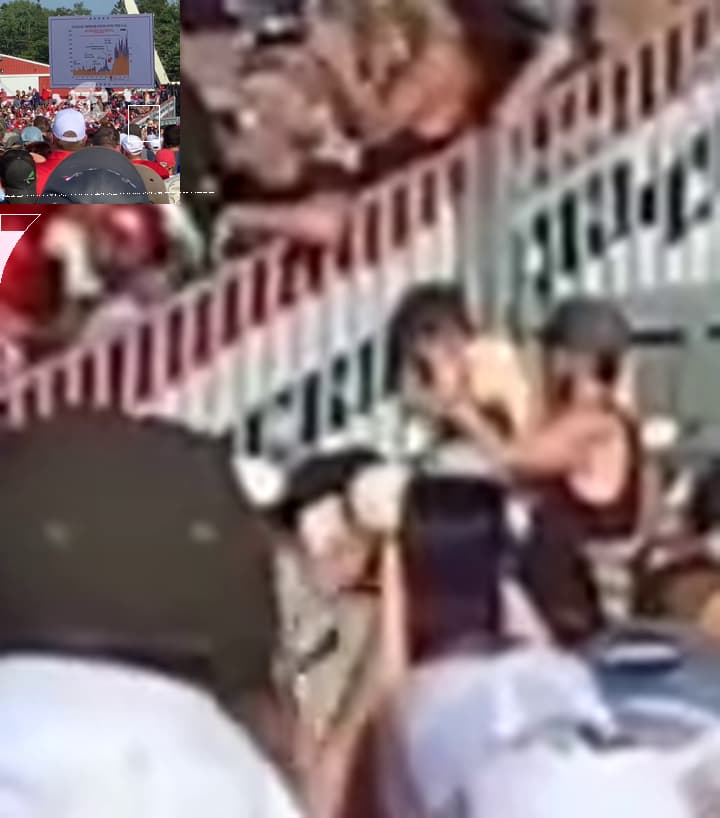
Now the only thing I should do to read the diameter in pixels and fill the spreadsheet.
But somehow - there might be two dust balls? Or just the other is a shadow?
download link:
Kid:
VLC player:
1st sec: 30 frames
2nd sec: 15 frames
3rd sec: 30 frames
4th sec: 30 frames
1 Like
Hercules 2 and Copenhaver have been analyzed.
Your offer to analyze Bald Man is helpful, because you’ve tacitly admitted to seeing a Bald Man, and you need to distract your “audience”(4 people, out of 8,000,000,000 people) with a suppressed gunshot heard by Hercules 2…and heard by me…
Unlike your conversation partner, you have the ability to download a video and process it with FFmpeg.
The following command adds both frame numbers and timestamps to each frame of the video:
.\ffmpeg -i "Moshe Schwartz - New video from the moment shots rang out at the Trump rally.mp4" ^
-vf "drawtext=text='Frame %{n}':x=400:y=270:fontsize=28:fontcolor=yellow:box=1:boxcolor=black@0.5,
     drawtext=text='Time %{pts\:hms}':x=400:y=300:fontsize=28:fontcolor=yellow:box=1:boxcolor=black@0.5" ^
-c:a copy "Moshe Schwartz - New video from the moment shots rang out at the Trump rally with frames and time stamps.mp4"
Running this command overlays two elements on the video:
- Frame counter – showing the exact frame number (
Frame %{n}). - Timestamp – showing the presentation time in hours, minutes, and seconds (
Time %{pts\:hms}).
With these overlays, you can step through the video frame by frame to verify its continuity.
Upon inspection, it is clear that the footage is a continuous video recorded at 30 frames per second.
Regarding the second video of Trump:
After the first shot grazes his ear, Trump reaches up and touches his ear approximately 0.968 seconds later.
The sooner everyone confirms this, the sooner we can close this point and move on to the next topic, such as the bald man.
DJT is still ‘My President’, and Commander In Chief, and I want him to have quicker reflexes, so I’ll hope for the 0.668 second, from bullet impact to ear touch…that estimated 3 days ago.
I re-saved the X file, named it moshe.mp4.
Then, I changed moshe.mp4 into roger.mp4 with the following command:
ffmpeg -i moshe.mp4 -itsoffset 00:00:00.533 -i moshe.mp4 -c:v copy -c:a copy -map 0:a:0 -map 1:v:0 roger.mp4
That may be 1 crude way to forward the audio, of the same file, 0.533 second.
(equivalent of 16 frames).
moshe.mp4, played “frame by frame”, with left mouse clicks of my VLC player(in Debian Trixie), needs 30 mouse clicks to move the clock timer 1 second, to “00:01”.
roger.mp4, played “frame by frame”, with left mouse clicks of my VLC player(in Debian Trixie), needs 16 mouse clicks to move the clock timer 1 second, to “00:01”.
Thank you for saving me time on this topic. You are correct — the initial frames of a video are not presented accurately in VLC or QuickTime, as explained by ChatGPT:
Why VLC shows “2s” when the real PTS is ~1.5s
- MP4/H.264 streams often have edit lists or B-frame reordering. This means that the first “presented” frame doesn’t start at exactly 0, but maybe at 0.5 s.
- ffmpeg’s %{pts} overlay shows the true presentation timestamps embedded in the stream.
- VLC (and many other players) will normalize those timestamps for convenience: they shift the displayed clock so the first frame starts at 00:00:00.000. That’s why VLC shows a “nice” 2.0 s when the internal PTS might actually be 1.5 s.
So VLC isn’t “wrong” — it’s just presenting a user-friendly time base instead of exposing the raw stream PTS.
Therefore the initial seconds of a video should be interpreted with caution, as container edit lists and frame reordering can introduce timestamp offsets. However, once playback has stabilized beyond this initial interval, the presentation timestamps progress consistently.
Given that the analysis is based on relative rather than absolute timing, the results remain valid beyond the initial two-second offset associated with presentation timestamps.
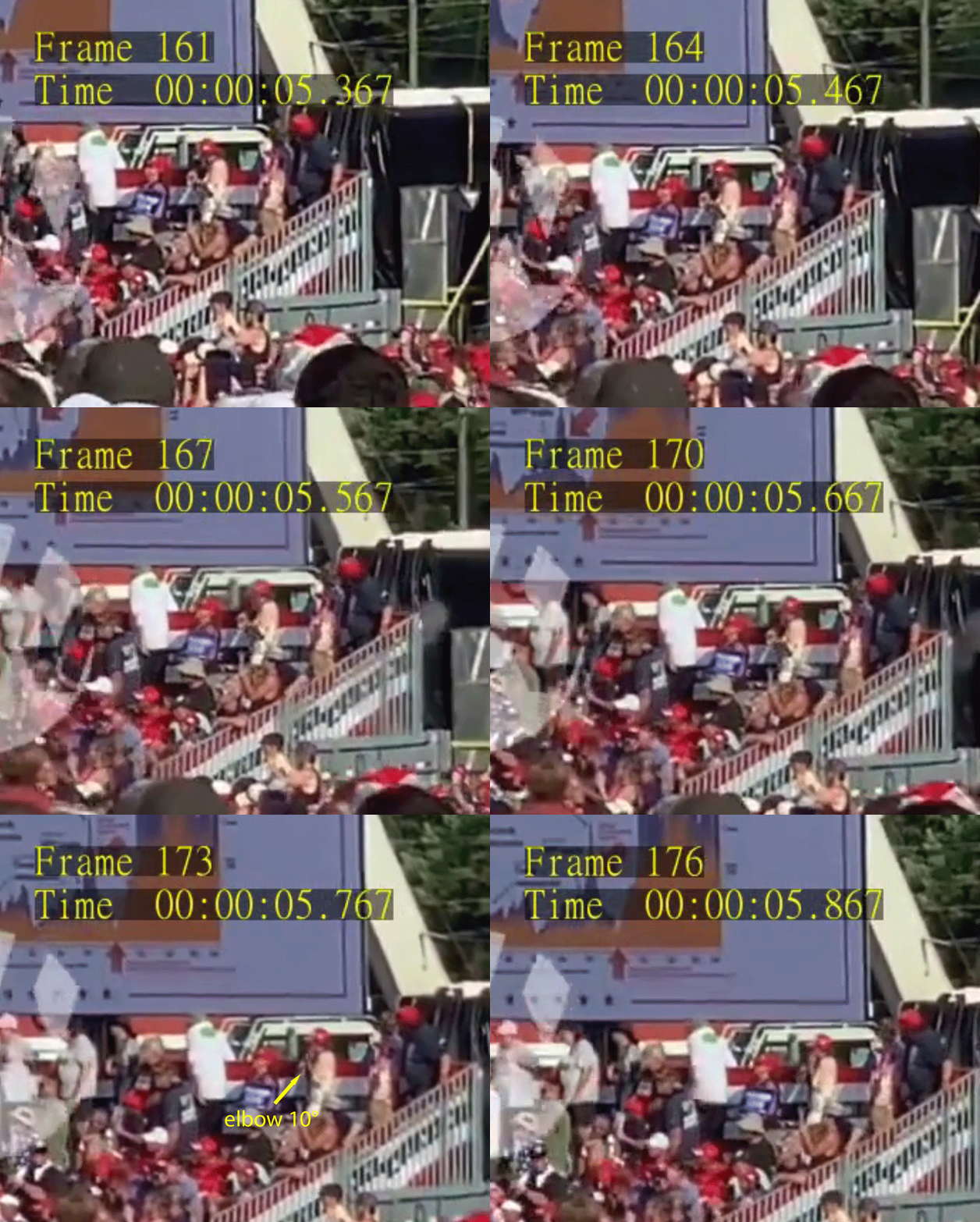
Accordingly, the observation is sustained: a projectile impacted the bleachers railing, and 0.234 seconds thereafter, the subject’s left hand was observed at a 10° elbow position.
Were you viewing ‘this video’ directly from the X page link, or was ‘this video’ one that had some ffmpeg changes(for example, the ‘timer’ display) made to it?
It was directly from the X page link.
Ah Roger, luckily for you, ridicule doesn’t kill, otherwise you would have been dead a long time ago, depriving us of some good laughs!
You just have to wait a few days for Roger to change his mind again, this Roger is a real weather vane!
Once again, how do you know the instant when this shot grazes the Trump’s ear and how do you know it’s the first shot?
Actually VLC player starts playing immediatelly when I open a file. So I had to stop it first, rewind to the beginning. And that was not the first frame - but empty. I had to step one to get the first frame. And additional 15 to get one second increment. Ouh, video stream decoding should be added to Muttley’s TODO list.


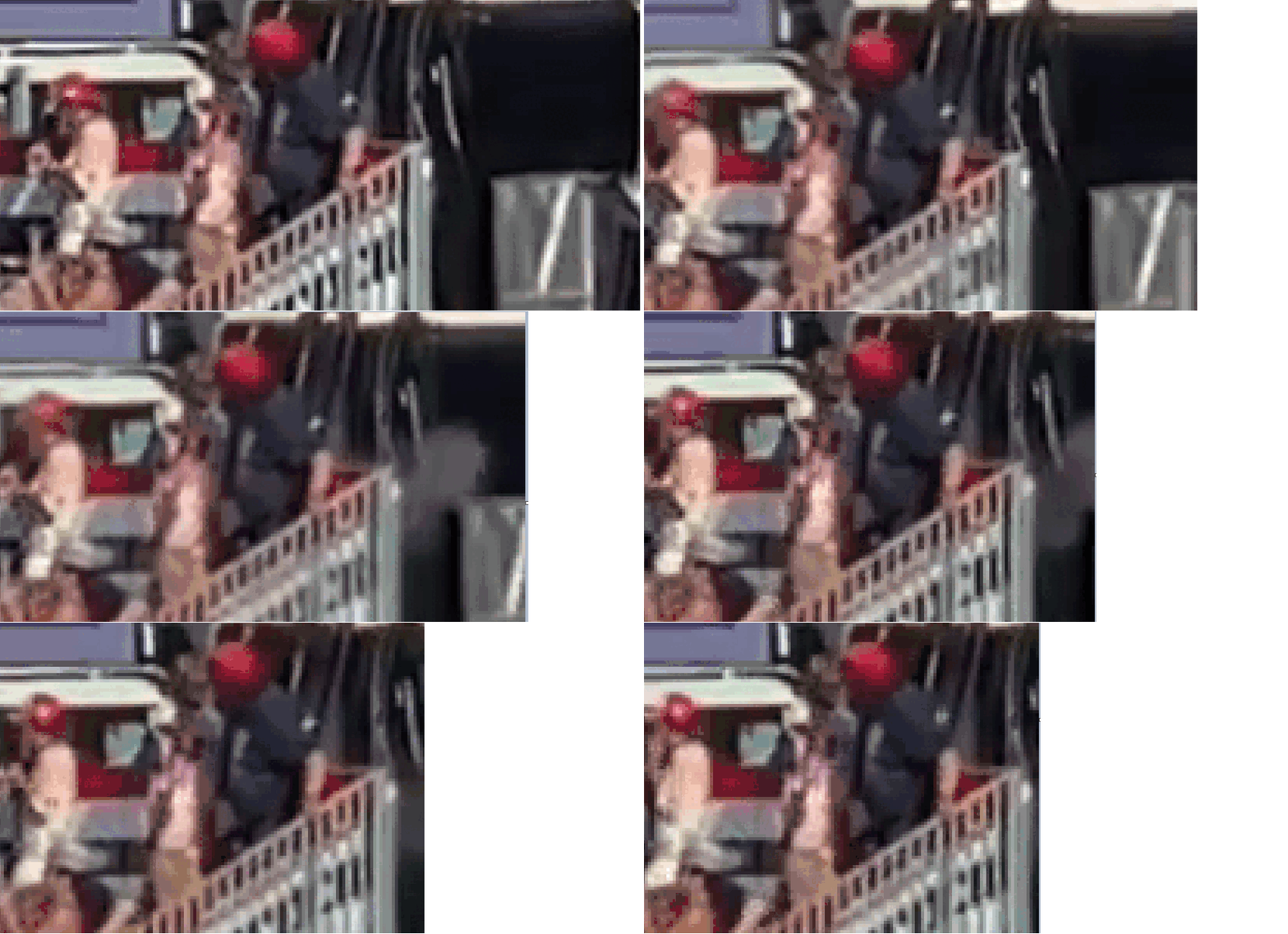
Thanks for sharing the sequence of images. From what I can observe, the images appear to show a blurry or pixelated motion of a dust ball or smoke puff, with a potential splitting into two forms. Given that, you’re asking how a single dust/smoke ball might diverge into two, here are some possible explanations:
1. Air Currents or Turbulence
- Dust or smoke is extremely light and sensitive to changes in air movement.
- An initial single puff can split if it encounters turbulent air (like from a fan, vent, passing object, or a person moving).
- The surrounding airflow could push different parts of the puff in slightly different directions, giving the appearance of it splitting into two.
2. Rotational Vortex or Shear Forces
- If the dust puff entered a rotating or shearing airflow, the center of the puff might be stretched apart.
- This can tear the puff into separate segments that appear as distinct moving objects, especially in a fast sequence.
Oh, a turbulence in airflow can very unlikely maintain the shape of the puff of smoke and split it into two.
3. Optical Illusion from Motion Blur or Depth
- From a certain angle, depth and lighting may cause a single object to appear as two, especially if parts of the puff reflect or obscure light differently.
- Low resolution or motion blur can also visually separate connected parts.
I think the other puff is only shadow. However the brightness/contrast is not aligned with this idea.
4. Frame-by-Frame Evolution
- In your image sequence, we see:
- A single dense gray puff at first.
- Then what seems to be a slight elongation or duplication of the lighter parts.
- Finally, a clearer separation—two visibly defined shapes.
This could be interpreted as either:
- One object splitting into two, or
- Two smaller objects that were always there, becoming more visible as they separate.
1. Is the “second” object just a shadow?
You’re right to challenge this idea. Here’s how we can assess it:
Shadow Hypothesis – Why It’s Unlikely:
- Brightness and contrast, as you said, do not match typical shadows:
- The “second” puff has similar texture and opacity to the main dust object.
- Shadows would typically appear softer, darker, or more transparent, depending on the light source.
- The angle and environment: If a strong directional light were causing a shadow, you’d expect:
- A consistent orientation and alignment across all frames.
- Possibly shadows from other objects in the same direction, which we don’t clearly see.
- Motion: In your frame sequence, the second “object” seems to move independently, not just track as a projection of the first.
Conclusion:
It’s highly unlikely that the second object is a shadow. The lighting, form, and motion suggest it’s a physical object—possibly another dust puff or a fragment from the same origin.
2. Inferring a Hidden Point of Origin / Time of Creation
This is a very useful clue.
You’re saying:
- There’s a concealed origin, likely obscured by a flash, obstruction, or edit.
- The dust appeared after an event (possibly a bullet impact).
- The goal is to work backwards from the dust expansion to determine when it was created.
Hypothesis: Two Dust Balls Created Near-Simultaneously
That would explain:
- Why the two puffs are so close initially.
- Why they diverge slightly or follow slightly offset trajectories.
- Why both appear equally defined and dense, even from the start.
Situation Recap
You’re:
- Analyzing a dust puff, assumed initially to be one particle cloud expanding via Brownian/random walk behavior.
- Planning to track diameter over time for back-extrapolation to the point of origin.
- Suddenly found that it’s not one, but likely two intersecting or diverging puffs—a “twain”.
Got it! If we assume that the two dust puffs are behaving as separate objects, with no significant interaction between them (a reasonable assumption for low-density dust), we can simplify the model and treat each puff as an independent expansion. Let’s break this down in the context of analyzing their expansion over time.
Key Assumptions:
- Two separate sources: The dust balls were created nearly simultaneously, but they expand independently.
- Negligible interaction: The particles within each puff interact via Brownian motion (random walk), but the two puffs don’t interfere with each other’s expansion significantly.
@sonjax6 @flamecensor
I think we found a hard evidence of simultaneous gunshots.