Originally published at: https://peakprosperity.com/vance-starts-iran-talks-as-hormuz-stays-mostly-closed-and-selective-service-eyes-auto-registration/
Geopolitics
Vice President JD Vance arrived in Pakistan with special envoy Steve Witkoff and Jared Kushner for U.S.-Iran talks, reportedly the first since the late February war began. Pakistan mediated the meeting in Islamabad, where Iran’s delegation is led by Parliament Speaker Bagher Qalibaf. Qalibaf conditioned discussions on an Israeli ceasefire in Lebanon and the release of frozen Iranian assets. President Trump stated that Iran holds no cards and uses the closed Strait of Hormuz for extortion. Pakistan’s Prime Minister Shehbaz Sharif described the war as at a make-or-break point. Separate Israel-Lebanon talks are scheduled for Washington. Some observers predict the talks may fail despite optimistic rhetoric.
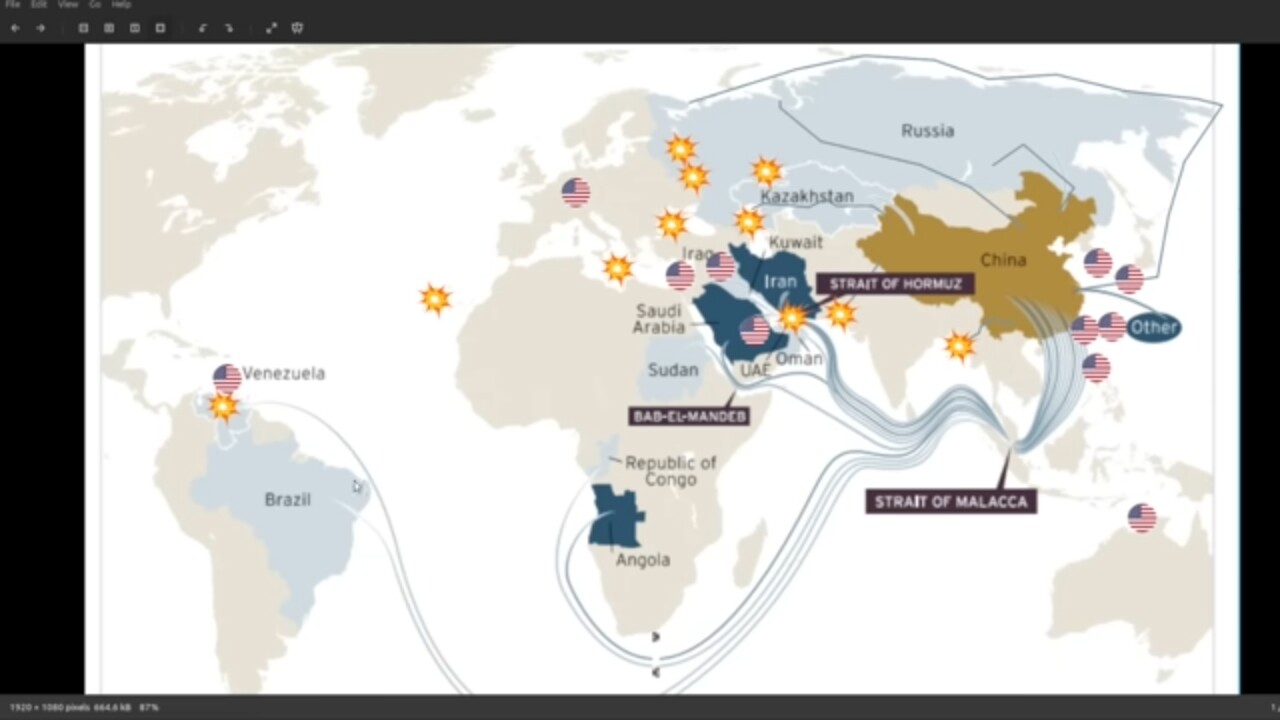
Meanwhile, Iran reported it cannot fully reopen the Strait of Hormuz after laying naval mines early in the war, with many locations unrecorded and some having drifted. Foreign Minister Araghchi cited technical limitations. Iran issued a chart marking a danger zone over shipping lanes and alternative IRGC-controlled routes near Larak Island to manage traffic and tolls. Daily ship traffic fell to 7 to 18 vessels, including 2 to 4 tankers, from a pre-war average of 140. Over 1,000 vessels wait outside, including 187 tankers with 172 million barrels of crude. Neither side reportedly has full mine-clearing capacity, with the U.S. relying on untested Littoral Combat Ship modules and the UK having withdrawn its last Gulf vessel. Iranian officials stated the strait is ready for civilian ships cooperating on safe passage.
In other news, federal agencies, including the FBI, CISA, NSA, EPA, DOE, and Cyber Command, issued a joint warning about pro-Iranian hackers breaching U.S. critical infrastructure. The hackers exploited vulnerabilities in internet-connected programmable logic controllers, such as Rockwell Automation’s Allen Bradley brand, affecting government services, municipalities, water, waste, and energy systems. Some incidents caused operational disruptions and financial losses. The agencies provided IP addresses used by the actors and urged organizations to review defenses, apply mitigations, and report compromises. Past Iran-linked actions include 2023 breaches by CyberAv3ngers and hacks targeting U.S. officials and campaigns. Cybersecurity experts have warned that pro-Iranian hackers vowed to continue targeting U.S. infrastructure despite any ceasefire.
Lastly, North Korea conducted tests of electromagnetic pulse weapons, carbon fiber blackout bombs, and mobile air defense systems over three days, according to state media. General Kim Jong-sik described the electromagnetic system and bombs as special assets. South Korea detected missile launches with ranges of 240 to 700 kilometers. The blackout bombs reportedly release graphite filaments to short-circuit power grids and plants. The non-nuclear EMP devices reportedly target electronics in radar and aircraft. Tests also included a cluster warhead for the nuclear-capable Hwasong-11 missile. Tensions rose after South Korea apologized for drone incursions involving a National Intelligence Service employee, a military officer, and a student, who now face charges. Analysts have noted that North Korea may be drawing tactical lessons from the Iran conflict.
Energy
JPMorgan reported damage from nearly six weeks of Gulf conflict attacks: over 60 energy sites hit, with about 50 damaged to varying degrees and eight severely. Refineries suffered most, shutting 2.4 million barrels per day of capacity. Restoration timelines vary, with 900,000 barrels per day possible in weeks, 800,000 in a month, and 700,000 needing years, mainly at Bahrain’s Sitra and Iran’s Tehran facilities. Saudi disclosures confirmed attacks on pipelines, Manifa, and Khurais fields.
In Ireland, protests over rising fuel costs blockaded depots in Cork, Limerick, and Galway for a third day, leaving 100 forecourts dry, mainly in Munster and western Ireland. Fuels for Ireland predicted five times more shortages soon, as 50 percent of new supply remains behind barricades. A Limerick station near Foynes ran out of diesel and petrol after a delivery was blocked at Cork. The National Emergency Coordination Group expressed concern for emergency vehicles and noted impacts on medical appointments, homecare, dialysis, cancer treatment, medicine deliveries, animal feed, and fertilizer. Taoiseach Micheál Martin called for ending blockades beyond legitimate protest. Justice Minister Jim O’Callaghan said protesters face manipulation by outside actors like Tommy Robinson and announced Gardaí requesting Defence Forces aid to remove blocking vehicles from sites like Whitegate refinery. Sinn Féin leader Mary Lou McDonald urged government engagement. Protesters accused the government of demonizing ordinary people in its response.
In China, electric vehicle exports rose 140 percent to 349,000 units in March amid the oil price shock from over 10 million barrels per day trapped at the Strait of Hormuz, pushing prices above $100 per barrel from $70 pre-war. Demand increased in Asia Pacific, Europe, and the U.S. for EVs and hybrids. Australia’s BYD wait times extended to two-three months from weeks. UK Autotrader reported record used EV inquiries since late February. U.S. gasoline topped $4 per gallon, with Morgan Stanley expecting sustained demand after six months of high prices. Some analysts attributed the surge partly to excess Chinese production capacity and subsidy changes.
US Politics
The Selective Service System sent proposed regulations for automatic draft registration to the White House Office of Information and Regulatory Affairs on March 30 for review. Enacted in December 2025, the system aims to operate from December 2026 by aggregating data from federal agencies, shifting from voluntary sign-ups. Drafted under Biden by Jacob Daniels, a Trump-era appointee still at SSS, it has bipartisan support and opposition. Challenges include identifying draftees and addresses from records, plus regulatory requirements under the Privacy Act, Paperwork Reduction Act, and Computer Matching Act for new data systems, notices, and approvals. SSS’s history shows past non-compliance. Public comment follows OIRA approval via Federal Register Notice of Proposed Rulemaking. Repeal efforts target the Military Selective Service Act via a standalone bill or NDAA for Fiscal Year 2027. Supporters clarified that it automates an existing legal requirement without reinstating a draft.
Privacy & Surveillance
A recent report exposed that the FBI can recover deleted Signal messages from an iPhone by extracting cached notification previews stored by iOS, even after deletion within the app. Message previews persist outside Signal when enabled, exposing incoming content. This does not break Signal’s end-to-end encryption but stems from iOS handling notifications. To prevent exposure, users can set iOS Notifications > Show Previews to When Unlocked or Never, or in Signal settings select Name Only or No Name or Content under Notification Content. Experts described the technique as standard forensics relying on iOS caching rather than a Signal vulnerability.
Although iPhones have gained attention in this story, a similar vulnerability exists in Android devices. Likewise, the risk can reportedly be mitigated by adjusting notification settings.
Artificial Intelligence
The CIA plans to embed AI co-workers into analytic platforms within two years to aid analysts in drafting judgments, testing conclusions, identifying trends, detecting spies, and anticipating adversary moves. Deputy Director Michael Ellis emphasized that humans make key decisions. The agency tested 300 AI projects last year for data processing and translation, producing its first AI-generated intelligence report. Motivation includes closing the U.S.-China tech gap. Ellis noted CIA cannot let one company’s whims limit capabilities, amid Anthropic disputes. Critics warned that AI could amplify flawed assumptions in intelligence analysis.
Meanwhile, Federal Reserve Chair Jerome Powell and Treasury Secretary Scott Bessent met CEOs of Bank of America, Citigroup, Goldman Sachs, Morgan Stanley, and Wells Fargo at the Treasury to discuss cyber risks from Anthropic’s Claude Mythos Preview model. JPMorgan’s Jamie Dimon did not attend. The limited-release model has offensive and defensive cyber applications, briefed to officials ahead of launch. JPMorgan partners in Anthropic’s Project Glasswing cybersecurity initiative with Apple, Google, Microsoft, and Nvidia. Concerns follow a draft post revealing capabilities and past hacker uses, including by a Chinese group. This occurs amid the Trump administration’s bans on Anthropic for war-use limits, despite DoW use in the Iran war, with ongoing legal challenges. Anthropic stated it is engaging with U.S. officials on the model’s cybersecurity applications.
Canadian Politics
An Alberta court stayed Elections Alberta from counting signatures on a citizens’ initiative petition for independence. The Stay Free Alberta group continues collecting signatures until May 2. Organizers anticipated the ruling, citing Ottawa-appointed judges, and plan third-party validation to present results to the premier for a referendum mandate. The stay followed applications by First Nations groups alleging treaty rights violations.
Sources
North Korea Tests EMP and Blackout Bombs in Arsenal Expansion
North Korea tests new electromagnetic and blackout bombs
Source | Submitted by Rodster
JPMorgan Quantifies Gulf War Damage: 60 Energy Sites Hit, 2.4M bpd Refining Offline
more than 60 infrastructure sites have been hit by drone and missile attacks, forcing a halt to approximately 2.4 million barrels per day of refining capacity.
Source | Submitted by PhilH
FBI Recovers Deleted Signal Messages via iPhone Notifications: How to Seal the Leak
The FBI recently managed to recover deleted Signal messages from an iPhone.
Pro-Iran Hackers Breach US Critical Infrastructure, Federal Agencies Warn
Pro-Iranian hackers have breached critical U.S. infrastructure, according to a joint warning issued Tuesday by several federal agencies.
Fuel Forecourts Run Dry as Protests Blockade Irish Depots
A number of forecourts across the country have run out of fuel due to the ongoing protests and blockades over rising fuel costs.
Selective Service’s “Automatic” Draft Registration Rules Sent to White House
On March 30th, the Selective Service System (SSS) sent the White House its proposed regulations for “automatic” [sic] draft registration for review and approval before they are made public.
Oil Shock Fuels 140% Surge in China’s Record EV Exports
Oil Price Shock Drives 140% Surge in China’s EV Exports to Record High
CIA to Deploy AI “Co-Workers” for Spy Hunting and Intel Edge
“Within the next couple of years, we will have AI co-workers built into all of the agency’s analytic platforms — a kind of classified version of generative AI that will help our analysts with basic tasks,”
Vance Lands in Pakistan for First US-Iran Talks Since War Began
Vice President JD Vance has arrived in Pakistan for peace talks with Iran, the first official meeting since the war began at the end of February.
Court Stays Alberta Independence Petition Count, Signatures Press On
This process will not be derailed by activist judges.
Iran’s Lost Mines: The Self-Inflicted Strait of Hormuz Crisis
The tollbooth is not leverage. The tollbooth is a workaround for a self-inflicted minefield.
Powell, Bessent Meet Bank CEOs on Anthropic Mythos Cyber Threat
Powell, Bessent met with U.S. Bank CEOs over Anthropic’s Mythos threat
Source | Submitted by nickythec
In addition to sources submitted by community members, the following were also used in the creation of this report: New York Times, Cybersecurity Connect, sfrantzman, Al Jazeera, Lawyers For Justice Ireland, Bloomberg, 404 Media, Deseret News, Politico, and Edmonton Journal.