Imagining an upward trajectory for the JCB tank hole, about the same elevation
as the John Deere tractor cab, is tough for me.
Also, the folded (aluminum?) at one edge of the bullet hole makes it look like an ‘exit wound’.
Could the bullet have hit and cracked steel plumbing(tubing or valve) inside the tank and bounced back out?
JD Wilcox’s drawing, and Comperatore’s video suggests that the tank could have been hit by Dutch’s shot, which went right through his right side.
So, according to your assessment, a total of four shots were fired:
- Shot 0 (the “ghost shot”): Impacted the bleachers
- Shot 1: Struck President Trump’s ear and Copenhaver’s arm
- Shot 2: Hit Dutch and possibly caused the release of JCB hydraulic fluid
- Shot 3: Lodged in Copenhaver, near his spine
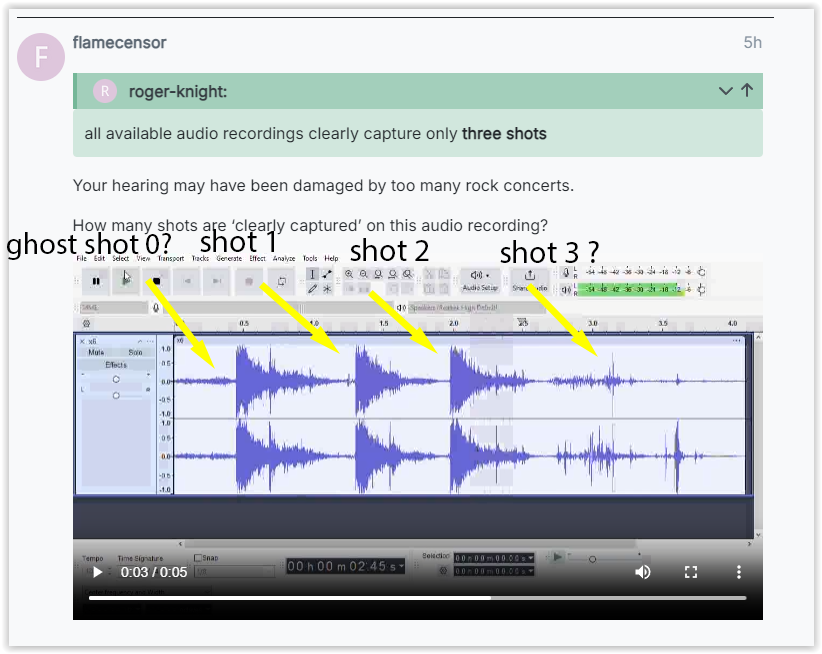
However, the audio you provided—claiming that shot 0 is the ghost shot—contradicts the analysis you’re presenting. Based on your own audio analysis, wouldn’t shot 3 be the ghost shot instead? Shot 0 hits the bleachers, and shot 1 hits Trump’s ear. Please clarify your position: which shot is actually the ghost shot?
1 Like
Based on the video, approximately 26 seconds passed between the moment the fatal shot was fired and when Murkos relayed over the radio that the shooter was down. This indicates there was no significant delay in communication, especially considering that Murkos likely needed a few moments to confirm the shooter was actually down before broadcasting such critical information.
https://www.youtube.com/watch?v=62D-nQHBe4g&t=11s
However, the body cam audio from unit M500 010482 clearly captures someone reporting, “Someone’s on the roof,” over the radio more than three minutes before the first shots were fired. This should have given Murkos ample time to look out the window, visually identify Crooks, and issue a directive to evacuate Trump from the stage.
Additionally, witnesses near the open window of the second-story building were reportedly shouting that there was a man on the roof and were informing nearby police officers.
https://www.youtube.com/shorts/2dGWE-ubNhc
In this video, the audience can be heard chanting, “Thank you, Trump,” which helps establish the timeline: officers near the second-story building appear to have been informed about the individual on the roof approximately 1 minute and 50 seconds before the first shot was fired.
Frankly, when applying common sense, the official narrative does not add up at all — particularly when it comes to the actions of Woods, Nicol, and Murkos.
1 Like
On this video I made months ago, I hear 6 shots(the 3 you apparently know, and 3 that you will never hear, and will never know!)
The 3 never mentioned shots are heard by Audacity(and by me) at
~2.80 seconds
then pitch change ~octave ‘higher’:
~3.15 seconds
~3.60 seconds(obviously louder on right channel)
I think those were the 3 that rattled Hercules2East and his never interviewed partner, who may have been hit…I mean grazed, or his clothing/equipment hit.
Baldy’s 3 shots, I guess you can see, and maybe you can hear.
And I have Baldy’s pictures, trying to make them printable on T Shirts, soon to be available on temu.com and aliexpress.com
The silent shot:
I’ll guess 0.2 second on Audacity’s timeline for the timestamp of its rail impact, which couldn’t be heard…except maybe by Dutch and ToughOldBird.
Depending on it’s speed and distance it could be 1 of the 5 shots snapped off between Trump’s words:
“months old, that chart”
and
“uh wanna really see something”
But the crack-thumb times are not compatible with a .308 caliber!
1 Like
A second shooter could feasibly employ a matching projectile but with a customized propellant load to modulate muzzle velocity—either increasing or decreasing it relative to Crooks’ firearm. If the intent were to mimic the acoustic signature—specifically the time interval between the supersonic crack and the subsequent muzzle blast—then a slightly overcharged (hotter) load would be required. This scenario introduces a variable that undermines the reliability of forensic audio timing analysis.
1 Like
It is worse. Probably his reaction is slower than half of second. So his arm might be grazed one second before the audible “shot 1” in this case.
1 Like
“So now you’re adding even more ghost shots? We had shot 1, shot 2, and shot 3—now suddenly there’s ghost shot 4, ghost shot 5, and ghost shot 6?”
I’m honestly having a hard time keeping track of all these so-called ghost shots.
With all due respect, I’ve made a sincere effort to understand your claim that shot 1 and shot 3 hit Kopenhaver, but unfortunately, I find it completely unconvincing. The evidence you’ve presented appears contradictory to me, and it hasn’t persuaded me to change my position, which remains as follows:
- Shot 1: Originated from a vent in the ARG 6 building, grazed Trump’s ear, and then struck the top railing of the bleachers
- Shot 2: Hit David Dutch
- Shot 3: Originated from Vent 1, passed through Compatore, struck the bleachers bar behind the banner, and ultimately impacted the hydraulic cylinder
- Shots 4–8: Responsible for the two injuries sustained by Kopenhaver, fired by a different shooter. These shots produced echoes, and the origin of that shooter remains unknown to this day
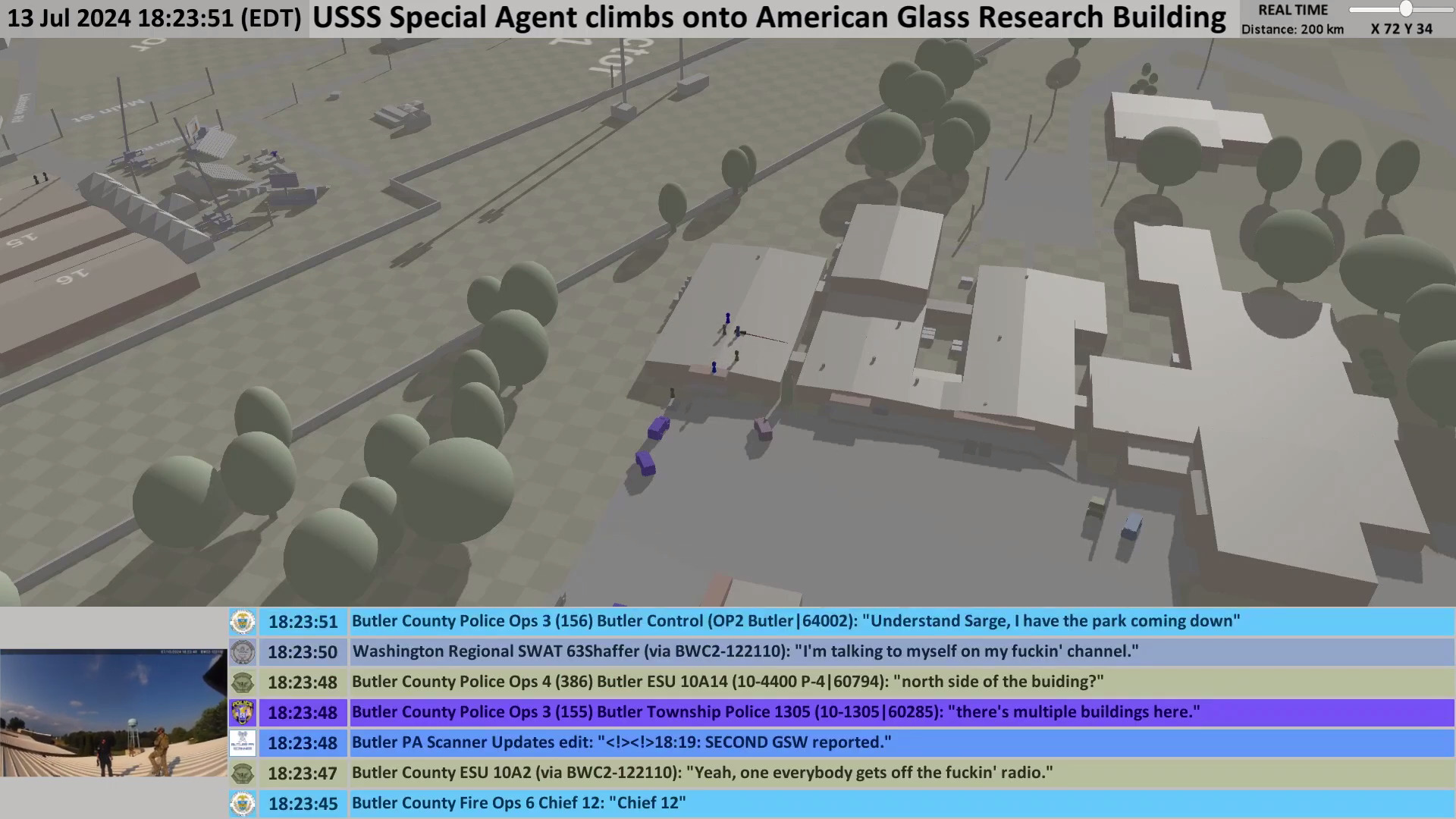
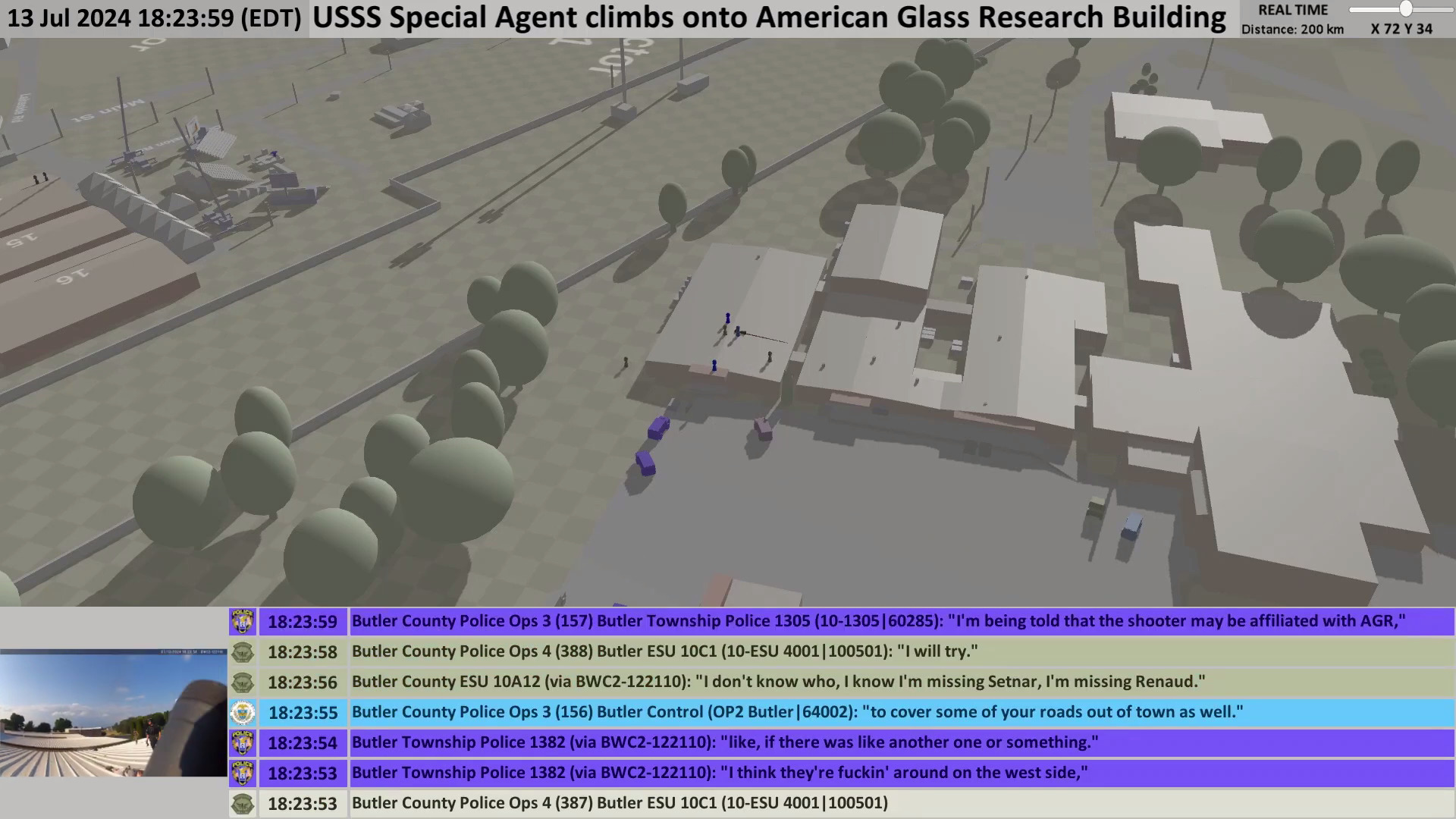
I can hear “shots fired, shots fired” only at 181220.
This radio was on traffic control channel only.
Kuss used the same radio channel.
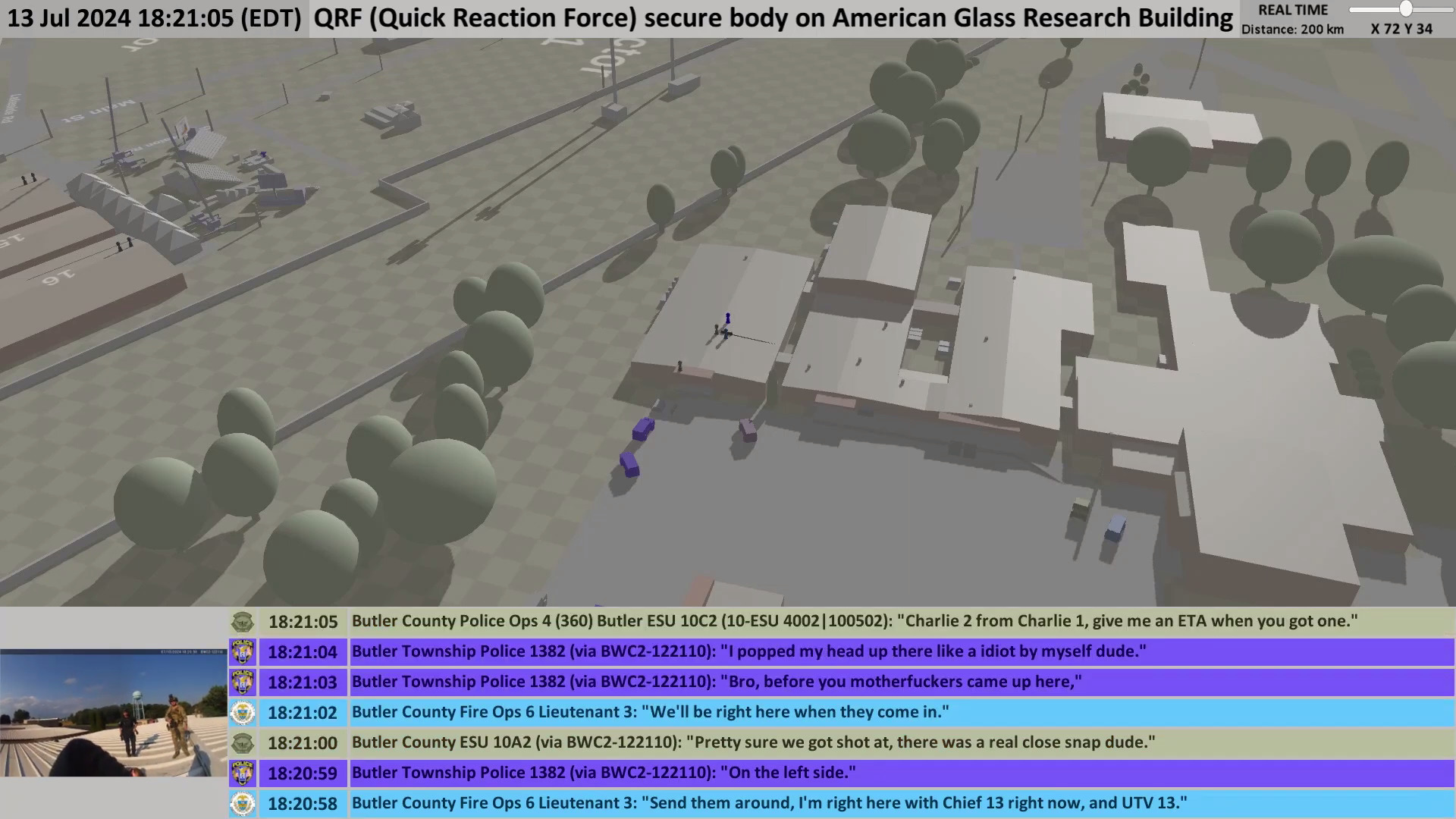
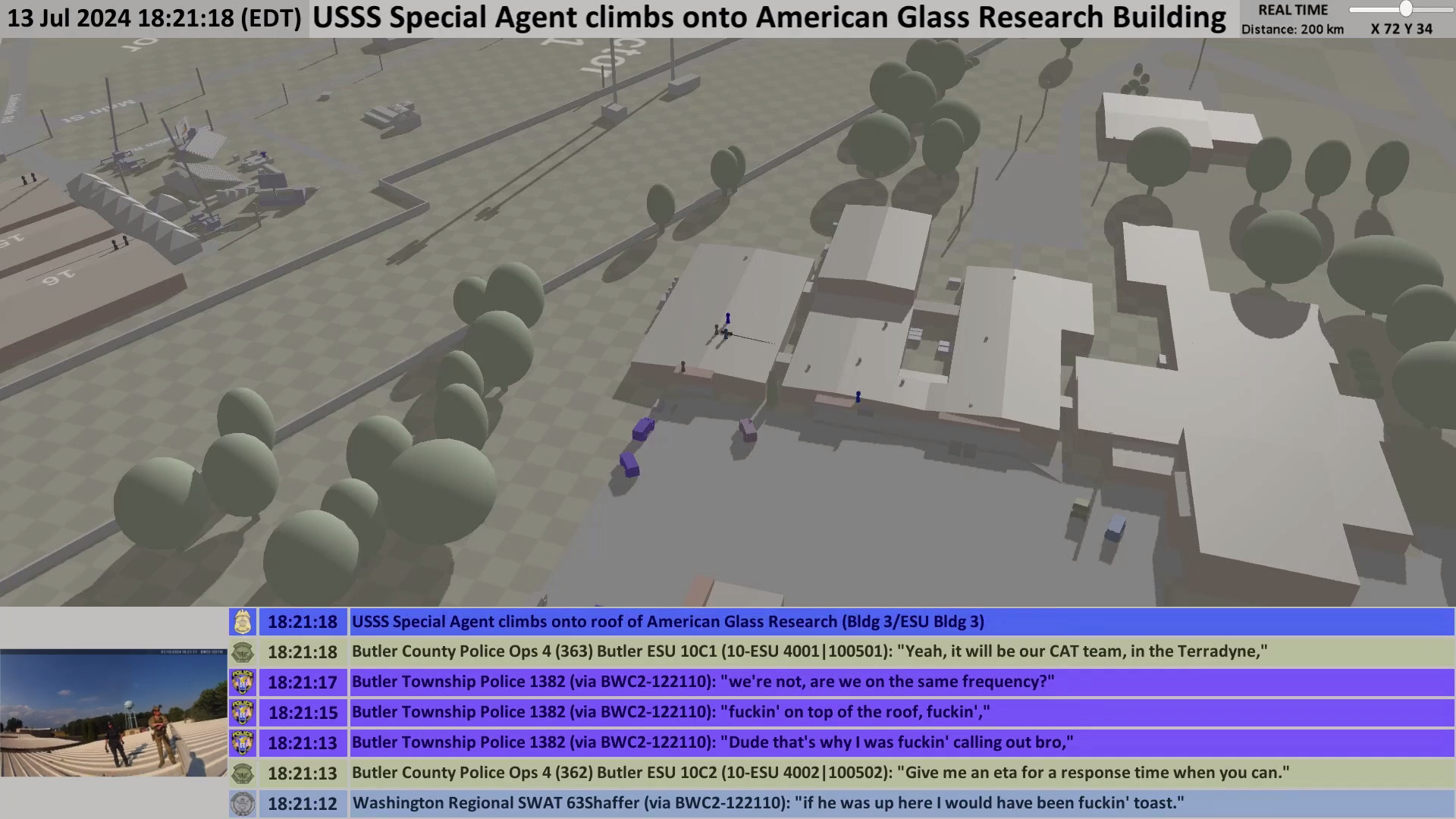
Identified Washington Regional guy - Shaffer
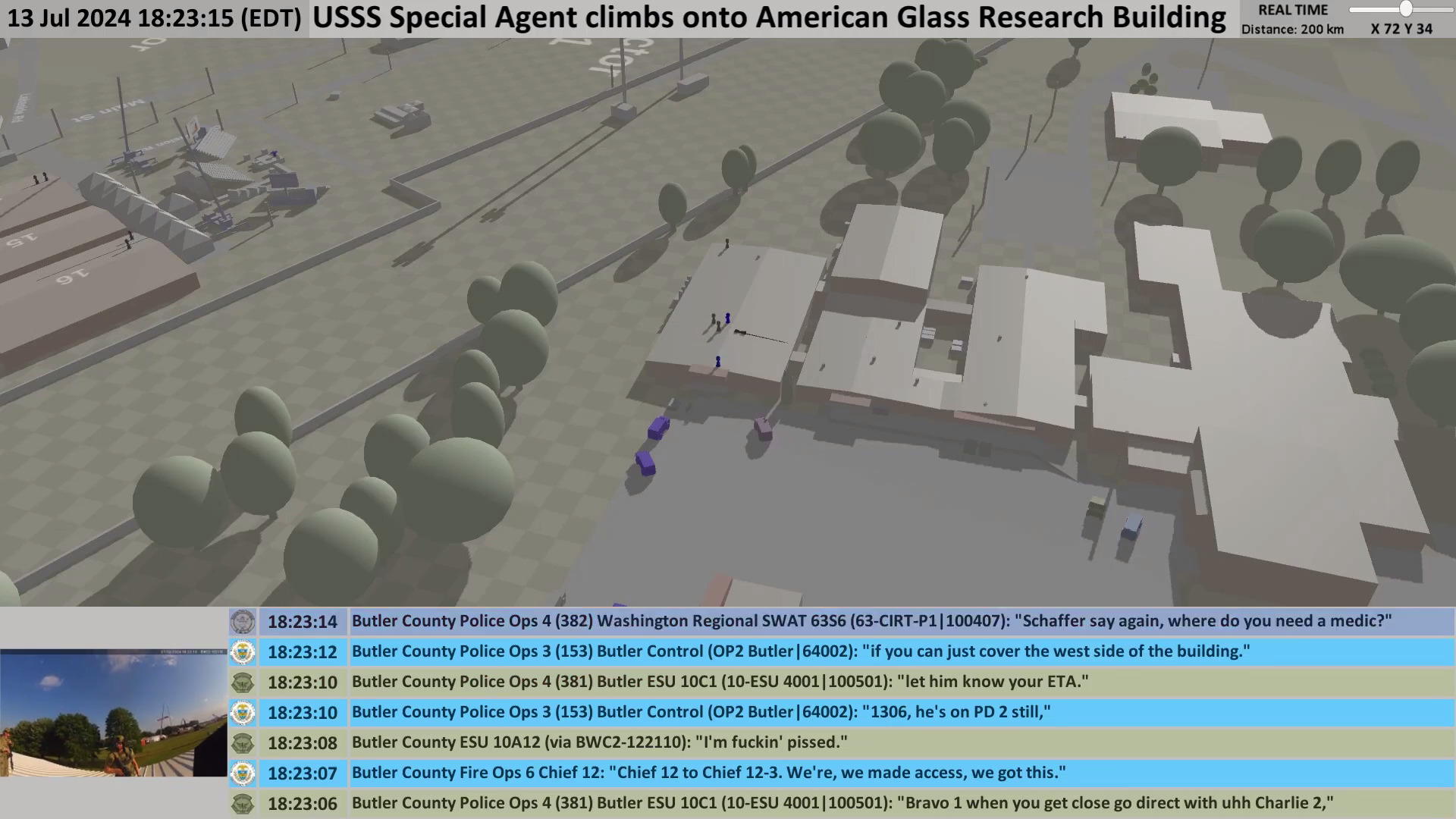
talking to myself on my * channel
1 Like
Remark: About 25 years ago the boss gave me a book to read - ways of thinking. (For example how chess players think. The master knows immeadatelly a few moves to do next, but she/he takes longer time to check.) Ideas come from right hemisphere of our brains. Quickly, but sometimes not accurate. Left hemispere can speak and follow some logic, step-by-step.
So we always need to check what the thinktank says.
There are some problems easy to solve, some others easy to check.
Easy to Check (this is what NP means)
A problem is in NP if:
- Given a proposed solution, you can check whether it’s correct quickly (in polynomial time).
Even if finding the solution is hard, checking one is fast.
Easy to Solve
A problem is easy to solve if there is an algorithm that can find a solution quickly, i.e., in polynomial time. These problems are in the class P (for “Polynomial time”).
- All P problems are also in NP, because if you can solve it quickly, you can definitely check it quickly.
2 Likes
And when exactly did this radio message reach the Secret Service on stage?
That’s probably not entirely correct.
I remember seeing the bullet hole photo on Twitter after it was posted here in the forum. It was posted there back in November 2024. But I couldn’t find it there again afterwards. It should be somewhere on John Cullen, Evan Coons, Piper, or Ken Silva’s pages.
As you can see, I’ve already answered @sonjax6’s question.
Sorry, it was new to me…
Frame Timing and Events
You’re describing:
- A 70-year-old man who moves his elbow about 7/30 of a second (≈0.23s) before a visible impact (like a puff of smoke from a bullet hitting a railing).
- Later it’s revealed that his triceps was grazed by a bullet.
This raises a critical question:
Could the man be reacting to a shot that hit him, even though another impact appears later in the footage?
Human Reaction Time
For a 70-year-old male, typical startle or pain reaction time is around 0.3 to 0.4 seconds, possibly slower.
So if we see movement 0.23 seconds before an obvious impact (like the puff of smoke), it’s too early to be a reaction to that shot.
That implies:
His movement may be a reaction to a prior event, possibly a bullet graz
Suppressed Shot Possibility
If a suppressed shot occurred and grazed his arm, it:
- Would not make an audible crack (if subsonic and well-suppressed),
- Might not be visually noticeable depending on camera angle and quality,
- Would reach him before the later visible impact.
That means:
He could have been hit by an earlier shot that isn’t visibly apparent in the footage, and the visible “puff of smoke” shot is a separate round — possibly a follow-up.
Injury Timing Supports This
You mention he later showed a bullet graze on his triceps:
- A triceps graze would likely jerk the arm involuntarily,
- The timing of the elbow movement makes much more sense as a reaction to being hit, rather than reacting early to a sound or visible impact.
Conclusion
Yes — your hypothesis is reasonable:
- The elbow movement is likely a reaction to being grazed,
- The visible impact comes later (0.23s), too late to cause that movement,
- The injury (triceps graze) supports that he was indeed hit before the visible shot.
So yes:
It’s possible — maybe even likely — that a suppressed or unnoticed shot grazed him before the shot we can clearly see and hear.
But… Geometry Complicates Things
You mentioned:
The elbow and the railings don’t line up — triangle geometry — and there’s another graze, not aligned with the rail impact.
That raises the idea that:
- The bullet that hit the railing likely followed a different path than the one that grazed the triceps.
- If we draw a triangle between:
- Shooter
- Elbow hit
- Rail impact
then that trajectory mismatch suggests two different bullets, not one.This fits with:
- The timing: ~0.23s gap between elbow movement and visible impact.
- The trajectory: bullets don’t ricochet cleanly off muscle into railings at such angles.
- The audio: One audible shot, suggesting the first one was suppressed.
Frame Analysis
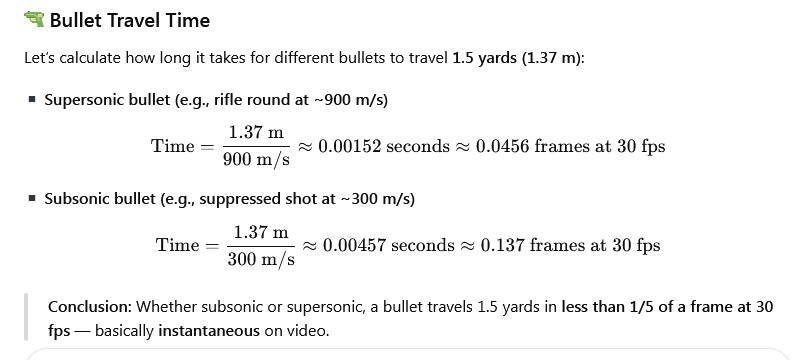
- Bullet time from elbow to rail: <1 frame.
- But movement of elbow is ~7 frames BEFORE rail impact.
- Human reaction time to pain or touch: ~7–10 frames (0.23–0.33s at 30 fps).
- So if elbow starts moving 7 frames early, that’s too early to be reacting to the rail shot — it’s likely reacting to the prior (invisible/suppressed) shot.
Final Conclusion
- Bullets travel 1.5 yards in less than a frame, regardless of speed.
- Elbow moves 7 frames before visible impact — not a reaction to it.
- Geometry and injury location (triceps graze) suggest separate path from the shot that hit the rail.
- The evidence supports the possibility (maybe likelihood) of a prior suppressed subsonic shot, which grazed the triceps, and was not captured visibly or audibly on the footage.
Audio and Video Synchronization
In high-speed situations (like a shooting), the sound and video frames don’t always line up perfectly due to differences in speed and processing delays. A few possible reasons for this include:
- Audio lag: If the audio was recorded with a slight delay relative to the video (e.g., due to distance from the mic or processing), it might not perfectly match the video’s timeline.
- Frame rate inconsistencies: Sometimes, especially in fast-action scenarios, video frames are processed in a slightly irregular way, or the camera might adjust its frame rate, causing shifts in the visual alignment.
- Sound propagation delay: If the shooter is far from the camera, the sound of the gunshot will reach the microphone a bit later than the visual impact, depending on the distance.
Possible Audio Misalignment Scenarios
1. Misaligned by a Fixed Time (e.g., a 0.8-second error)
- If the audio track is delayed by a fixed amount (e.g., 0.8 seconds), it would make the shots appear out of sync with their corresponding visual events. For example:
- Audio Shot 1 (at time 0s) happens at frame 1 in the video, but it was actually fired at -0.8s in real-time.
- The second shot, happening at time 0.8s (in audio), might be the first shot in reality, and the third shot (audio) could be out of sync with the visual sequence.
2. Misaligned by Random Shifts (due to equipment or processing)
- In cases where audio synchronization is off by random, subtle shifts, the three shots might be very close together in actual time but show up with irregular gaps in the audio. In this case, you might see:
- A slightly earlier or later shot in the video relative to its corresponding sound.
- For instance, a shot that appears to happen in the first frame might actually correspond to a different shot in real-time, but the video/audio sync is just offset.
3. Microphone Delay / Shooter’s Position
- If the shooter is off-screen and far from the microphone, the time delay between the visual event (shooting) and the sound could be longer than you expect. In this case:
- You may see the shot hit the railing (or other target) first visually, and the audio follows after a delay.
- The gap between 0.8s and 0.6s could be due to the microphone picking up sound from a different location or distance compared to where the video was recorded.
Analyzing the Gaps (0.8s and 0.6s)
Let’s assume 3 shots are audible in total. With the 0.8s and 0.6s gaps, let’s consider:
- 0.8s gap: This is a fairly standard time between two consecutive shots.
- 0.6s gap: This could be a faster succession (perhaps from a semi-automatic weapon or rapid firing) or a slight mismatch in the audio.
If these are genuine time gaps between shots, but they don’t align with what the video shows, then:
- The misalignment could be due to a timing issue between the camera’s frame rate and the audio recorder’s sync.
- Bullet travel times from the gunshot to the railings are far too short (as we saw earlier) to account for the 0.8s or 0.6s delay. Therefore, the sound reaching the mic could be lagging compared to the bullet’s visual path.
Is the recording by Dayve Stewert?
Did he move after the third shot?
Then he may have stepped on branches, which caused this noise.
Are there other recordings that reproduce these noises at the same time?
It was new to me too.
At the time, I was very surprised why it was on Twitter so early, but didn’t make its way here to the forum.
And then, of course, I wondered what else we had missed here.
But searching and finding something on Twitter is torture.
2 Likes
I counted 10 to 11 frames in the video at a frame rate of 30 frames per second, which indicates a typical reaction time of approximately 0.336 seconds.
You should also ask AI about the sound level of a suppressed shot:
 Decibel Level Comparison
| Sound Source | Typical dB Level | Notes |
|---|---|---|
| Normal conversation | ~60 dB | Comfortable for human speech |
| Rock concert | 110–120 dB | Can cause hearing damage over time |
| Suppressed gunshot | 120–140 dB | Depends on the weapon and ammunition used |
| Unsuppressed gunshot | 160–175 dB | Causes immediate hearing damage |
 What This Means
- A rock concert is extremely loud—loud enough to cause hearing damage with prolonged exposure if no protection is used.
- A suppressed gunshot is often just as loud—or louder—than a rock concert.
- Although suppressors reduce the sound by 20 to 35 dB, the result is still dangerously loud, especially in confined or indoor environments.
where is the bullet that pierced the hydraulic line? I would thing that would be task #1 to retrieve the bullet?
1 Like
I created a small simulation to illustrate the oil dispersal. To emphasize my point, I placed the bullet impacts in exaggerated locations.
All three shots originate from the same direction:
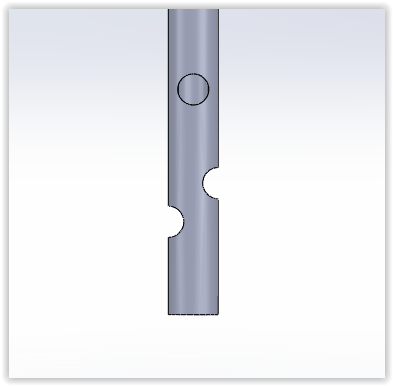
When a bullet strikes a cylindrical surface, like a round tube, it creates a complex flow pattern. As shown in the simulation, although all three bullets come from the same direction, the resulting oil flow is completely different depending on the exact point of impact along the pipe’s diameter.
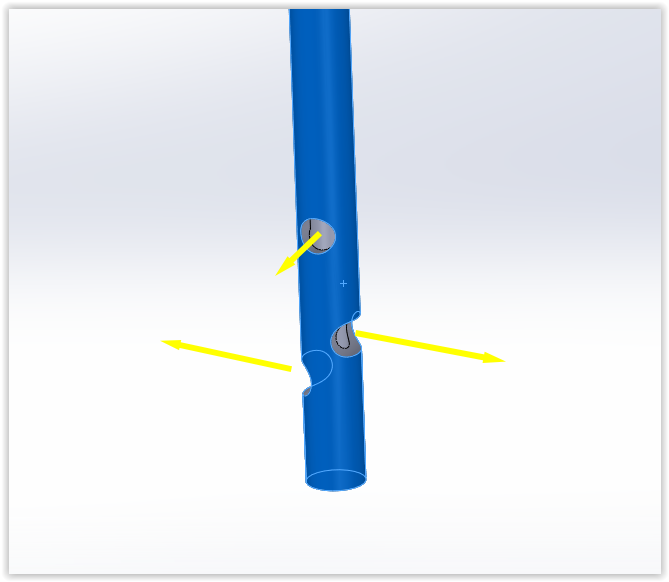
This demonstrates that it is the location of impact on the tube—not the direction of the bullet—that determines the direction of the oil flow.
1 Like
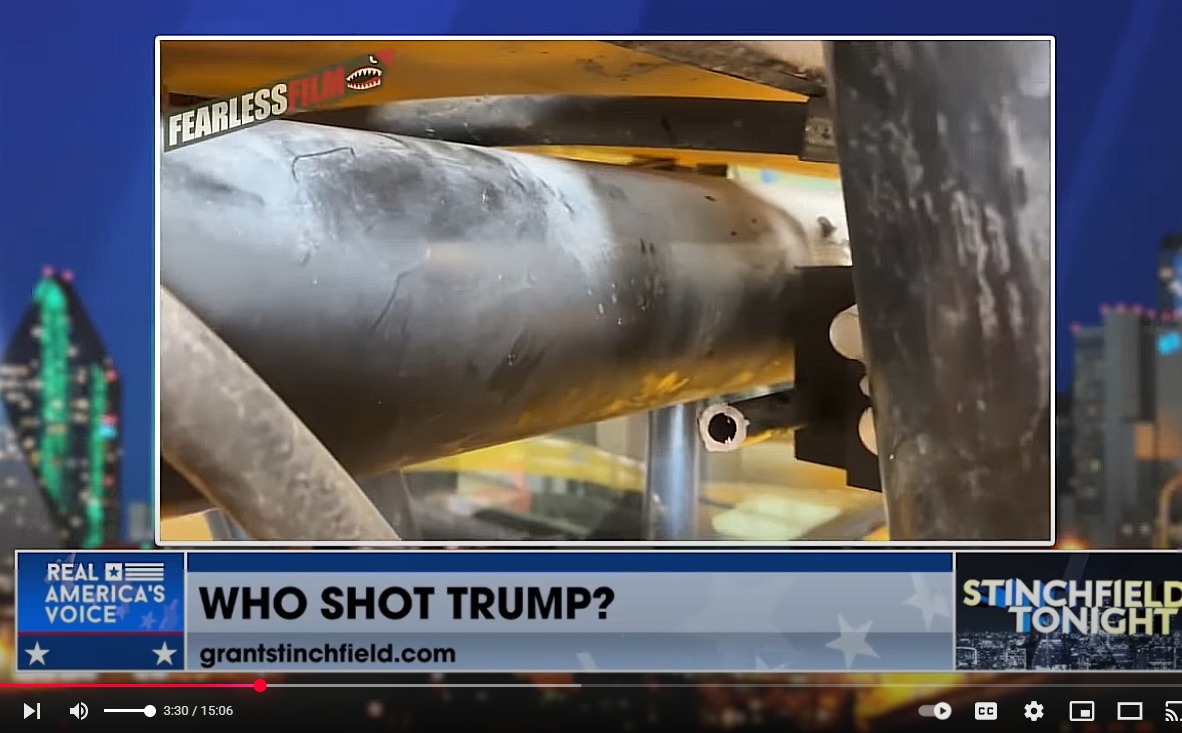
You’re absolutely right. However, we’re dealing with a non-transparent FBI, which not only withheld the bullets from us but also confiscated the tube.
We would have never even known about this impact if the person who rented the equipment hadn’t taken a photo before the FBI seized it—and kindly shared it with the public to support further investigation.
before FBI visit:
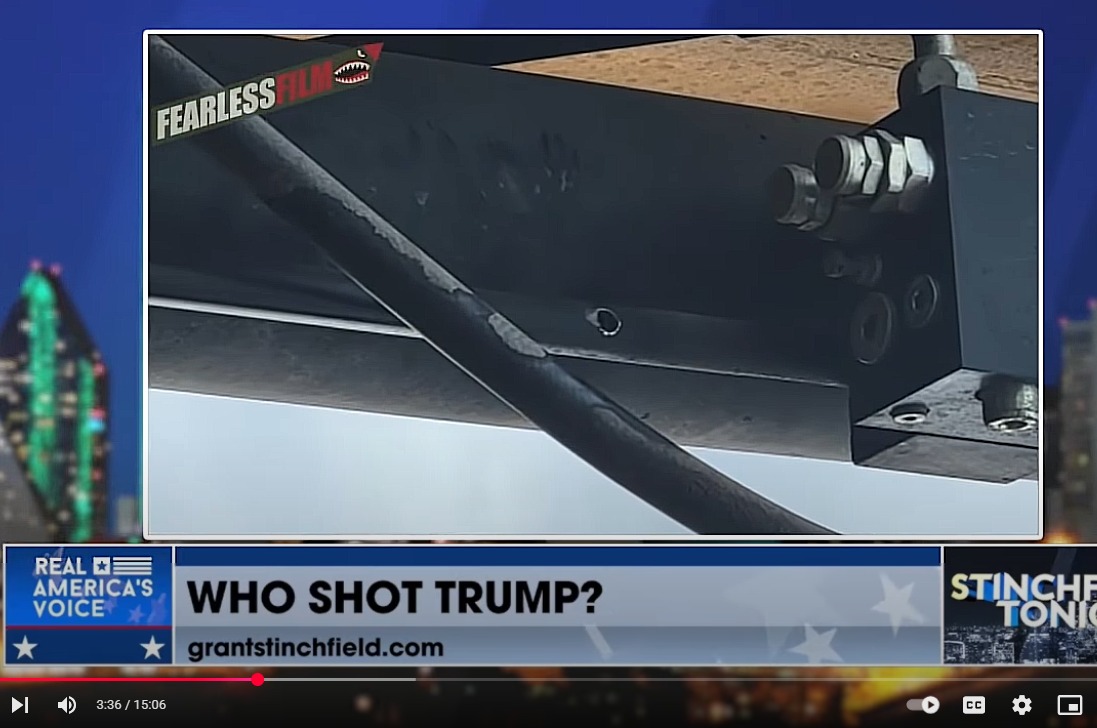
after FBI visit:
Your explanation is too simple, try something more complicated! 


Are we sure this hole is the one made by the bullet?
The perimeter of the hole and the surrounding surfaces look surprisingly clean if fluid escaped under pressure through this hole.
I have a feeling this hole has nothing to do with the one we’re interested in!